Ngā Manu Kōrero National speech contest
Last month Year 12 student Tracy Bailey travelled to Ōtepoti Dunedin to participate in the 58th annual Ngā Manu Kōrero National speech contest.
Tracy gave a reflective and heartfelt speech titled Unapologetically Māori, which can be viewed here (Tracy’s introduction starts just after the 6:06 mark).
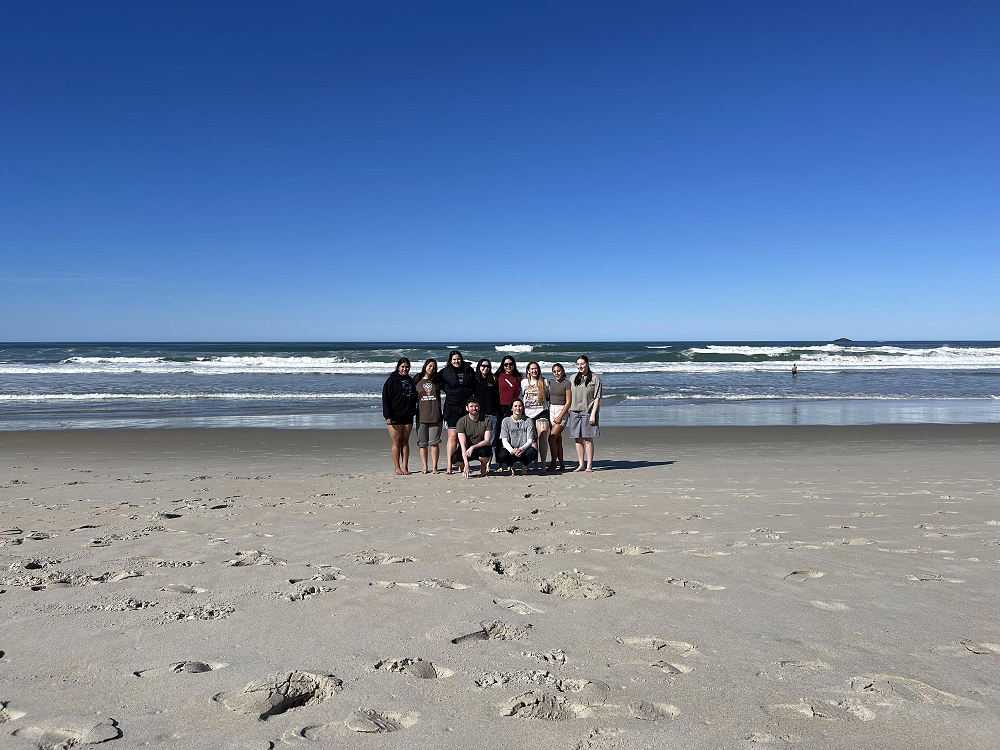
Her journey began in Māori class, when she volunteered to represent WGC at the regional competition in Porirua. This was a big commitment as the contest includes both a prepared speech and an impromptu speech in which students are given a choice of topics and only five minutes to prepare. She describes feeling “complete shock” when she found out she won, an emotion that quickly turned to gratitude, both for herself and because she had been given the opportunity to share the experience of the contest with the WGC students supporting her.
In creating her speech Tracy began with one of the suggested topics: What Makes Someone Māori? Her thoughts opened up questions (“Is it having brown skin, being able to kōrero Māori, do kapa haka?”) and led her to reflect on her own family, particularly her older sister Isabelle, and the different experiences the two of them have had moving through the world as wahine Māori. “Although we have the same mother and father, and whakapapa back to the same place, people are astonished to learn that we’re sisters.” Tracy has been asked how they could be sisters when Isabelle was “clearly white” and describes the different ways people perceive them based on the colour of their skin.
The stories she shares are deeply personal and include being racially profiled while with her mother at a mall when she was seven, being told that STEM subjects may not be for her, and being told she was “dumb” because she was Māori. She also discusses the pain it causes her that Isabelle is reluctant to get a ta moko because of the colour of her skin “for fear of being judged and getting accused of cultural appropriation.”
It takes courage to step up on stage and make yourself vulnerable in this way, but Tracy did not hesitate. She shared so much because it is important to her that other Māori students know that they are not alone, and that they are enough. “If you whakapapa Māori, you are unapologetically Māori, and you shouldn’t let anyone hold you back. Don’t let people frown on you for being too Māori or not Māori enough…If you whakapapa Māori, express your mana and your wairua in your own way.”
She is particularly passionate about encouraging Māori students to study STEM subjects and describes how schools and society can fail these students by stereotyping them and steering them away from Maths and the Sciences. She says in her speech that she has let stereotypical remarks hold her back from her full potential in the past and she wants to bring awareness to the damage this can cause. Her hope is that people will listen to what she has to say and ask “how can we help bring about change?”
This was Tracy’s first time taking part in Ngā Manu Kōrero and she enjoyed her experience and is appreciative of the staff members and students who supported her and travelled with her to be there on the stage. During the impromptu section at that final competition Tracy gave her five minute speech on the question How would you like to be remembered? It is clear that she will be remembered by anyone who listens to her prepared speech as a strong and caring person who reflects deeply and wants to change the world for the better through her words.
He aha te kai a te rangatira? He kōrero, he kōrero, he kōrero.
What is the food of the leader? It is knowledge. It is communication