Aoraki pūrākau
We are right in the middle of our Way, way back deep dive. Ko wai/i aha rānei hīkoi i mua ake i ahau? Who or what has walked this path before us?
With our trip to the Halswell Quarry Park to learn about the area's geology, and how the many volcanos and such events that happened millions of years ago have shaped our landscape today. We also have Te Whare Taoka o Waitaha (Canterbury Museum) visit to talk about fossilisation and how the characteristics of dinosaurs were discovered based on what we know about animals we have now—for example - using the teeth of tigers and sheep to determine which dinosaurs were plant eaters and which were meat eaters.
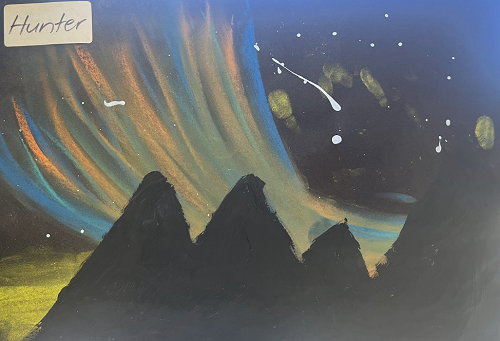
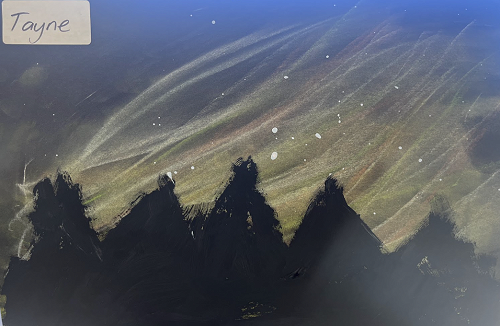
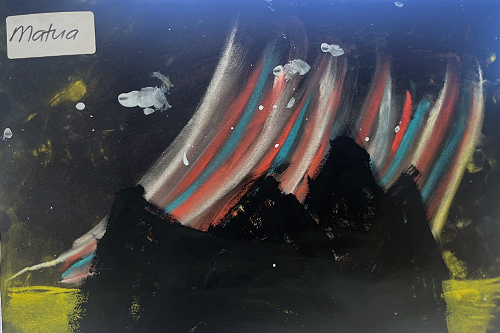
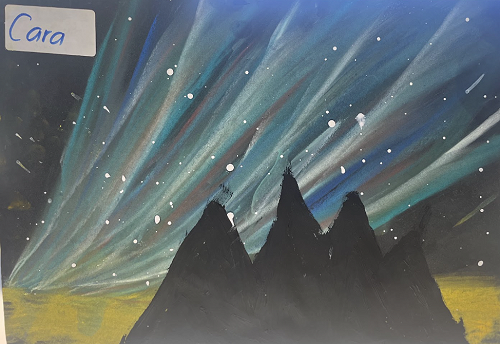
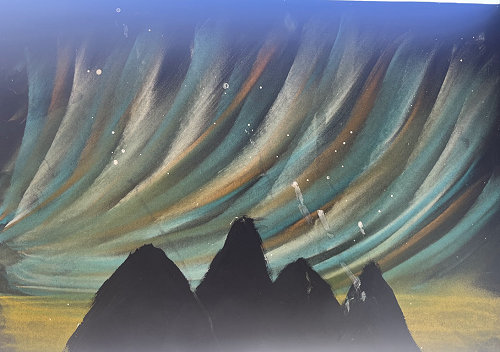
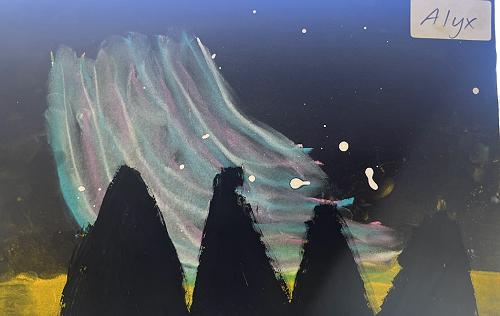
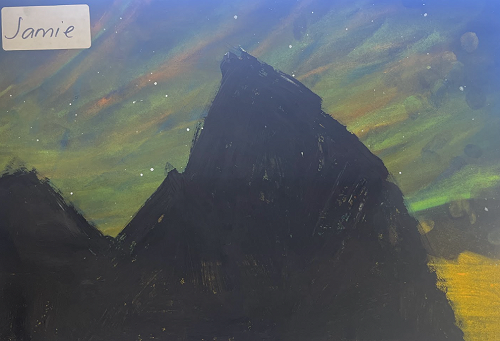
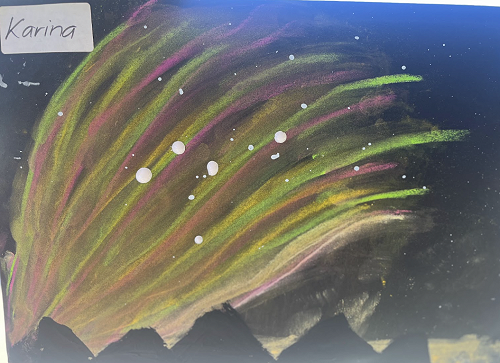
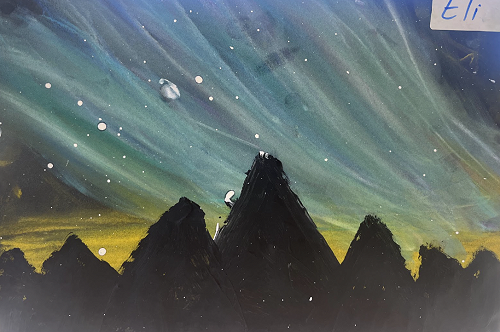
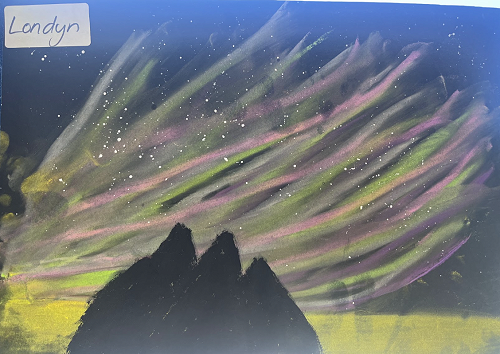
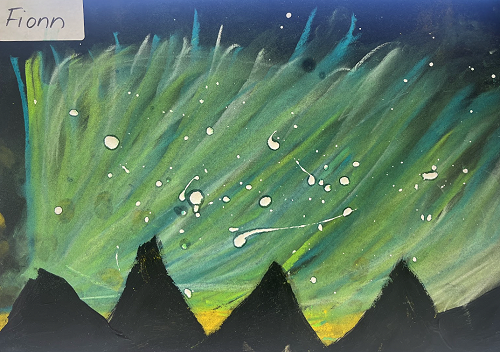
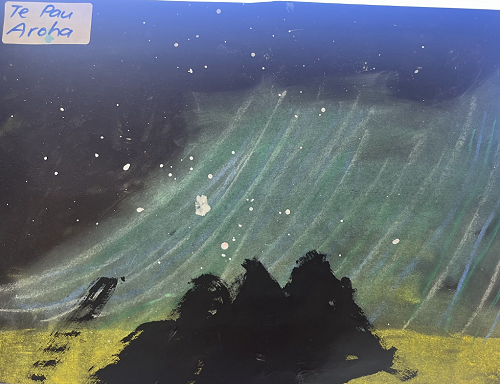
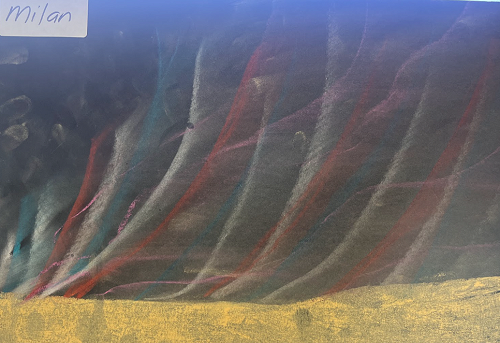
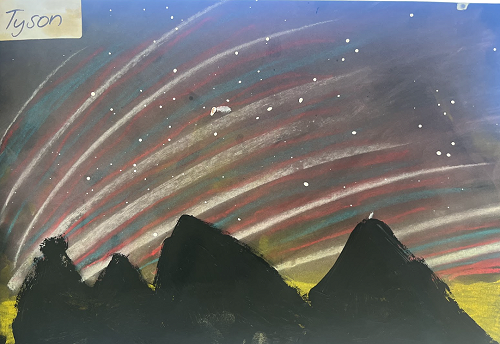
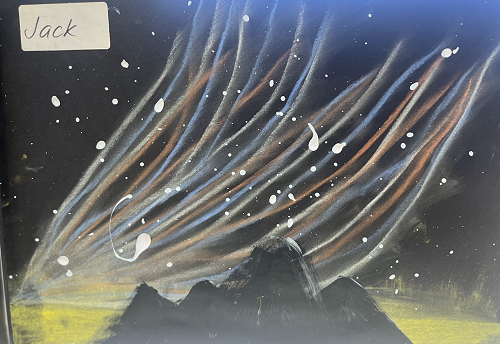
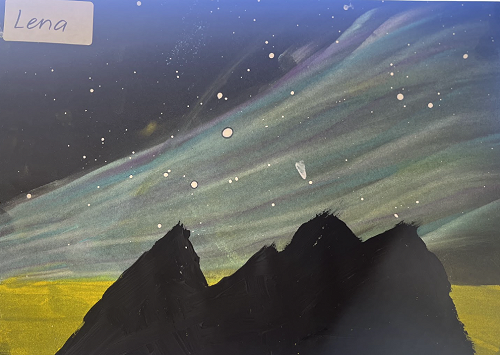
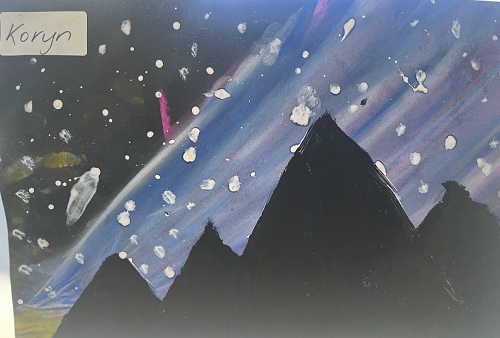
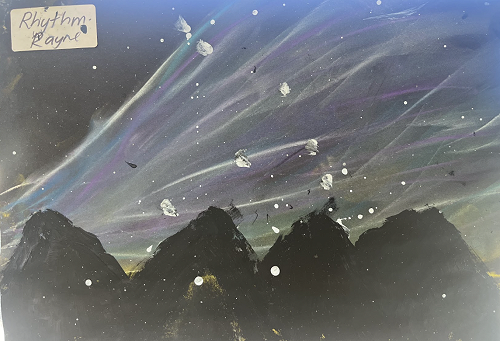
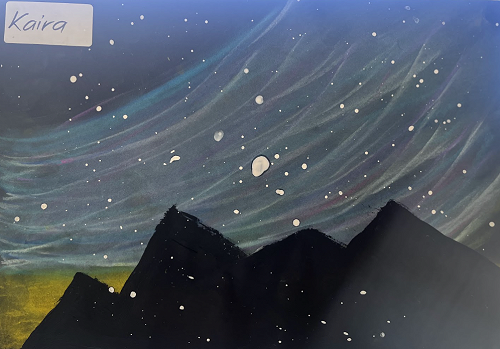
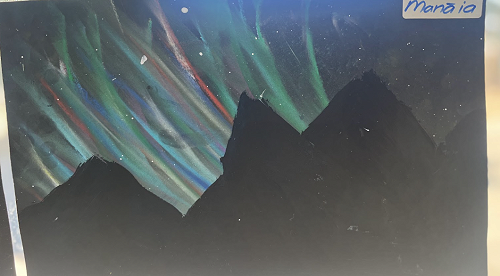
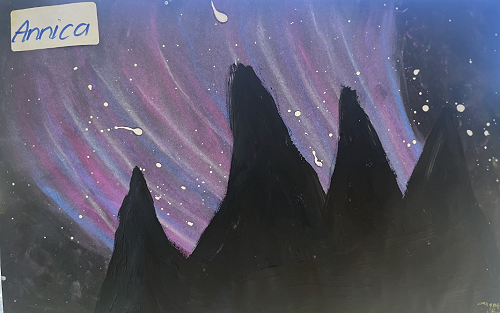
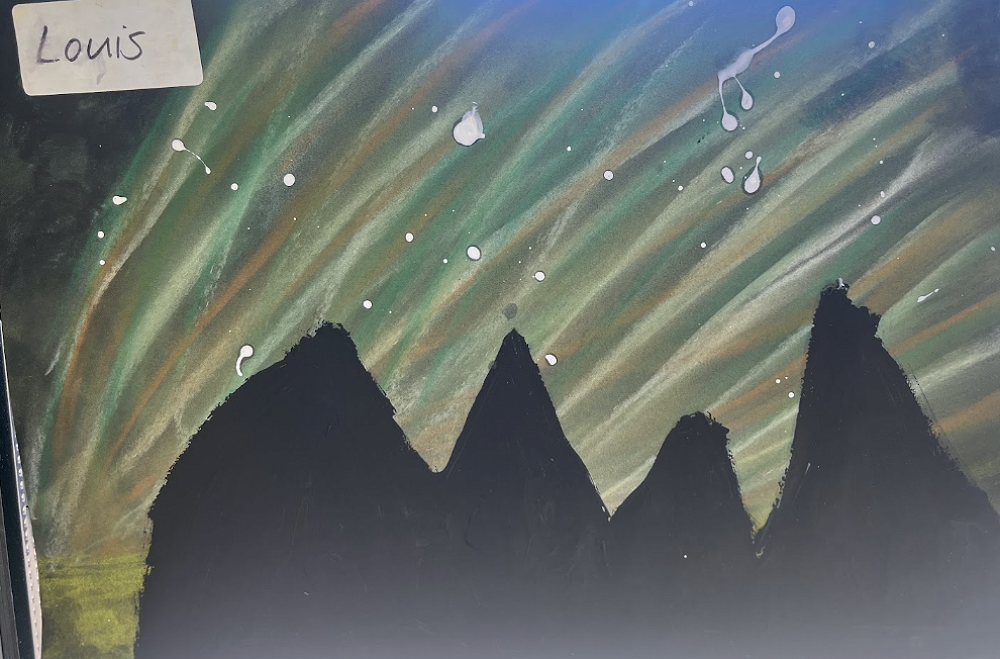
It was a great time for us to dive into and learn more about Pūrākau (A traditional story that is well known, which has layers of understanding. Some are stories about the Atua such as those pertaining to Māui. Some are stories portraying the origins of aspects of the natural world such as a rock, birds and rivers.) We used the oral traditions of a pūrākau to tell the Ngāi Tahu kōrero of Aoraki and his three brothers - Rakiroa, Rakirua and Rarakiroa and how they formed Kā Tiritiri o te Moana (The Southern Alps) and how their waka became - Te Waka o Aoraki (an original name of Te Waipounamu - the South Island). After exploring all the attributing Atua and their connections to one another we decided on a visual art piece to depict the event. We chose the moment when the four brothers huddled together on top of the waka and became Kā Tiritiri o te Moana.
We spoke also about the depth of a place name and that Māori purposefully named maunga (mountain), awa (river), roto (lake), moana (ocean) and other locations based on Atua, people, events and descriptions of the area. A great website to learn more about Ngāi Tahu place names is Kahurumau.co.nz, here you can use the Atlas to discover the origin of many places in Te Waipounamu.
Gallery