Piwakawakas
Recently the Piwakawaka Homeroom children researched facts about fantails.
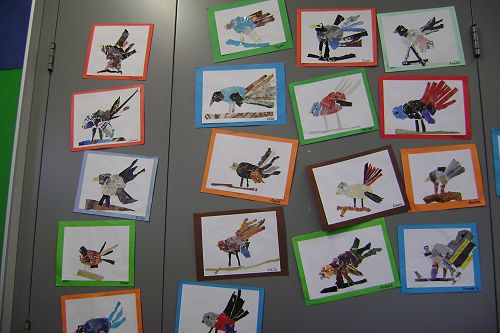
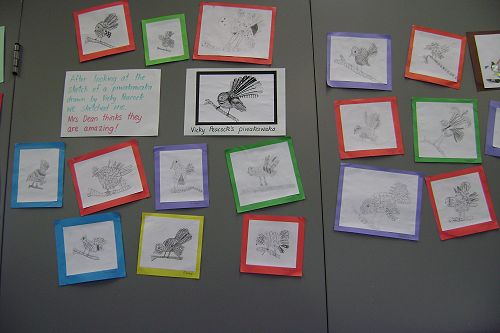
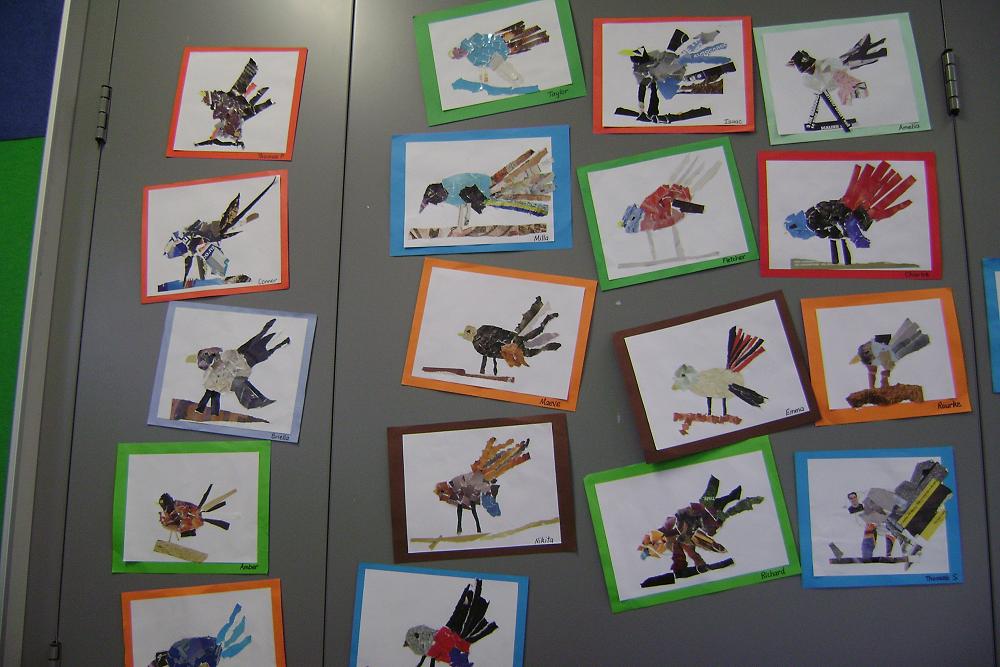
The children in Piwakawaka homeroom sketched a fantail and also created collage pictures of one by tearing up magazine pages. They researched facts about fantails in writing time and then presented them in their assembly in Week 4. Here are some facts they learnt:
- Fantails are native to New Zealand and piwakawaka is the Maori word for fantail. Emma
2. They are also native to Australia and the Pacific. Charlie
3. Fantails live in the bush and sometimes they come into our gardens. Lily
4. If you walk In the bush fantails flit around hoping that you have disturbed little bugs and insects. Ruby
5. Fantails like to eat moths, insects, and spiders. Hema
6. Fantails poop when they are scared. Milla
7. Their tail looks like a fan. Waka
8. Their tails are bigger than their body. Kristal
9. Fantails use their tails to turn quickly. Kate
10. Fantails bones are hollow and that makes them light enough to fly. Briella
11. Most fantails are brown but twenty percent of them are black. Amber
12. The Maoris think that if you see a black fantail someone is going to die. Thomas P
13. Fantails make their round nests out of grass, weeds, moss, straw, hair and wool. Maeve
14. Fantails lay 2-4 eggs in a clutch. Amelia
15. The fantail’s eggs are white with brown spots. Olly
16. Piwakawaka chicks are fed about every 10 minutes which is about 100 meals a day. Richard
17. The inside of the chicks’ beaks are yellow so their parents can easily see where to drop in the food. Connor
18. Rats are one of piwakawaka’s enemies because they eat the eggs. Rourke
19. Cats and stoats are also fantails’ predators. Farai
Gallery