As a City for Peace
Words + Photos: Olive Lawson
In a quiet corner of the Christchurch Botanic Gardens, there is a peace bell, surrounded by trees. This massive bell, weighing 365 kilograms, has the words "World Peace Bell" inscribed on it in English and Japanese. Behind are Japanese maple trees: trees which symbolise peace, serenity and tolerance. A Camphor tree grown from seed that survived atomic bombing also flourishes. Paving stones, engraved with the word "Peace" in 40 languages, surround the bell.
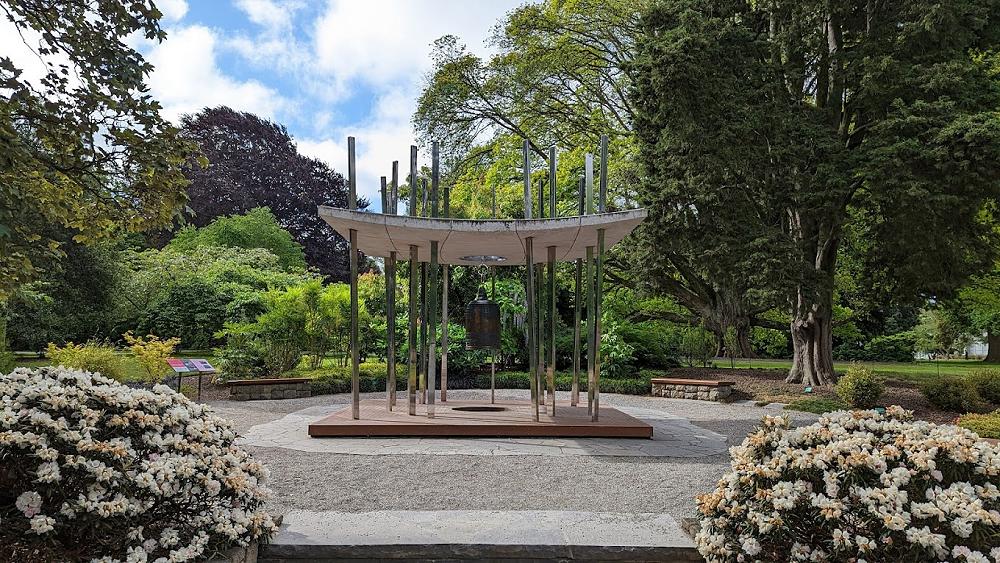
This bell was a gift to Christchurch from Japan. Following the dropping of atomic bombs on Hiroshima and Nagasaki in World War II, Peace Bells, like this one, were gifted, from Japan, to cities all over the world, with the goal of promoting world peace.
Christchurch, known as the first New Zealand City for Peace since 2002, was chosen to receive a peace bell. The Christchurch peace bell is rung on special occasions, such as the earthquake memorial service, the mosque shooting remembrance day, and holocaust survivors day.
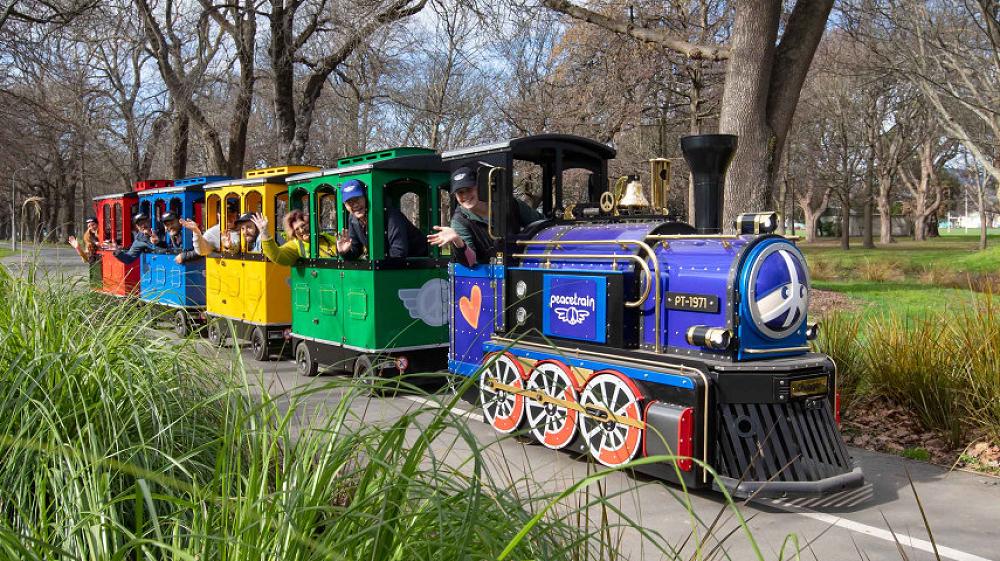
Not far away, in South Hagley Park, there is another tangible peace symbol. A miniature train offers free rides, starting at the Multicultural Recreation and Community Centre carpark. Between 10.00am and 4.00pm on the first and third Sunday of each month (except the winter months of June, July and August) this train chugs happily around the gardens. The train, named "Peace Train," was gifted to the city by singer Yusuf Islam, also known as Cat Stevens. Cat Stevens promotes world peace and wrote the song "Peace Train", which he sang at the Mosque Remembrance Service in 2019. Then he donated the peace train. At the launch, Mayor Lianne Dalzeil said, "He wanted to put a smile on young people's faces and inspire them to dream of a better world and good things to come."
Christchurch, the garden city of Aotearoa, is a city of trees, flowers, green grass, bird song, fresh air, blue skies, rivers, and mountains. While we walk freely in beauty, unspeakable horrors in the name of war are happening around the world. Gaza, Ukraine, Sudan…
We all want peace. Inner peace: a peaceful heart, a peaceful mind, a peaceful society, and no war. Violence brings more violence. War brings more war.
On 16 July 2024, Pope Francis spoke about the way to peace. He said:
"The world must have a culture of encounter and a culture of dialogue. This is the only way to peace."
Encounter: meeting together. Dialogue: speaking to one another.
Every church service is an encounter. Services are an opportunity to speak to one another, communicate, learn a little about each other; every kind word spoken, every friendly gesture made, every bit of hospitality offered, helps "break down the walls that divide." When walls go up, suspicion breeds, division brings distrust, and hatred begins to fester.
After church worship, a cup of tea is usually provided. This is an encounter. It provides a chance for dialogue. Speak to one another.
Migrants to New Zealand may find this hard. English is not their first language. They may feel cold, homesick, struggling to find work and pay bills. They may be worried that their pronunciation is not good enough, or perhaps they will use the wrong word. They may be thinking that the person they are speaking to might ignore or laugh at them.
Speak to one another! If we know and understand one another this is a way to peace. And New Zealanders when you meet a migrant, smile and say a few words. Every interaction counts for a newcomer. If we can all do this, hopefully, walls will never go up and we will live peacefully here together.
Jesus Christ is the Prince of Peace. Blessed are the peacemakers for they are the children of God.
Adapted from a homily given at the Multicultural Combined Service on Sunday 4 August, 2024 at St Barnabas Anglican Church, Fendalton Parish, Christchurch by Olive Lawson.