'Rebuild the cathedral, or rename our city'
This is an article written by Professor Te Maire Tau at the Ngāi Tahu Research Centre at UC, also published by The Press.
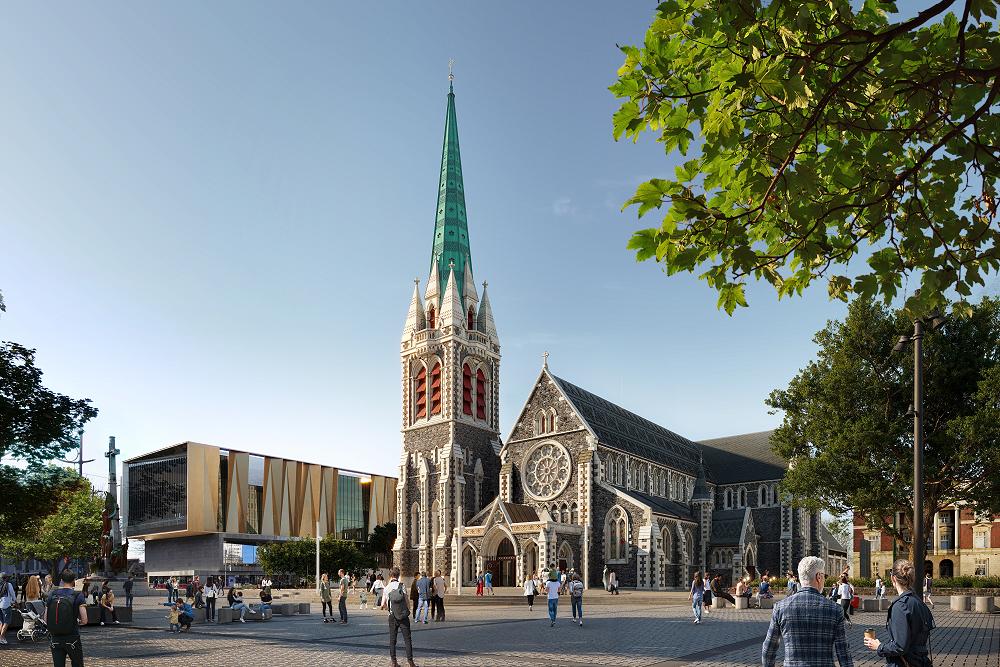
Christchurch is a cathedral city in the English tradition, with the Cathedral at the heart of its identity. It was deliberately founded by the Canterbury Association on this basis, drawing on customs that also underpin the common law—yet the depth of this history and culture is not always fully recognised or valued.
There is a striking contrast in how heritage is valued. If Ngāi Tahu could identify with certainty the precise departure point of Paikea or the Uruao waka, those sites would be honoured with reverence. Yet Pākehā New Zealanders possess detailed historical knowledge—the founding of the Canterbury Association, its members, and its purpose—but often fail to value it.
The name "Christchurch" itself derives from Christ Church College, Oxford, linking the city to a long intellectual tradition dating to Henry VIII. That institution produced figures who shaped the modern world. Even popular culture echoes this lineage—the Great Hall inspiring settings like Hogwarts.
Since the 1980s, however, the importance of the United Kingdom in New Zealand's identity has diminished. Politicians who should know better question the relevance of British history. Our Parliament is derived from Westminster, and the constitutional monarchy exists in part to protect minorities against majoritarian excess. Common law, grounded in English custom since Henry II, remains a foundational element of our system. These constitutional roots should not be lightly dismissed.
In July 1984, the body of Ngāi Tahu rangatira Riki Te Mairaki Taiaroa Ellison lay in Christchurch Cathedral. The Cathedral became, in effect, a marae, with over a thousand people attending before his return to Rehua Marae and Taumutu. The service, led by Manu Bennett and attended by civic and church leaders, reflected a time when Cathedral Square was the civic heart of Christchurch.
This period also marked a wider renewal of Ngāi Tahu identity. The Ngāi Tahu claim was filed in 1986, followed by the Te Māori exhibition and Waitangi Tribunal sittings at Tuahiwi. Yet, as Ngāi Tahu reasserted its identity, New Zealanders began questioning their own. That reflection descended into cultural amnesia.
Ngāi Tahu have spent decades rebuilding our language and history, often facing criticism from those unfamiliar with their own. A proposal to legislate for English simply reflects reality. What Ngāi Tahu understand is that language gains meaning from custom and history. It is an oddity that the recent standout publications are Te Haumiata Mason’s translations of Romeo and Juliet, Macbeth, and Troilus and Cressida, all of which reflects how our leaders have always seen our relationships with the wider community.
The foremost Ngāi Tahu cultural leader of the early twentieth century was Te Aritaua Pitama, adopted by the Reverend Charles Fraer and educated at Christ's College. Te Aritaua was renowned for mastery of both Māori and English. In his 1940 memoirs, he described learning tribal traditions from Taare Tikao and Hoani Matiu, while his elders were equally versed in Milton, Shakespeare, Donne, and Burns. His grounding in classical texts, including Horace, shaped his translations and thinking.
His greatest influence was his mother. When he named the Ngāti Ōtautahi Club, she rebuked him: "Kua moumoutia e koe tō tīpuna"—how cheaply you treat your ancestor." The point endures. Ōtautahi was a specific mahinga kai site, not the city itself, which our ancestors also called Puari, Putaringa-motu, and Karaitiana (Christchurch).
Her warning remains relevant. Our joint heritage must be valued. Efforts to properly name and protect local history—from stadium naming to post-earthquake recovery—have too often been neglected. The original name for Parekiore Recreation Sports Centre was Queen Elizabeth II. It was declined. This cultural amnesia must stop.
If Christchurch and its cathedral is not valued, then find a new name – but our ancestors are not to be squandered. Te Aritaua Pitama and Riki Te Mairaki Ellison were our leaders because they understood both cultures and were part of it. The Cathedral needs to be rebuilt. It is the pūtake (source) of Christchurch.
Te Maire Tau is professor with the Ngāi Tahu Research Centre at the University of Canterbury, a historian and the Ūpoko of Ngāi Tūāhuriri.