Getting the job done: touring Europe
Dunedin composer, producer and performer, Dudley Benson, toured Europe over August to October, following up his Zealandia album release last year. Jo Register posed him some questions about the highs, lows and lessons learned.
What was your favourite moment on your European tour and was there also an ‘oh, no’ moment, too?
My final show of the tour was in Berlin, and that was a special one. I was never sure what my audiences would be like or how they’d respond to my show. Each night, it wasn’t ‘til I’d finish my first song – which was pretty challenging for an audience – that I’d get a sense of what they thought and the energy in the room. The Berlin audience screamed and wouldn’t stop, so I knew then I could relax and this would be a great night.
There were many times on tour that were tough, and I think all touring artists experience huge unexpected challenges. For me it was having to let go of my booking agent mid-tour. After playing some of the shows he’d booked, I realised that we were on such different pages about what the right performance space and audience were for my show. It was the only thing to be done, I learnt a lot from it, and the tour got better once I took control of it myself.
You had shows in the UK, Bulgaria and Germany. Were they places you simply wanted to go/where your buddies are/where the audiences lie – i.e. what set your tour itinerary?
I played wherever an offer felt good. Mostly I performed in London, where I was based for eight weeks. But when the opportunity came through to play in Eastern Europe, I was super keen to see a part of the world I’d never been to. I had a booking agent based in London who put feelers out everywhere and building up an itinerary that way. But if I were to do this all over again I’d probably skip that cog in the system and instead focus on booking just one or two amazing opportunities, and work on getting audiences just to those two. But, I’m not a commercially-oriented artist and many people would probably advise against that.
What feedback did you get from European audiences about the stances and ideas expressed in your music?
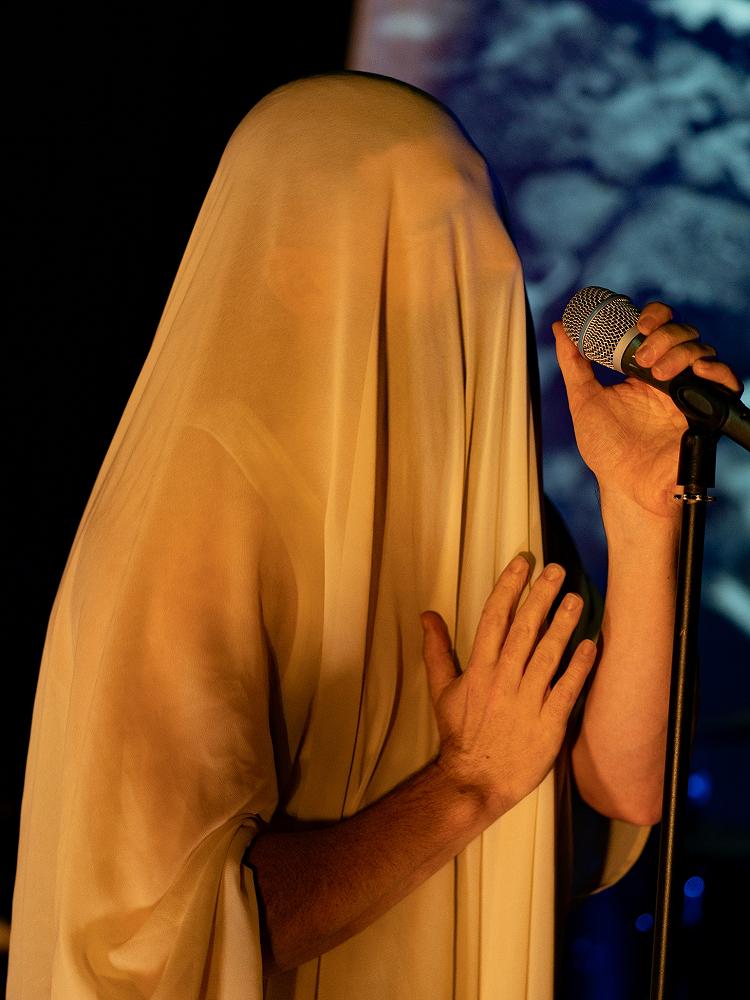
My show is about the death of everything around us. The challenge for me is to talk about these things but in a way that’s uplifting – not hammering people over the head with doom. I can’t cope with art like that. So, though my songs are very specific to my feelings about Aotearoa, and the challenges and environment unique to us, Europeans absolutely fell into the show. I think this is because everyone is in the same boat: we all face death in one way or another, whether it be the people in our lives or the collapsing natural world. So, if I was performing a stone ritual as a ghost, or singing about baby birds in te reo, the audiences got it. When I played a garden party in Sofia, Bulgaria, the taonga pūoro recordings in my show set off about three neighbourhood dogs who wouldn’t stop barking, so they got it too.
What was the best lesson you’ve learned about tour promotion?
Tour promotion depends on the resources you have, and whether you’ve already toured in that region or not. What I’ve learnt is that the best way to get people to a show is through personal invitation. Write to people individually, on email. It’s so personal, and starts a conversation. Even if you know only three people in that place, get them and their friends there. Then, the next time you play in that place, there will be double the number of people.
I’d also say that the best way to approach all this is to have very low expectations. Know that there will be shows where you play to very few people, and others a few more. The internal gems I took away from touring aren’t so much from having incredibly well-attended shows or getting interviews in press – that’s all kind of ephemeral and meaningless. To me it’s more about the friendships and personal realisations you get from doing it. I came away a different person and a stronger artist from touring.
What was your favourite support act/performer line up on a show night during the tour and why?
Once I’d taken over my own tour itinerary, I got to curate how the night would run. In Berlin I lined up with Dunedin musician Danny Brady (Death and The Maiden) and his co-performer Charlie OPI, who were based in Berlin at the time. They performed a phenomenal electronic set which felt like Enya meets birdsong meets industrial techno. The whole room was mesmerised and I was so proud to be a part of it.
Briefly, has having videos made of some of your Zealandia album songs helped you out and if so how?
Making the videos for Zealandia has probably been my favourite part of the whole project. I think because I’m a musician and not a filmmaker, there’s less pressure around making the videos – it feels like I can try things out and it doesn’t matter so much if they don’t work. So, it’s fun being an untrained director and editor and to learn along the way. The videos also offer me an opportunity to collaborate with visual artists and performers I love.
I’ve also found that because Zealandia is a very dense and layered record, creating visuals has made it easier for some people to step into the songs. It’s like I have one more chance to open a door for people. I’m working on the sixth and final video at the moment.
What’s next for you musically?
In 2020 I’m expanding the European show to include a choir, and performing it in Dunedin. So many people here helped me make it and I want to share it with them in its final form. I’m halfway through writing my next album too, so I’ll keep chipping away at that. It’s a very different record to everything I’ve made so far.
And, I have to ask… why the white singlets?
Ha, no problem. I decided to wear singlets throughout the Zealandia project - on the album cover, many of the videos, and on tour - because I feel like they're symbols of New Zealand masculinity, which I'm interested in melting down. They also represent this idealised rural NZ idea of 'getting the job done', which I think is interesting, and certainly I'm wanting to get the job done. The singlet became the uniform of the project.