“Polyfest is a lifestyle”
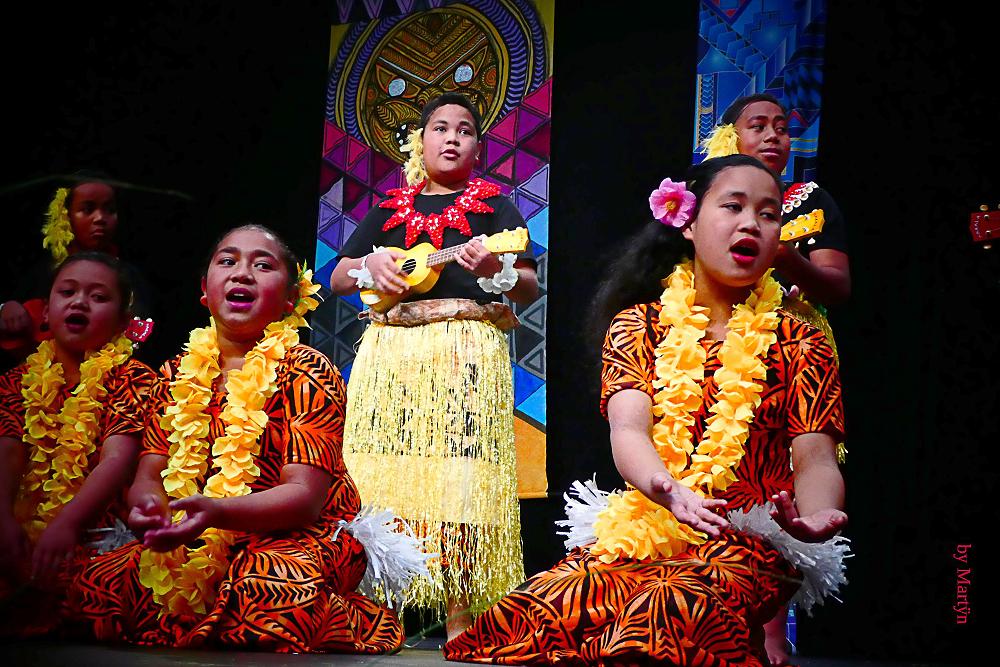
Otago Polyfest’s 30th year is expected to draw in tauira, kaiako, whānau and community in their thousands to perform, guide, tutor, support and cheer from 11-15 September.
Angelina Kiore and Pip Laufiso are perfect examples of those who tend this hive of community energy. Their many years as co-chairs of Otago Polyfest’s organising Te Mana Āhua Ake Trust stemmed from their own whānau taking part.
“We can speak as mums, nannies, supporters and Trustees,” Angelina says. “We have watched it grow for over 20 years.”
Paving the way were teachers Alva Kapa and Margaret Kennedy at George Street Normal School and Buster Walden, Kiwa and Yvonne Brouwer at Teachers’ College. Establishing the Polynesian Cultural Group at Dunedin North Intermediate School in 1989 was made possible by the contribution from the families and members of the wider community like Grant Leoni, Emma and Rouru Henry and Teariki Nooroa.
According to former DNI teacher, Carol Clarkson, the first Polynesian Cultural Festival came about in 1993 when she and other local educators including Sue Harlow, Rosalind Hinds, Ani Denham, Gael Trevathan, Sandy Copeland, Ripeka Walden, Pesamino Tili and Lindsay Dunlop met to arrange a day of performance at the Dunedin College of Education auditorium.
So began an uninterrupted run of annual Otago Polyfests, moving venues as it grew, first to the Regent Theatre and then in 2008 to the Edgar Centre’s MoreFM Arena.
Pip says, “The last move meant we could open the event up to other regions with room for the wider community to spend time and watch. Now, we have an all-inclusive, accessible environment with people of all ages and abilities invited to attend, from retirement villages to tertiary groups all welcomed.”
Previous events have seen up to 160 groups perform over five days. Including the on-stage teacher, tutor and parental support, some 8600 people have performed across the week, with over 10,000 through the doors.
COVID 19 forced the event’s only cancellation in 2020. But a far more positive milestone occurred in 2021, when the festival moved to a week-long, live-streamed, online-only event.
Angelina says, “We adapted to the times and used different types of tech. Pip talks about how uniforms changed and performers became more innovative when they went live online.”
Pip adds, “Now, the event engages family members from all over the country and overseas, as well as a live audience. People go back and rewatch it on YouTube.”
Both emphasise the rising quality of Te Reo and Pacific language in performances, noting a move away from backing tracks and more use of live instruments.
Angelina says, “We see people who were performers as students now involved as parents or tutors. We have teachers who were there in 1993 still leading schools, such as Trinity College’s Pesamino Tili.
“That’s probably why we say it’s a lifestyle.”
Otago Polyfest faces the same financial challenges as most community events, with funding applications taking up energy year-round. It has been a recipient of funding from the Creative NZ Pasifika Festivals Initiative fund, DCC Major Community Events, The Lion Foundation and Lottery Grants and others.
Pip says, “Capability funding from the DCC and Otago Community Trust gave us opportunities to work with local strategic consultants to evaluate our processes and really build and strengthen our internal strategic planning and capability.”
Angelina concludes, “The [festival] brings people together to continually grow and learn, to watch and provide peer support. We have all evolved and got better at what we do – we know more about ourselves and about each other.”