

Welcome to Course Selection for 2025
Ko Hine-Titama koe nānā i puta ki te whai ao ki te ao mārama | Educating and empowering young women to achieve now and in the future.
Subject choice is an important process in the school year. You need to consider a number of factors and talk with as many people as you can about your pathways and subject choices for 2025.
CHOOSING A COURSE
Choose subjects or a course that:
you are good at
you enjoy and are likely to do well in
will allow you to get the qualifications you need
will lead you to the career you have in mind
provides a pathway supporting future plans
will be broad enough to allow flexibility if you change your mind in the future
HOW MANY SUBJECTS DO I STUDY?
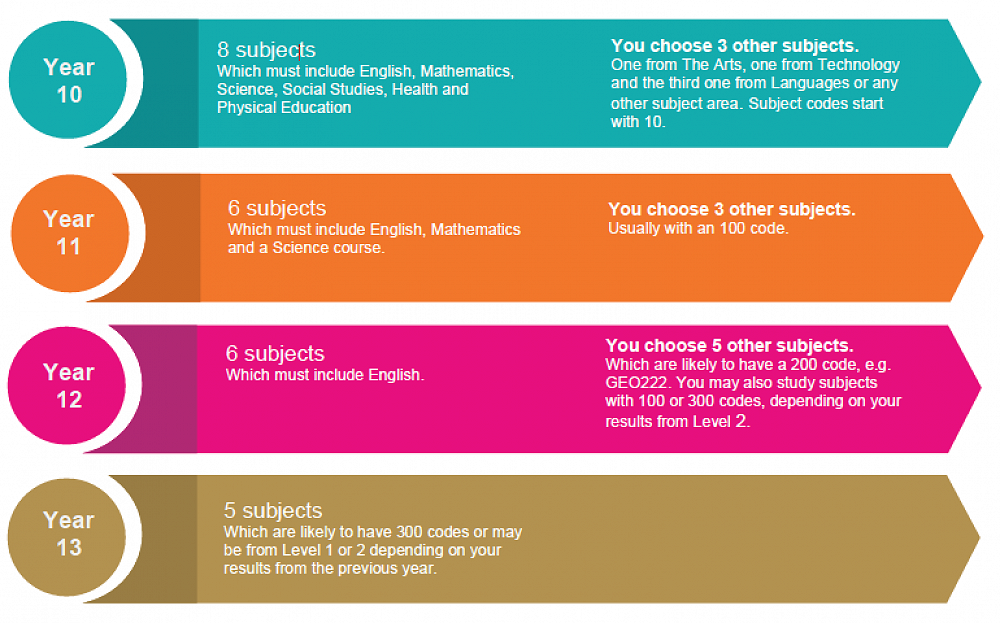
QUALIFICATIONS
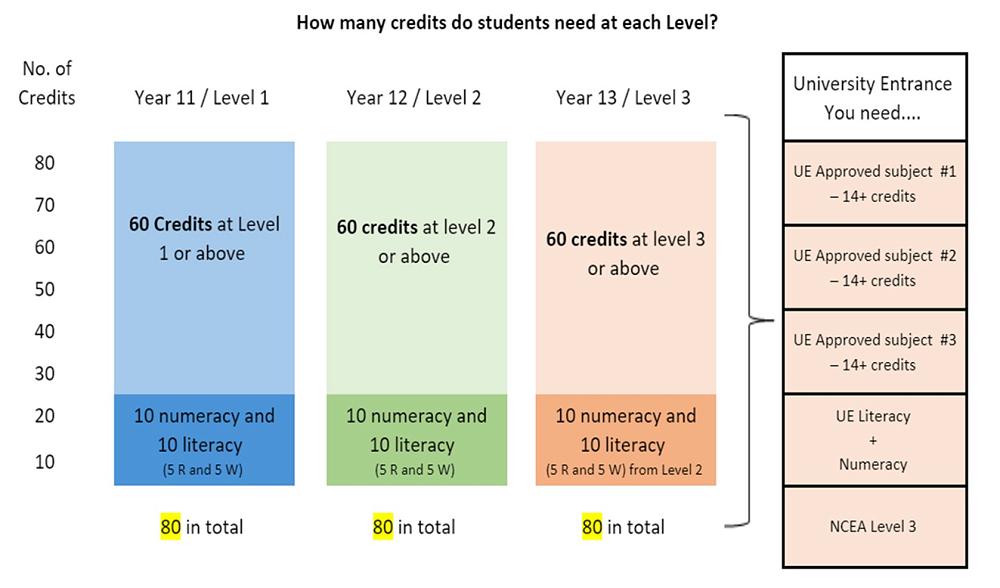
All learning leads towards gaining a National Certificate of Educational Achievement (NCEA). Subjects in Year 9 and 10 build the foundations for learning in Year 11 and success in gaining qualifications. All subjects at Level 1, 2 and 3 in the senior school are assessed against achievement standards which are worth credits.
NCEA KEY INFORMATION
Over the next few years, NCEA will transition from its current form into a new qualification.
In 2025 the new NCEA level 1 standards will be taught. NCEA Level 1 becomes a 60 credit qualification.
Level 2 and Level 3 standards remain the same.
In 2028 the new NCEA level 2 standards will be taught.
In 2029 the new NCEA level 3 standards will be taught.
LITERACY AND NUMERACY CO-REQUISITE
The Literacy and Numeracy | Te Reo Matatini me te Pāngarau Co-requisite has become a mandatory part of NCEA from 2024. Learners will need to complete the literacy and numeracy co-requisite requirements to be awarded an NCEA.
Note that in 2024 and 2025, to help with this transition, ākonga can also achieve numeracy and literacy through a list of additional approved standards. These standards can be viewed on the NCEA website.
ENDORSEMENTS
Course and certificate endorsement requirements remain the same. Students will be required to gain 14 or more credits in a course at Achieved, Merit or Excellence (including at least 3 external and 3 internal credits) to gain a course endorsement.
Certificate endorsement continues to require 50 or more credits at Merit or Excellence level.
UNIVERSITY ENTRANCE (UE) REQUIREMENTS
This remains unchanged for 2024.
NCEA Level 3 Certificate
14 credits in each of the 3 subjects from the list of approved subjects
UE numeracy - 10 numeracy credits at level 1 or higher
UE literacy - 10 literacy credits at level 2 (5 reading, 5 writing). These can be gained from specific standards in a number of different subjects.
ACADEMIC PROGRESSION
It is recommended that you need to achieve a complete NCEA certificate at each level in order to take a full programme at the next level.
Year 12 students who have not achieved NCEA Level 1 may take a mixture of Level 2 and Level 1 subjects.
Year 13 students who have not achieved NCEA Level 2 should not take 5 level 3 subjects. Students could do a multi-level programme of learning, if this best suited your pathway.
Some courses have recommended learning. Please consider this when you choose your courses.
At Level 3, it is recommended that you have prior learning for some subjects. If you have any queries or concerns about entry to a subject you should talk to your Ako teacher.
If you wish to study subjects across levels please speak to your kaitiaki.
CAREER EDUCATION
Career Education aims at developing career competencies appropriate for each level. These include self- awareness, exploring opportunities, deciding and acting, skills for job search and the world of work.
All students participate in a range of Career Development activities during their Ako time using "My Mahi".
Year 13 students have an individual interview to assist them in planning their future. There is also a range of career presentations and seminars for Year 13 students throughout the year.
CAREER DEVELOPMENT OPPORTUNITIES
All students can make an appointment for a career interview at any time.
The department aims to "touch base" with students to assist their pathway planning.
All students have access to career resources.
A staff member is available each lunchtime to help students.
Any student in the senior school may request a work experience of up to 5 days.
A range of needs-based STAR courses are available to provide hands on experience and assist with career decision making.
The Gateway Programme is available to Year 12 and 13 students. This assists students to gain vocational credits while undertaking extended work experience in a career that they are considering pursuing.
There is an opportunity for Year 12 and 13 students to dual enroll to study 1 or 2 days per week at a Trades Academy.
A job search programme is available to Year 12 and 13 students who are in transition from school.
Lunchtime talks on a range of careers and tertiary education opportunities are held throughout the year.
For further information about Career Education or support, please email Mrs Armstrong at rarmstrong@avonside.school.nz
VOCATIONAL PATHWAYS
Achieving success in a Vocational Pathway means that as a student you have developed skills and knowledge in areas that employers value and are relevant to their industries.
If you are aiming for a career in a particular sector, the Vocational Pathways tools can help you to see which subjects and standards you should do to get to where you want to go. If you are undecided on a career, the pathways can help you see how your strengths and interests match up to an amazing range of jobs and study options available.
To get started visit: The 'Profile builder' http://youthguarantee.net.nzwhich provides information about jobs and study options. The 'Occupation Outlook' shows where the real job opportunities exist.
Below are the different vocational pathways. Throughout the booklet, each Learning Area will outline which VP they cater to within their subjects.

AVONSIDE GIRLS' HIGH SCHOOL CURRICULUM 2025
Open the file attached to see the AGHS Curriculum 2025. Use this to help plan your pathway through our kura.