RFNZJA AGM & Conference Report
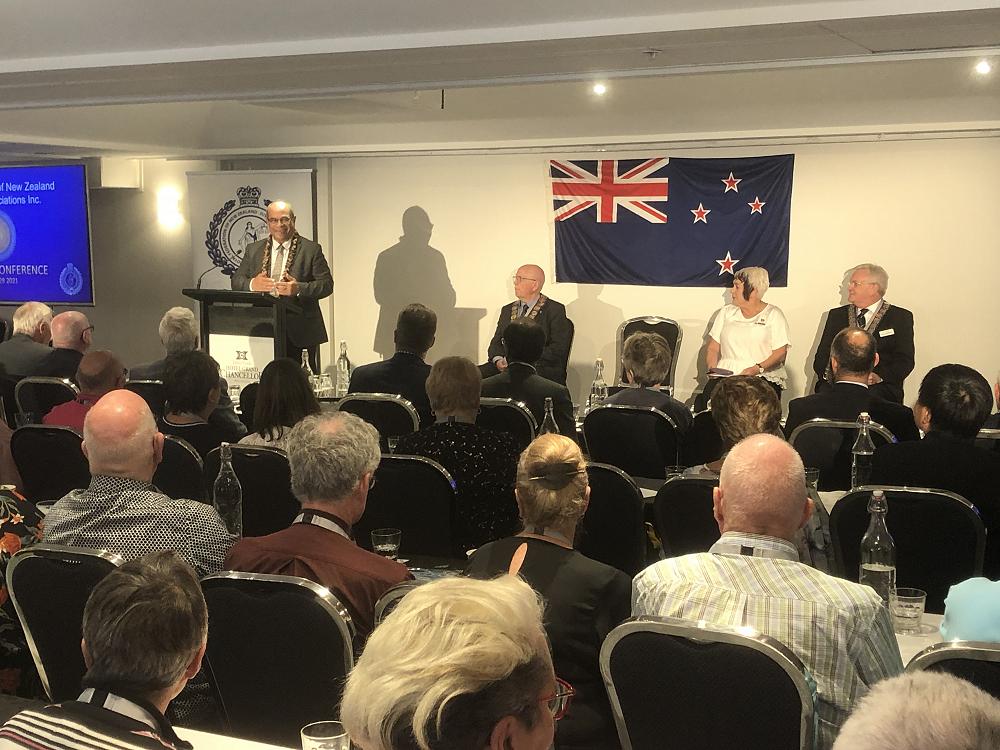
The Hon Aupito William Sio, Associate Minister of Justice thanked Justices of the Peace for the work they do...
The AGM received the Boards Annual Report, and amongst other matters discusses all Notices of Motion, Elects members of the Board and selects future conference venues.
This was held over 4 sessions but will be compacted into one report.
Garry Nicholls took over the role of President in May 2020 following the resignation of the incumbent. He was re-elected as President unopposed.
Gary advised the meeting that there is now an acceptance with the MOJ that we are serious about accreditation.
Peter Osborne was elected Vice President.
The Regional representatives are Northland Nigel Tait, Auckland Terry Holding, Central Laurie Gabities and Southern Graeme Barber.
The Financial Statements were adopted.
Remits that were passed were:
- Auckland – “That RFNZJA approach the Ministry of Justice with a request to have the official wording of affidavits and declarations in te reo as well as English.”
- Taranaki – “That the RFNZJA Board review the education and training policy and procedure with a view to increasing the allowances and reimbursable expenses.”
- Northland – “That the RFNZJA Board reviews the current Federal model of Association membership and consults member associations as part of the review, with an initial report to be provided to the Royal Federation Annual General Meeting in 2022.”
- Northland – “That Royal Federation board be empowered to use electronic communications directly to all members of associations, without pre-approval from associations, and where the Board believes that such communication is being made in the best interests of the members of the public. Such communications are to be approved by at least two Board members prior to sending.”
- Northland - “That the FRNZJA Board review the format and appropriateness of Regional Conferences with regard to whether they deliver outcomes which reflect the needs of associations and Justices.”
Notice of Motion 1 - changing Section E3 to change the date for the calling of nominations from 1 August to 1 July, closing off 31 July and Board nominations for Regional Representatives to be delivered to the National Manager by 1 August. This was moved by the Canterbury JPA.
Notice of Motion 2 -Section F11 and F12 of the RFNZJA amended to enable the Board to provide their comments to and Remits or Notices of Motion.
The 2022 Conference will be in Taranaki. The 2023 Conference will be in Southland.
General Business
It was noted that the Royal Federation adopted the Principles of the Treaty of Waitangi in 2016 and was given a Maori name in 2017.
The budget for 2021/22 was approved. It was noted that 84% of the funding for the Royal Federation is from the MOJ.
There are 230 Service Desks around the country.
Conference
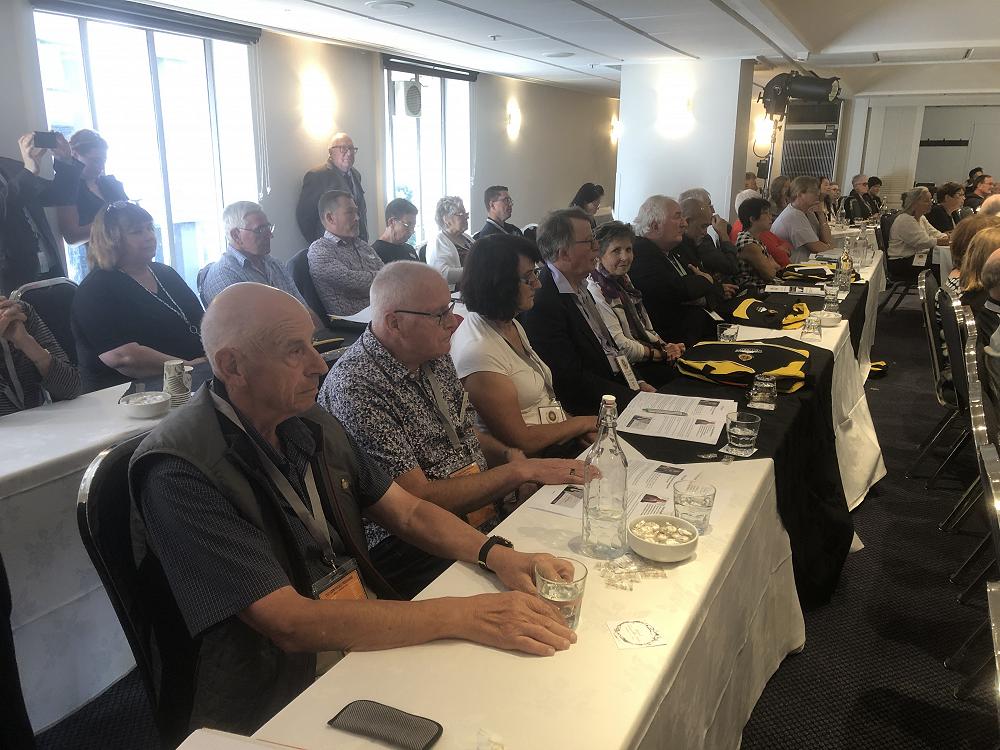
This years conference contained 5 presentations and 3 workshops with attendees allocated 2 workshops they could attend.
In the opening ceremony officiated over by the Hon Aupito William Sio, Associate Minister of Justice thanked Justices of the Peace for the work they do in the community.
Rajesh Chhana, the Deputy Secretary, Policy, Ministry of Justice, explained that he presides over 150 separate pieces of legislation and any changes the Government proposes must be either incorporated into the various existing legislation or brought out as a new piece of legislation.
He commented that if New Zealand doesn’t comply with international money laundering policies, then we would be unable to import or export money from NZ to other countries.
Chief District Court Judge, Heemi Taumaunu, explained that in 2020, 13 new Judicial JPs were approved. There are 25 going through the course this year.
New Zealand has 180 permanent Judges plus 40 acting Judges, 18 Community Magistrates and 220 Judicial JP’s who work in 58 courthouses.
He thanked the Judicial JPs who stepped back into the role after the lockdown. He reiterated the compulsory retirement age for Judicial JPs as 75 years.
He outlined a new “Te Ao Mārama” model of justice that starts in Hamilton this year. This will enhance access to Justice in NZ. Some people come to court and feel unseen and unheard. We should have justice for all regardless of ethnicity. Things will look and feel different under this new system but will still provide justice for all. The new system will include plain language, better court procedures and will better identify the needs of those who come to court. The focus will be on reparation and restoration. Everyone must be treated the same – they must be heard and understood and have meaningful engagement.
Tahir Mawaz, JP, President of the International Muslim Association of NZ, advised we need to work on diversity. He advised that in the next 10-15 years there will be more Asians than Pakeha in New Zealand. We should not need to have an anger event like the shooting in NZ.
Workshops
“Getting to Yes” Presented by Virginia Goldblatt, MNZM, MA (Hons), DipBusStuds (Dispute Resolution), FAMINZ (Med), MlnstDNZ
This interactive workshop suggested we take responsibility for disputes and conflict as well as the outcome. Put simply, through behaviour examples provided by participants, Virginia suggested we must first ask what do we want to resolve the dispute or conflict? We can’t move forward if we play the blame game. Dispute or Conflict escalation and suppression were described as being as bad as each other so we must be centred (prepared, thoughtful and engaged) in taking responsibility for the conflict as well as the solution. The importance of having empathy as well as honesty was explained. Empathy without honesty was described as ‘sentimentality’ and honesty without empathy as ‘brutality’. Striving for a position in the middle somewhere was recommended.
We were advised to deal with ourselves first before dealing with others. Good strategies demonstrated by Virginia were to relax from a tight position and inhale a full lung of air before acting and take time to think about the contents of an email before sending it.
‘Buy in’ at the end is achieved by getting ‘put in’ at the beginning. We must move past any positional behaviour – allegations, blame, grievances, past issues, and winning and losing – if we are to move forward. ‘Getting to YES ‘is all about ‘Getting past NO’. With the issues clarified Virginia suggested we keep exploring options and use the nudge theory to make process while also ‘catching them' being good. Change the temperature in the room is best achieved by finding a small thing that is important to them and to know when to take a break or as Virginia called it - “going to the balcony’.
Virginia concluded by drawing a satisfaction triangle suggesting a balance, if possible, between the 3 sides which she labelled as procedural, affective (from a psycho/social perspective) and substantive was likely to the most satisfying to each parties perspective.
“Thinking Inclusively” Carol Buckley, JP
Our first impressions of people are made according to our unconscious bias. These are the opinions of people based on generalisations formed on our previous experiences. This can help us with decisions where our safety is at risk.
There are many types of bias including; age, ethnicity, cognitive ability, personal appearance, reliability, confidence, gender, social-economic group.
Affinity bias is where people are similar or know similar people.
Conformity bias is a “yes” person.
Beauty bias is where physical attributes are related to competence.
How do we control the influence of bias? Things include; be aware, ask the question (understand more), deal with the facts (take away emotion), have diversification on any panel, advertise widely for candidates, have a prescribed criterion (objective), use the DIM rule (Does It Matter), take your time.
Other strategies include: including people who are different (make them feel welcome), look at people as a person.
How does thinking inclusively help? This is not about compliance but should be about inclusion – making people feel empowered and valued.
The formal dinner on Saturday evening included an auction of donated goods with the proceeds going to the Women’s Refuge.
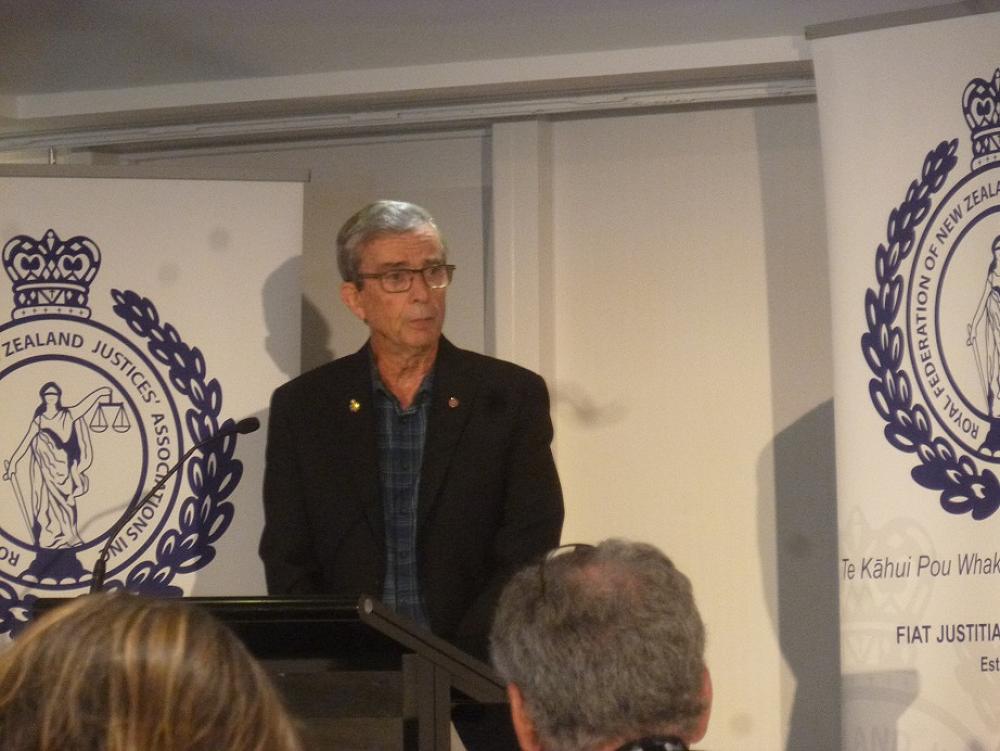
Sir Bruce Ferguson KNZM OBE AFC, gave an interesting talk on his experiences when he was tasked with bringing the Unknown Soldier back from France to NZ. This was extremely interesting, informative and emotional, and a personal highlight of the weekend.
Because of the new COVID restrictions announced during the Saturday night dinner, the Conference ended early and the Presidents and Registrars meetings planned for Sunday were unable to proceed.