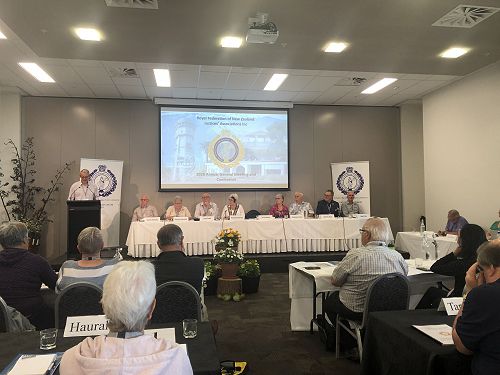
CJPA Report for 2020 RF AGM and Conference
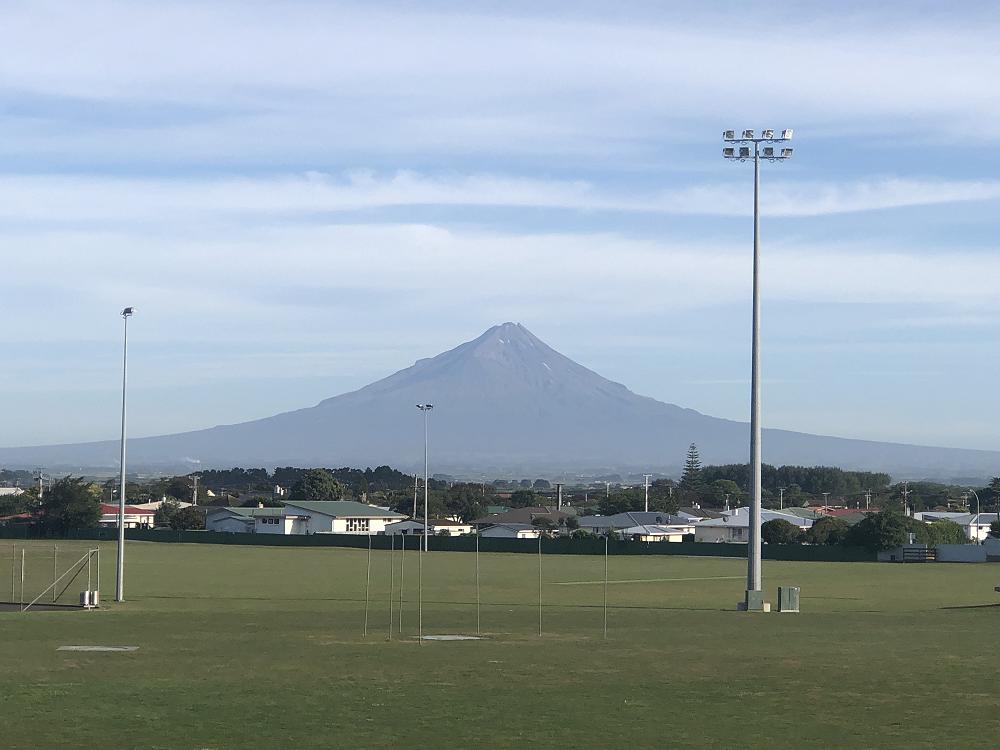
Held at Hawera 28 February – 1 March
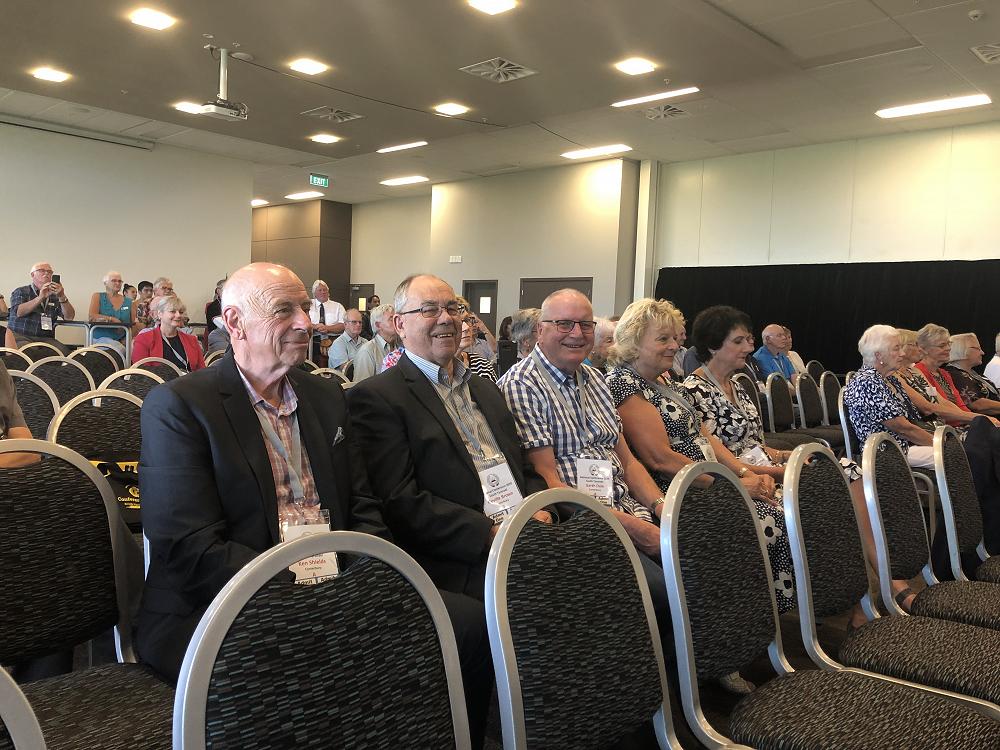
Six attendees attended from Canterbury; Graeme Barber, Neville Brown, Garth Dale, Gwen Mitchell, Adrienne Sears and Ken Shields. There were 11 attendees from the Royal Federation made up of their Board and staff. Other attendees from Associations saw the total attending at 91.
The Official Opening on Friday night was a particular highlight with a fantastic performance from the Patea Maori Club. Attendees enjoyed a variety of musical pieces from them, including their world famous song “Poi E”. This certainly got all the attendees up off their seats enjoying the performance.
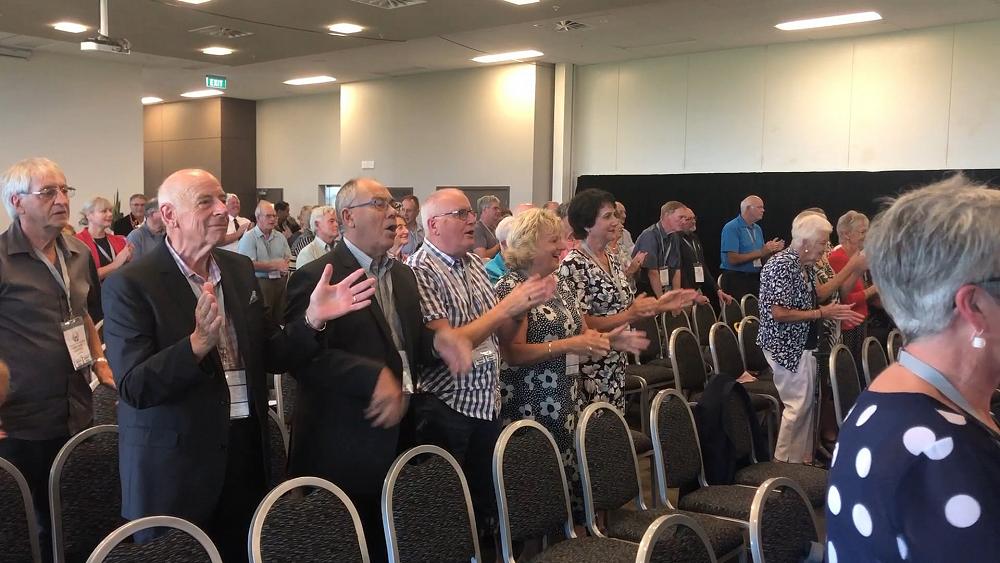
The venue, TSB Hub, was exceptional. Easy to get to, plenty of parking, plenty of space, light and airy with exceptional catering.
Speakers:
Judge Heemi Taumaunu
Chief District Court Judge
His Honour Judge Heemi Taumaunu was appointed Chief District Court Judge in 2019. He was the first District Court Judge to swear the oaths of office and allegiance in both english and te reo. He went to primary and high school in Christchurch. When he left Riccarton High School he joined the NZ Army for 5 years. Then he studied law and became a solicitor with the Immigration Service in Wellington then moved to Gisborne to practice law for 10 years. He gained substantial experience in jury trials as a Youth Advocate in the Youth Court and as a lawyer for child and counsel to assist in the Family Court. As National Liaison Judge for Rangatahi Courts, he encouraged fellow judges to set up other marae based youth courts and there are now at least 12 judges who preside at Rangatahi Courts at 15 marae around the country.
His vision is for the District Court to be modern, efficient, ensuring multicultural acceptance and gives a fair hearing for everyone. The current reports released into the Justice System see no change to issues around accessibility etc. Since 1986 the feelings of the community have not changed, in that it is not fair or accessible.
The District Court is New Zealand’s busiest court and Australasia's largest. Fairness is integral to Justice. Defendants can feel alienated, angry, hurt and/or confused.
He acknowledged the Judicial JPs who sit in the Bail Court.
His vision is to improve the way justice is delivered to ordinary people in our court. One size does not fit all. He wants to ensure people feel they are treated fairly, although they may not like the outcome. Barriers to the legal system do not change quickly. Some barriers start with the terms we use e.g. bail, remand, defendant – many people don’t understand these words.
We need to think about giving people a positive hearing. We should hear, listen and understand what the defendant is saying. A multicultural society challenges this.
Andrew Kibblewhite
Secretary for Justice and Chief Executive, Ministry of Justice.
Andrew Kibblewhite has been Secretary since February 2019. Prior to this, he was Chief Executive of the Department of the Prime Minister and Cabinet (DPMC) for seven years. He has been Deputy Chief Executive at Treasury, Director of the Policy Advisory Group at the DPMC and General Manager Strategic Development at the Ministry of Research, Science and Technology.
He acknowledged that we (JPs) are New Zealanders who care. He sees our role as important and upholding the principles of Law. Andrew outlined the six things that define success:
- Leadership and stewardship of the courts
- Uphold and maintain the integrity of the Courts and the Law.
- Honour and engage with Maori
- Transform the criminal justice programme and connect with people
- Do something about family and sexual violence (get traction on the issues)
- Access to Justice (e.g. family court) to enable every New Zealander to get to court
The issues most relevant to JPs are upholding and maintaining the integrity of the Courts and Law, and access to Justice.
He acknowledged that accreditation builds the standing of Justices.
Hon Auptio William Sio
Associate Minister for Courts and of Justice, Minister for Pacific Peoples
Hon Sio has been an elected Member of Parliament since 2008. He has served in local government as the deputy mayor of Manukau City and the elected city councillor for the Otara Ward. He was born in Samoa and educated in New Zealand.
He is passionate about advocating for diversity.
He acknowledged the history or the Justices of the Peace in New Zealand and was very complimentary of the work we undertake.
Dr Ang Jury
Chief Executive, Women’s Refuge
The Women’s Refuge is New Zealand’s largest domestic violence agency. It started in Christchurch in the 1980’s. Now it has 40 refuges of which 12 are specifically for Maori. They have 300 staff and 200 volunteers to cater for their 24/7 crisis response. In the last year there were 750,000 referrals, 70% were from the Police. These resulted in 61,000 nights of refuse. Every night they have 230-250 people in a refuge. There were 48,000 call to their crisis line. Police attended over 180,000 family violence calls – they estimate this is only 30% of family violence.
The form of violence is often invisible e.g. psychological or sexual. Society often looks the other way and provides excuses for the behaviour e.g. should|could always leave. There can be opportunities of early intervention. The victims of coercive control are often unaware of what is happening and struggle to identify this. These methods are the efforts of one person to control another. It could be isolation (e.g. bad behaviour when out with friends so friends fall away), guilt (e.g. “if you love me, you shouldn’t need them”), monitoring them (e.g. GPS tracking, frequent texts, monitoring online activity, home video monitoring), controlling the finances, run up debt in their name, sabotage their ability to work (e.g. making a scene at work).
Ang stressed that only the Police should intervene in physical violence. Everyone can help with early intervention – educate ourselves to see what invisible control looks like – challenge ourselves – not to slide into victim blaming (why doesn’t she leave) – learn how to safely and gently approach the issue ensuring the victim knows they are not being judged. Find out how we can help – who to put them in touch with.
Early intervention is done by people, not Government agencies.
Arun Chaundharui
Chief Executive, Taranaki Chamber of Commerce
The role of the Chamber of Commerce is to connect businesses locally, nationally and internationally. There are 30 Chambers in NZ and 12,000 in 120 countries. This encompasses 6 million businesses.
The Taranaki programme is to be sustainable and reduce global warming through reliance on oil and gas. The alternatives include wind farms and solar. Since 2010 the cost for wind farms has dropped 50% and 70% for solar energy.
He stressed what we do as individuals does make a difference.
Hon Chester Borrows QSO
Chester was a police officer, prosecutor and defence counsel. He was a politician and member of Parliament from 2005 to 2017 and held a wide range of ministerial portfolios including Minister for Courts, Associate Minister for Justice. He was responsible for writing the Youth Crime Action Plans.
Chester is passionate about the Justice System which he said is broken. Of the children born in 1978, one quarter now have a criminal conviction and half of these are Maori or Pacific Islanders. These statistics for that year are not exceptional – this is just a snapshot of that year.
He has a keen interest in restorative justice.
He suggests that the Justice System should be risk managers, not risk adverse and Justice should be by Maori, for Maori.
Workshops
Each Conference attendee was able to attend two of the three workshops. These were:
- Selecting great Justices (Do you want the best Justices of the Peace in your Assn)
- Building Great Associations (how our world is changing and how will be change to remain relevant)
- Repairs and Maintenance (Giving life to the Codes of Ethics and Conduct)
Selecting Great Justices Workshop
This workshop focused on the current selection process of new Justices of the Peace and the role that JP Associations can play in improving or maintaining the appointment of suitable people. It looked at a number of areas and these included:
Best Practice Manual – this is currently under review and it was acknowledged that, although it was last reviewed in 2016, it is now out of date in some areas especially some of the interview questions. One area of concern revolves around the use of Social Media and the long term effects of “unfortunate posts”.
Relationship with Electorate MPs – as all nominations must be endorsed by an electorate MP, Associations are urged to foster and maintain good relationships with their local MPs and the MPs office staff who are often responsible for processing the nominations.
Induction Training and Ongoing Education – Associations were reminded that they are responsible for both the Induction Training and ongoing Education for all Justices – including “self-nominated” – not just those who are nominated by the associations.
Keeping an Open Mind – it is important not to foster a “closed shop” mentality and not to “clone” the new nominees in our own image. We need to keep open minds about referrals. The need for an appointment in any area – while important – is not necessarily a final determinant and we should not rule good people out because we think there are enough JPs already. This led on to:
Succession Planning – all Associations were urged to think ahead and establish a succession plan by encouraging members who may be thinking of retiring to look around their area and suggest some people who could be approached for nomination. New nominees could be assessed on “community reputation”, willingness to commit to ongoing education and their understanding of the Codes of Conduct and Ethics.
Also, as a part of the succession planning, the existing membership should be assessed in relationship to accreditation, willingness to serve, competency in all areas (not electing to avoid some requests). Long serving JPs could be encouraged to apply for JP (Retired) status in recognition of their service to their communities.
Building Great Associations (Changing World) Workshop
The workshop was focused on how our world is changing and what the future will look like for JPs. There will be greater diversity and inclusiveness that will play a leading role in creating a more harmonious society. Technology will continue to evolve in ways we cannot conceive now. Driver-less cars and artificial intelligence are already here.
The impact of greater technology could have the following impact: Isolation, less face to face interaction, more automation, virtual technology could change how we interact with people, selection of Justices could be based on algorithms, personal ID could be implanted, new methods of power generation, more hydroponic farming.
We are more environmentally aware but it will be the next generation who implement future ideas.
New Zealand is vulnerable as we face conflict and pressure for our resources e.g. water/space.
Looking back over the last 20 years, we are now on the internet more, remember the dial-up connections? TV patterns have changed – we don’t have to wait until next week to see the next episode. The President of the US keeps us up to date via twitter, we advertise and consume information via social media, we have open discussions about societal issues (poverty, decolonisation, gender identity, sexual orientation).
How can JP Associations adapt to these changes:
- Multicultural approach
- Proactive membership – self management of education
- Being open to how we do things
- Recruit younger and community connected JPs
- Using leadership and influence to effect change
- Put our clients at the centre of what we do
Repairs and Maintenance (Codes of Practice) Workshop
This was a really enjoyable workshop. Lack of professionalism in voluntary organisations takes many forms. Professionalism for us, is about the reputation of the office of Justice of the Peace. Professionalism breeds confidence. This starts with the people who make up the organisation – this inspires others to join. Consistency of delivery and transparency is important.
We all agreed that professionalism in the Justice of the Peace environment requires adherence to our Code of Ethics, attending training and attending education with the key word being “education”. The word “training” relates to what we learn on our journey on the road to becoming a Justice of the Peace and being sworn in. The word “education” relates to all learning as we keep ourselves up to-date thereafter. The language used is important.
Having good morals, good behavior and ensuring we are competent and available to clients during our tenure as a Justice of the Peace gives us a “good reputation” which makes us feel confident. This is important if we want to be seen as professional Justices’.
We need to be very careful what we post or comment on using social media. Social media reaches a lot of people and it is “not necessarily what has been said” but “it is what has been perceived” which can be very damaging.
The main cause of complaints is less about JP performance, but more on outside activities of JPs e.g. social media and using the JP title outside of the role.
Regions should mention professionalism at every education session. Not necessarily a dedicated session on this but keep mentioning it. It was noted that almost no other Associations have specific training on Ethics or the Code of Conduct.
We were divided into groups and asked to come up with our thoughts relating to the following questions:
1. What does professionalism look like in the Justice of the Peace environment?
2. What current education sessions conducted by our Association enables members to refresh not just ministerial duties but their professional obligations?
3. If a “Professionalism in the Justice of the Peace Environment” ongoing education module was to be developed for Association use what content would be useful for the local educator(s)?
Written comments relating to the above three questions will be collated and in time, be available on the Royal Federation website. Keep an eye out for them..
Quote of the Day
“The service we render to others is the rent we pay for our room on Earth”.
Southern Regional Meeting
At a meeting of the Associations in the Southern region, discussion was based around the level of members accredited. This ranged from 27% (South Canterbury) to 60% (Otago and Southland). All had service desks. Canterbury has a high number of new JPs who work over our 18 service desks and 98% of those on the service desks are accredited. We have had 14 education sessions spread over our outlining areas and in suburban Christchurch plus 12 accreditation sessions.
It was suggested we could have pop up clinics in June/July at some High Schools to assist with University Entrance requirements.
The Regional conference is 22/23 August in Oamaru.
Royal Federation Annual General Meeting
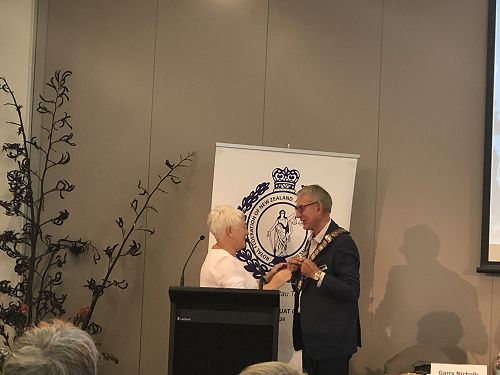
The Royal Federation Annual General Meeting was held in chunks over Saturday and Sunday. Mrs Rachael O’Grady retired as National President and Mr Terry Byrne was elected unopposed. Mr Garry Nicholls was elected as Vice President. Denise Hutchins retires from the Board as Rachael O’Grady takes over the Immediate Past President role.
Canterbury submitted a remit requesting the closing date for nominations for Regional Representatives be changed to the 31st July, prior to the holding of Regional Conferences. This involved a constitutional change so required a notice of motion. The Royal Federation did not pick up on this until the week before the AGM so Canterbury withdrew the Remit.
Auckland proposed a remit that the Royal Federation introduce, subject to due diligence, a national database that can be accessed by local Associations. This was passed.
Auckland also introduced a remit stating that electronic learning modules be made available for each new or revised Justice of the Peace function. This was passed.
There were some (minor) Constitutional changes proposed by the Royal Federation that were passed. These appeared to be housekeeping matters only.
The 2021 Conference venue was confirmed as Wellington (their 100-year anniversary).
There were expressions of interest for future conference venues as follows:
- 2022 Taranaki
- 2023 Southland
- 2024 Hawkes Bay
- 2025 West Coast (their 100-year anniversary)
- 2026 Otago (their 100-year anniversary)
- 2027 Waikato
- 2028 Gisborne (their 100-year anniversary)
Not much General Business was received from the floor. Canterbury asked about the JP appointment process. There is concern that an MP can override an Association's wish to not appoint a person as a JP. The Royal Federation advised this is a work in progress.
Canterbury also asked about having visibility of and access to JPs who do not belong to any Association. There was little enthusiasm from the Royal Federation that these details would made available from Ministry of Justice.
The next National Conference will be in Wellington at the James Cook Hotel from 19 – 21 February 2021. Guest speakers will include Dame Helen Winkelmann (Chief Justice of New Zealand) and Tahir Nawaz (President of the International Muslim Association of New Zealand). There are a lot of other activities in Wellington at that time so accommodation will be tight.
Gallery