
What do Judicial Justices do? Part 2
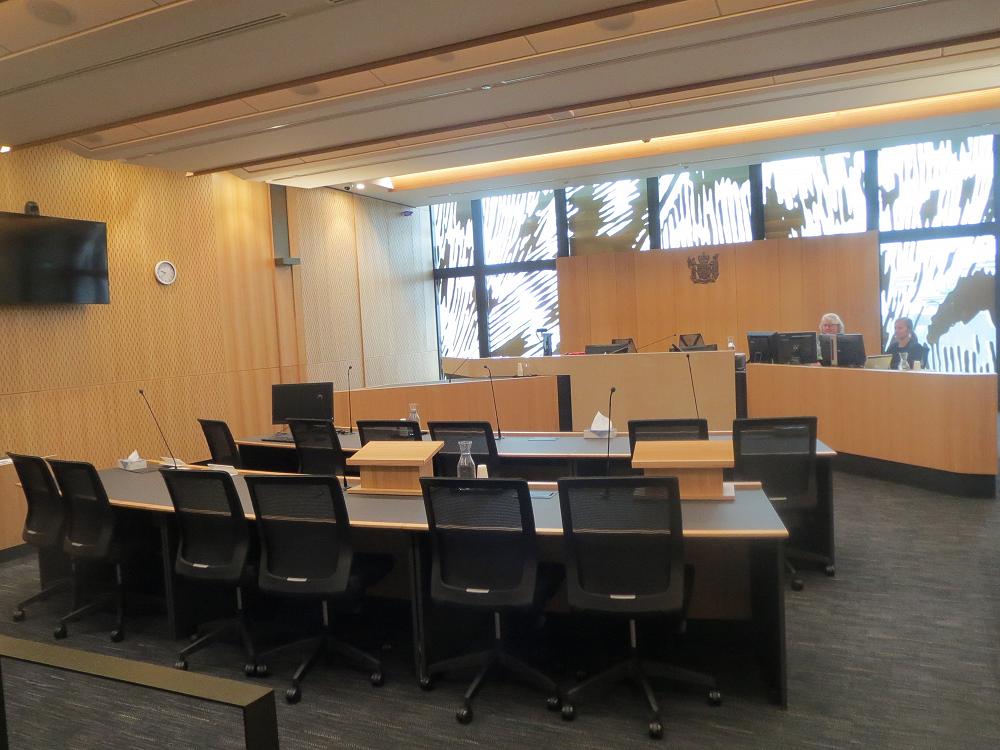
Following on from the first article on the List Court, the next court I would like to explain is the Fixtures court (or defended hearings).
This is where a defendant has pleaded not guilty and wishes for his case to be heard. Again, there are strict rules around the jurisdiction we have. Each case can take between 1-2 hours – more if there are a large number of witnesses. The reasons why people choose to defend their offence can be varied. It can be they really believe they are innocent, they do not want the demerit points attributed to the penalty or sometimes, they feel their integrity has been challenged.
The basic procedure for Judge-alone trials is contained in the Criminal Procedure Act 2011.
If the defendant pleads not guilty then the following is the procedure:
- The process of the hearing is explained to the defendant. It must be remembered that these people may never have been in a court before and almost all of them are not familiar with the process. Most defendants choose to represent themselves but they are entitled to be represented by a lawyer if they chose. They may have a support person (called a McKenzie friend) who can sit with them in court but may not ask questions or make submissions. They can sit beside the defendant and quietly give advice to them and take notes.
- Witnesses may need to be excluded from the court. This is to ensure that witnesses are not influenced by hearing the evidence of another witness.
- The Prosecution puts their case. This involves the prosecution calling any witnesses they have. This outlines the evidence the prosecution has against the defendant.
- The defendant is able to cross examine the witness for the Prosecution and ask any questions on the evidence given.
- The Prosecution can re-examine their witness on matters that arose out of cross-examination.
- The defendant gives their evidence. This can be by their own statement and/or with other witnesses.
- The Prosecution may cross examine the defendant’s witness.
- The defendant can cross examine the witness for the defence on matters that arose out of cross-examination.
- Both parties may be asked to sum up. This usually consists of advising points of law.
- The Justices retire to their chambers to make a decision.
- If the case is proven (found guilty) previous convictions are requested.
- A sentence or penalty is considered.
- The penalty is announced.
While all the evidence is being given, the Justices must listen to the evidence and defence, ensure the correct procedure is adhered to and direct the proceedings, take notes on what is being said and monitor the behaviour of those in court. These notes are used to assist with the decision-making and is important if the party appeals.
The burden of proof is that the prosecution must prove all the elements of the offence beyond reasonable doubt. To be satisfied beyond reasonable doubt means that we must be sure the prosecution has proved the charge.
When delivering the decision we must give the reasons for our decision. This is where the notes taken in court are invaluable. It is usual to write up a summary of the notes taken in court and this is read. It is vital that both Justices agree with the decision they have come to.
Sometimes deciding on a case it comes down to who’s evidence is more credible. For example, a police officer was adamant he/she saw the defendant using a mobile phone while driving and the defendant was adamant he/she was not using a phone. Surprising how many people do not realise that “using” a phone is not restrictive and includes any use whilst driving. Sending or receiving texts, emails, listening to music and using the phone as a GPS all constitute “using” a phone.
Some defendants challenge the speed laser guns. While they think they are not travelling over the limit, the laser clocks them clearly travelling at speed. The Police have very extensive protocols around the certificate of accuracy, testing and the certification of those using the lasers.
More often than not, defendants are happy even if the case is proven. It is important to them that they have been heard and had a chance to have their say. Noting their comments goes a long way to assuring them they have been heard and given a fair hearing.
Adrienne Sears
Court Panel Coordinator