
Year 6 Google Earth EOTC
The phrase "the best-laid plans of mice and men often go awry" originates from Robert Burns' poem "To a Mouse" and is used to illustrate how even the most carefully planned things can fail. Wet weather on the Year 6 camp departure day meant that ‘Plan B’ was needed.
Our original plan was that I would travel with the group to camp and teach our students about the Te Rabuwai, Waitaha, Kāti Māmoe and Kāi Tahu stories and names that have been placed on the land.
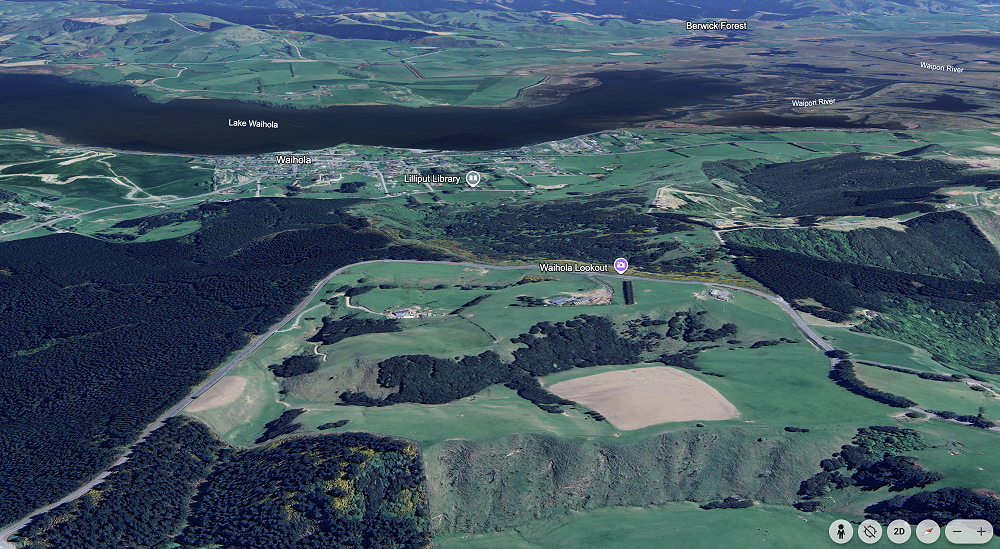
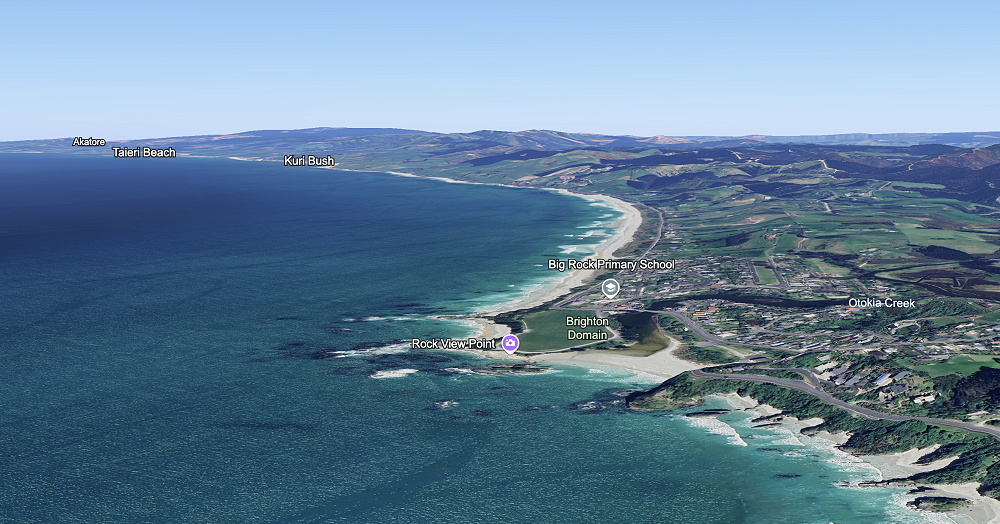
We decided to have a virtual session in Rūma Kekeno and journey to Waihora ki Taiari (Lake Waihola) via the coast then up and over the hill to camp using Google Earth. From Carisbrook School we made our way to Ōtāne (Lawyer’s Head) then turned South to Moturata (Taieri Island) learning about Makere Atu (Black Head), Ōkaike (St Micheal’s/Green Island), Kai Karae (Kaikorai estuary) and Whiti Whiti Ora (Brighton).
Many generations ago there was a pā (fortified village) at the mouth of the Taieri River called Motupara. Tuwiriroa was a Kāti Māmoe chief who lived there with his daughter, Hakitekura and hapū (sub-tribe).
Raised on the shoreline of Whakatipu Waimāori (Lake Wakatipu) near Tāhuna (Queenstown), Hakitekura is one of the most famous women of Te Waipounamu’s early human history. She is best known for a feat of athletic prowess in the cold waters of Whakatipu Waimāori. Less well known is her leading role in an ill-fated love story centred 200km to the east, near the mouth of the Taiari (Taieri River), events that flowed out of, and boiled over in, acts of revenge reaching from Kaikōura to Rakiura (Stewart Island).
During the European colonial period, much of the Taiari would be drained and turned into paddocks, but back then it was a large expanse of interconnected wetlands, lakes, rivers and streams — a plentiful source of food, both fish and birds. It was here, on the Taiari that Hakitekura lived as an adult.
As a young woman determined to show her athleticism, Hakitekura tied a bundle of kindling to her back, snuck down to the water before sunrise and swam 3km across the numbing lake to the shoreline at what is now called Refuge Point. There she lit a fire, the smoke alerting her father to her feat and her success. In her honour, various local landscape features were named after her, including Cecil and Walter Peaks, named Kakamu-a-Hakitekura, meaning the twinklings seen by Hakitekura, and Refuge Point, named Te Ahi-a-Hakitekura, the burning flames of Hakitekura.