Science/Pūtaiao Faculty
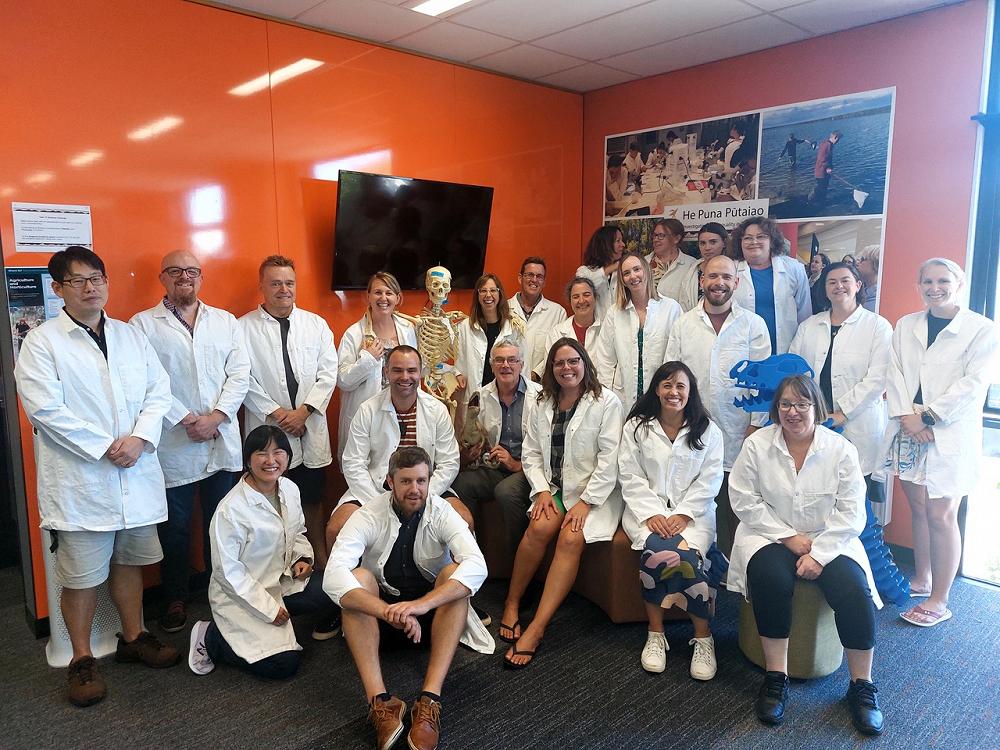
It has been a real pleasure to return to school this year, meeting both the Science staff and students keen to get stuck into teaching and learning. It is wonderful to see the positive attitudes on display and the many experiments already underway. Science is based on observations, constructing theories to explain phenomena, and then testing these ideas by experiment. When students are actively involved in these processes they can understand and apply new concepts, not only improving their performance in examinations but enabling them to think for themselves and make evidence-based decisions in all areas of their lives. The excellent facilities at Cashmere really do enable us to make Science lessons “Fascinating and Fun!” and bring Vibrancy/Hiamo into the labs.
As well as in-class there are a huge range of opportunities for students in science, both while at school and as future careers, with new discoveries producing new jobs that do not even exist today. The more students take up these opportunities at school the more doors open for them, many of which come with funding and lead to the next amazing opportunity.
Here are some of the Science Opportunities/ Whai Huarahi available to students at Cashmere. There will be others that arise during the year for individuals or classes, so keep an eye on the notices and information from science teachers:
- Science Fair All Year 9 and 10 students will be carrying out an investigation, research, or experiment for the Cashmere Science Fair, to be held early in Term 3. Senior students are encouraged to enter too. Entries from each class will be on display with certificates awarded and parents invited to view. Students may choose to enter the Canterbury-Westland Science Fair in September for a chance of higher honours and prizes.
- ICAS Science Competition Students are encouraged to enter this international competition, especially if they have a good Science general knowledge and are logical thinkers.
- Science/Pūtaiao Club This after school activity packed with interesting experiments runs in terms 2 and 3.
- Aquarium Club A group looking after the aquarium – choosing and caring for the fish and plants that make up this fascinating ecosystem.
- Electronics Club An activity run at lunchtime once per week where students build electronic devices from scratch. This year the aim is to include a programming component using microprocessors.
- Space Club A group exploring all things related to Space – astronomy, rockets, satellites and more. The journey continues as we Ekea ki nga whetū.
- Sustainability Council A student group that meets regularly and implements activities to improve the school environment along sustainable lines.
- Bee Club A group focussed on looking after the school beehive and learning about bees and the products they produce.
- North Island Earth and Space Science trip 2023 – Heading away this April to explore and immerse ourselves in the amazing geology of volcanic Te Ika-a-Māui. Look out for information on the 2025 trip.
- Space Camp 2026 We hope to be able to run this amazing trip again, consisting of a week of astronaut training at Space Camp, USA followed by an action-packed week in Florida including a visit to Kennedy Space Centre.
- Reef and Rainforest trip 2023 A group is off this year in July to explore the Great Barrier Reef and Daintree rainforest in tropical Queensland. Watch out for information on the 2025 trip.
See below reports from Summer Schools, the Antarctic Centre trip, Brain Bee, and He Puna Pūtaiao in this newsletter to find out more about the fascinating and fun opportunities available for our science students.
Antarctica Centre Trip Report 2022
On the 1st of December, I went to the Antarctic Centre for half the day with my form class and science teacher, Dr Paterson. All year nines were lucky enough to have this opportunity as well, but here is my opinion and perspective of the trip.
My class and I, with two other year 9 classes boarded the buses and travelled to the Antarctic Center, which is located close to the airport. Everyone was buzzing with excitement. We ate lunch on the grass after arriving. We had to wait for another year nine group to depart, before we were able to explore, after a quick briefing by the instructors we were off. All three form classes split up and started the tour, each with their guide. Once we stowed our bags, we swiftly went off to meet the other groups and see a video about Antarctica and the consequences of things like climate change and global warming and how Antarctica influences this. What I found most interesting is that if Antarctica was to melt the sea level would rise by 60 meters. Next, we made our way to a space with a 360 screen, it displayed incredible pictures of the landscape, animals and pure beauty Antarctica has to offer.
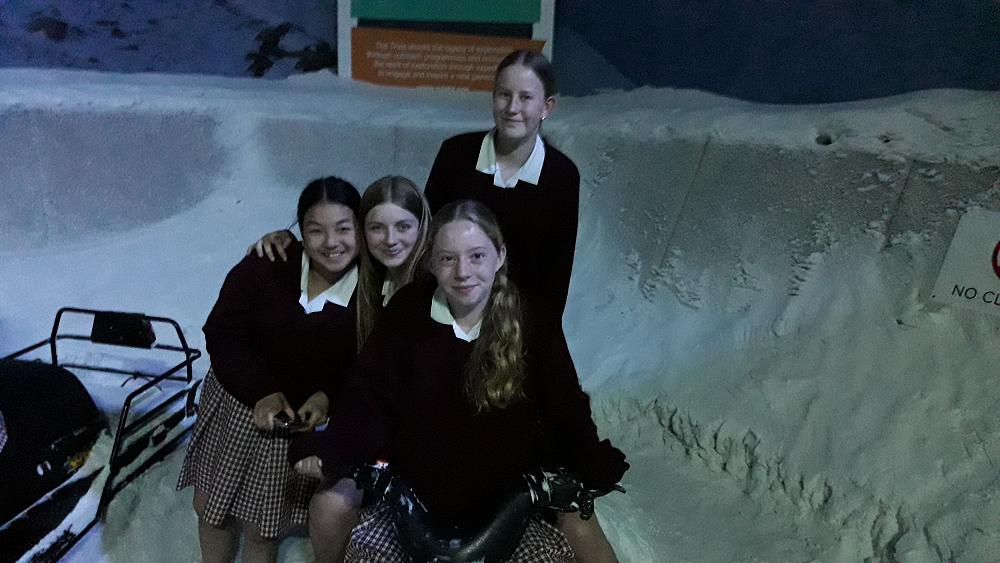
We were then led to the storm room, which contains snow and an igloo. Winds are blowing to give a temperature of minus -18°C, trust me, it sounds cold but being there feels much colder. Being able to experience what it is sometimes like in Antarctica was really chilling. When talking with others this was the highlight of their experience. Once everyone had warmed up again, we moved on to the 4D theatre. We were given glasses that allowed us to view the movie in 3D. The videos played on the massive theatre screen, and the icicles snapped off and jolted towards you. The seals chased after you, it felt as if you were actually there. Underneath the chair pieces of fabric hit the slap on your calf, it gave lots of us a fright. Water also sprayed all over my face, and even at the end, fake snow fell from the ceiling.
After the fantastic 4D experience we adventured onto the rescued penguins. All of them are not able to go back to the wild, most from injuries. My whole class was ecstatic to see the penguins. We got to watch one penguin swimming and coming up to us on the glass, all of the others were shy though. We were also able to see them in their burrows, a few of them were huddled together. It was fascinating to learn so much about the little blue penguins, I didn’t realise how much damage we are causing to the population of blue penguins in New Zealand. Here at home we are endangering the species, due to dog attacks and running them over with power boats, just to name a few issues. As we came closer to the end, we were taken to what they call the Antarctic Gallery. Inside there was loads of research on a vast variety of species and incredible discoveries. There was a replica of a tent that travellers would use before any of the bases were built, a sled loaded with luggage and you even got to see what type of food they would eat on their wild quests. One of my favourite parts of the gallery was the whale section. I liked it because you could compare the sizes of the different whales and dolphins, it was crazy to see the size differences.
Last but not least the huskies. We made a full circle back around to the room where we started. A lady brought in two husky puppies for everyone to meet. She told us lots of intriguing facts, like how huskies brought a disease to Antarctica and gave it to the seals, and also how we don’t use huskies in Antarctica anymore, after an agreement to not bring nonnative animals to the land. At the end of her talk, we got to go pat them; their coat was soft and silky, but also dense, which enables them to be perfect sled dogs. Even though I have been to the Antarctic Centre many times before, it was still a really enjoyable experience and I'm glad I had the opportunity to go.
Sienna Hitchings
Brain Bee Report
In early December 2022, I had the privilege of travelling to Melbourne for a few days to compete in the National Brain Bee neuroscience competition alongside students from both Australia and New Zealand. The information was coordinated and taught by Prof. Ramesh Rajan and Prof. Charles Watson, who lent an hour every Wednesday leading up to the competition to teach us about the nervous system via Zoom.
There were 4 rounds - neuroanatomy, neurophysiology, neurology and patient diagnosis, and a live Q&A round on addiction in the brain and movement control. The North Island representative won overall, while I came second.
However, my absolute favourite part of the competition was getting to meet and talk to some incredible students from across Australasia - there was never a dull moment.
Brain Bee has been an invaluable experience for me. I have learnt so much, begun considering a career in neuroscience, and met so many amazing people. I will be cheering on the Australian and New Zealand winners for the international competition this year.
Ruby Geddes
He Puna Pūtaio Programme
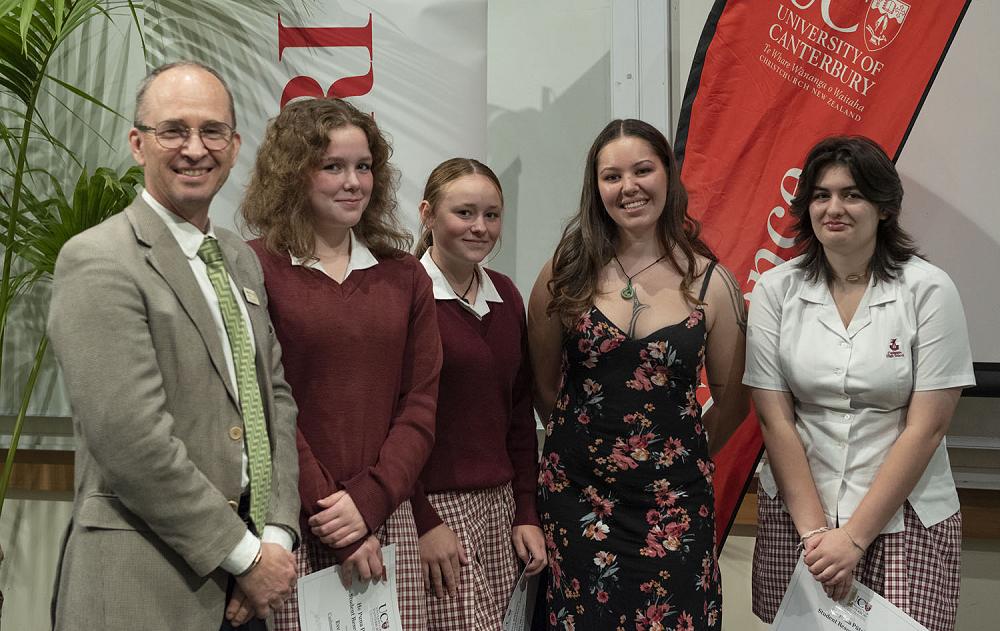
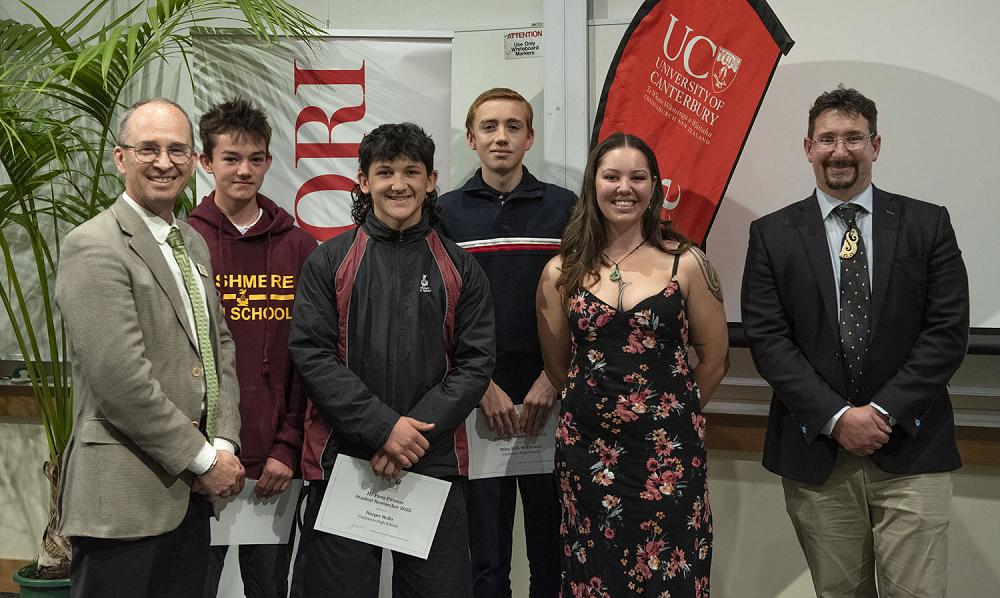
In Term 4 of 2022 six Cashmere students took part in the He Puna Pūtaio programme. This is an opportunity for Year 10 Māori Scientists from around Christchurch to attend the University of Canterbury. They engage in a meaningful and relevant Ecological investigation that involves time in the laboratory, a field trip to Te Waihora/Lake Ellesmere and opportunities to connect with Māori at the University and other Christchurch schools. The group collected valuable data which contributes to the on-going management of Te Waihora, and produced high-quality posters summarising their findings.
The Cashmere students graduating from this course were: Alex Conner-Watson, Riley Hill-Wikiriwhi, Jasmine Matuku, Harper Rollo, Eve Sayers, and Zaria Te Miha.
Our tutors at U.C. were Ellie Kingham and Theo Hampton. Both are Ex Cashmere graduates of the He Puna Pūtaiao programme in 2017. Both are now completing their studies at UC.
Look out for this awesome opportunity in 2023.