Science/Pūtaiao Faculty
It has been a real pleasure to return to school this year, meeting both the Science staff and students keen to get stuck into teaching and learning.
It is wonderful to see the positive attitudes on display and the many experiments already underway. Science is based on observations, constructing theories to explain phenomena, and then testing these ideas by experiment. When students are actively involved in these processes they can understand and apply new concepts, not only improving their performance in examinations but enabling them to think for themselves and make evidence-based decisions in all areas of their lives. The excellent facilities at Cashmere really do enable us to make Science lessons “Fascinating and Fun!” and bring Vibrancy/Hiamo into the labs.
As well as in-class there are a huge range of opportunities for students in science, both while at school and as future careers, with new discoveries producing new jobs that do not even exist today. The more students take up these opportunities at school the more doors open for them, many of which come with funding and lead to the next amazing opportunity.
Here are some of the Science Opportunities/ Whai Huarahi available to students at Cashmere. There will be others that arise during the year for individuals or classes, so keep an eye on the notices and information from science teachers:
Science Fair All Year 9 and 10 students will be carrying out an investigation, research or experiment for the Cashmere Science Fair, to be held early in Term 3. Senior students are encouraged to enter too. Entries from each class will be on display with certificates awarded and parents invited to view. Students may choose to enter the Canterbury-Westland Science Fair in September for a chance of higher honours and prizes.
ICAS Science Competition
Students are encouraged to enter this international competition, especially if they have a good Science general knowledge and are logical thinkers.
Science/Pūtaiao Club
This after school activity packed with interesting experiments runs in terms 2 and 3.
Aquarium Club
A group looking after the aquarium – choosing and caring for the fish and plants that make up this fascinating ecosystem.
Electronics Club
An activity run at lunchtime once per week where students build electronic devices from scratch. This year the aim is to include a programming component using microprocessors.
Space Club
A group exploring all things related to Space – astronomy, rockets, satellites and more. The journey continues as we Ekea ki nga whetū.
Sustainability Council
A student group that meets regularly and implements activities to improve the school environment along sustainable lines.
Bee Club
A group focussed on looking after the school beehive and learning about bees and the products they produce.
North Island Earth and Space Science trip 2023 – subject to safe travelling.
Explore and immerse yourself in the amazing geology of volcanic Te Ika-a-Māui
Space Camp 2024
We hope to be able to run this amazing trip again, consisting of a week of astronaut training at Space Camp, USA followed by an action-packed week in Florida including a visit to Kennedy Space Centre. Obviously dependent on safe travel returning.
Reef and Rainforest trip 2023
We hope to run these trips again, to explore the Great Barrier Reef and Daintree rainforest in tropical Queensland. Also dependent on safe travel.
See separate reports from Summer Schools, the Science Fair and Space Club in this newsletter to find out more about the fascinating and fun opportunities available for our science students.
Women in Engineering Residential Programme 2022
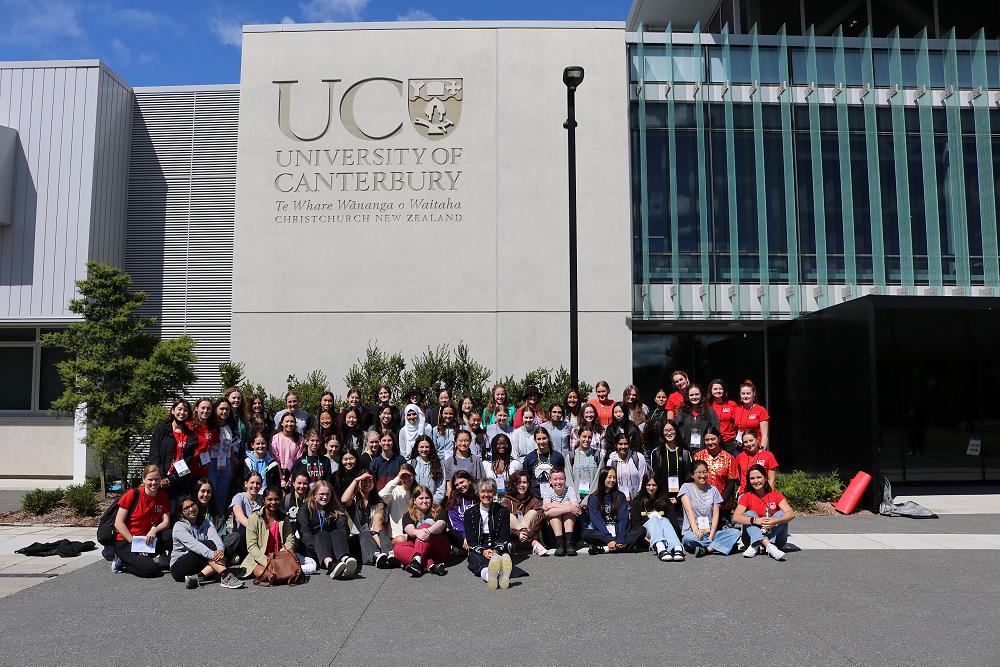
In the summer holidays I had the incredible opportunity to attend WiECAN 2022 at the University of Canterbury. This course was designed to promote engineering to female students going into Year 13 and over the five days that we were there we got to explore some of the limitless opportunities within engineering. During the program I stayed in Tupuānuku, the newest of the Christchurch halls of residence, alongside 60 girls from across New Zealand. Each day there were three workshops, each based on a different engineering discipline. These ranged from building a solar cell battery in chemical engineering to constructing earthquake resilient structures in civil engineering. They were all super interesting, but I particularly enjoyed the aerospace engineering seminar as well as the electrical engineering workshop where we built and programmed a mini solar powered car which we then got to keep (they really liked giving away free things). The afternoons consisted of a team challenge, my favourite being when we programmed exoskeleton fingers to play the piano. The course also included a variety of super fun social activities in the evenings such as a trip into the city for dinner, a quiz night hosted by the amazing Residential Assistants (UC engineering students) and a celebration dinner with some very memorable dancing. I left this program feeling so excited for university as it opened my eyes to the wonderful world of engineering, and I can’t wait to reunite with many friends made on this course next year. Huge thank you to the University of Canterbury for hosting WiECAN, I would highly recommend it for anyone interested in science and problem solving, it truly was the most amazing experience.
Lucy Watt
Space for Planet Earth Challenge
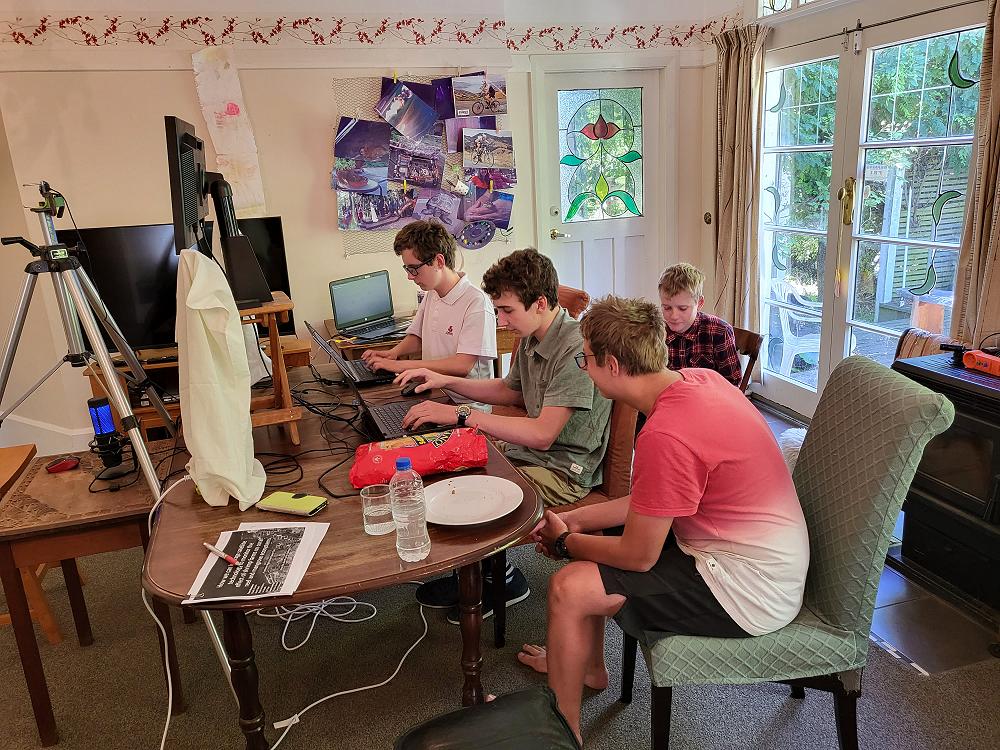
The Cashmere Space Club team have been busy all summer getting their entry prepared for the Space for Planet Earth Challenge, which has the goal of:
Using space technologies to find new and innovative solutions to address climate change issues in New Zealand, Australia, and the Pacific Islands.
The Cashmere proposal was one of only 6 school teams to get through the first round in October 2021, with the evaluators impressed by their innovative idea:
To use satellite technology to monitor the effect shrimp farms have on coral reef and mangrove ecosystems and to identify locations that are not suitable for shrimp farms.
The team were given access to Planet, a company with over 200 satellites that take images of the whole of the earth every day, plus the Allen Coral Atlas which provides in-depth mapping and data about every coral reef. They have just submitted their solution in 20 slides and a 5 minute video – worth a look to see what the latest technology can do, and to make you think about the effect your next purchase of shrimps might have on coral reefs.
Breaking News! The team have been selected to pitch for the grand prize of $10000 in the final. You are invited to watch the Space for Planet Earth Challenge - Final Pitch and Awards Event at 5pm Fri, 18 February 2022. Use this link to register for this online event: https://www.eventbrite.co.nz/e/space-for-planet-earth-challenge-final-pitch-and-awards-event-online-tickets-226922079047
The Cashmere Space Team are:
Charlie Trumm, Boyd Goldsbury, Ruairi Boyd, Joel Sage, and Iris Royds
Prize Winners at the Canterbury-Westland Science Fair 2021
The Canterbury-Westland Science Fair was postponed several times last year, but finally in December judging across the region took place.
Well done to all the students who worked on their Science Fair projects right to the end of the school year and in many cases made significant improvements to their entries in the School Fair way back in August.
The following entries won prizes:
Second, Year 9-10 Science Alice Vetcher and Niamh Cooper, "Drastic Drag". $150
First, Year 9-10 Technology Ida Scott. "LED there be Light" $200
Second, Year 9-10 Technology Morven McDaid. "Credible Edibles" $150
Plus, the Cashmere Science Faculty would like to acknowledge the efforts of our students by awarding special certificates for excellent work in several categories, as would have normally been the case in the Canterbury-Westland Fair:
Plus, the Cashmere Science Faculty would like to acknowledge the efforts of our students by awarding special certificates for excellent work in several categories, as would have normally been the case in the Canterbury-Westland Fair:
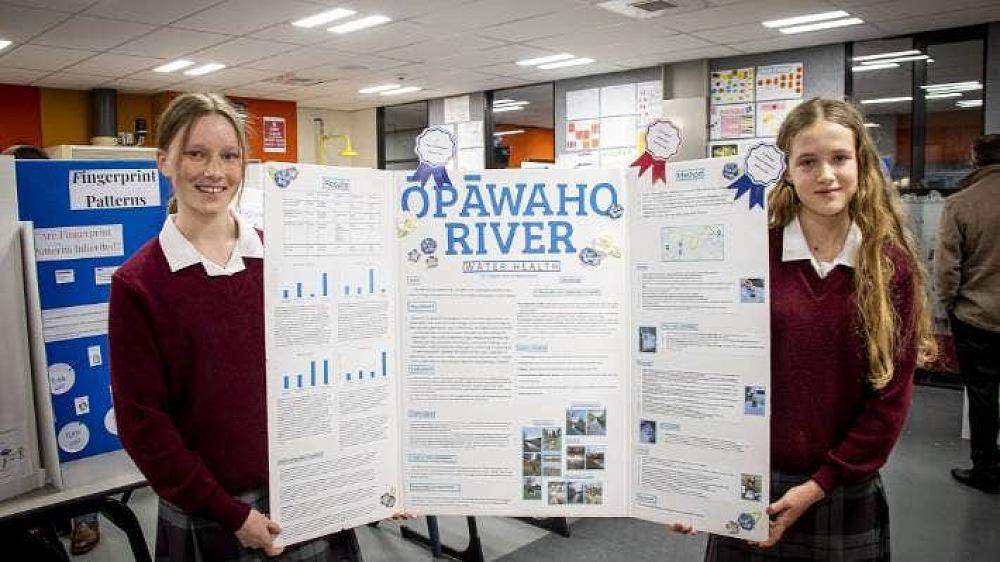
- For a project that increases the knowledge around freshwater quality or habitat protection.
Mia Aramowicz and Auraeyah Harris: Ōpāwaho River Water Health
Ruby Geddes Local rivers: A closer look - Exhibit that best displays an aspect of science related to plant health
Charlie Trumm: Are plants affected by ultraviolet ionizing radiation? - Awarded to meritorious projects in the subject of chemistry
Jett Coutts and Harry Hay: Elephant's toothpaste
Libby Bush and Laura Smith: A little salty - Exhibit that best displays an aspect of microbial science
Hamish Legg: Do you trust the 5 second rule? - Best exhibit on Food, Food Technology, processing or related matters
Poppy de Boo: Race to the top - Exhibit that best displays an aspect of health science
Millie Palmer: Kombucha, a healthy choice?
Rose Sutherland, Nadia Chitpientram and Charlotte Forbes-Moody: Monster energy - Best exhibit related to psychological science
Winni Goldsbury and Ava Robinson: Prize or punishment? - For an exhibit demonstrating excellent use of electrical, electronic and/or computer technology
Charlie Trumm: Are plants affected by ultraviolet ionizing radiation? - Prize for a project showing innovation in engineering design
Harry Pierce: Windmill - For excellence in experimental design, approach and interpretation.
Alice Vetcher and Niamh Cooper: Drastic Drag - Exhibit that best displays an aspect of science related to animals
Boyd Goldsbury: Does the early bird catch the worm? - Best exhibit related to environmental science or the protection of the environment
Natalie McCall and Charlotte Grey: Proving Sergei Zimov’s theory - Exhibit that best displays a practical application of Chemistry
Hugh Thompson, Vincent Aydon and Callum Hynes: The Crown Joule of Batteries - The best exhibit related to Space exploration
Nico Ford: Ionization Experiment - For the most innovative exhibit showing commercial potential
Ida Scott: LED there be Light