Deep Learning | Engage the World Change the World
What is Deep Learning?
New Pedagogies for Deep Learning (NPDL) is a global initiative launched by Michael Fullen, a leading authority on education reform. Cashmere Primary te Pae Kererū is one of many schools worldwide sharing best practice in how to prepare and equip our students for the future. Through deep learning design, teachers create relevant and authentic learning experiences that build on students’ innate curiosity, preparing them for the ever-changing world around them. Our Kahukura cluster schools have been a part of the NPDL project since 2014.
At the heart of Deep Learning are the 21st-century skills of Creativity, Citizenship, Critical Thinking, Communication, Collaboration and Character (known as the 6C’s). These skills are directly linked to the Key Competencies in the New Zealand curriculum. Key competencies are the capabilities people have and need to develop, live and learn today and in the future.
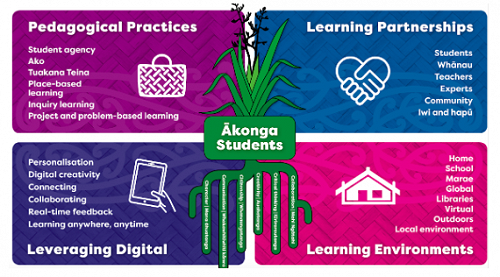
Teacher’s design learning around the 6C’s, considering the following components:
the development of learning partnerships between and among students, teachers, families and communities
exploring a range of learning environments
embedding the use of technology (using digital tools and resources in ways that accelerate and deepen learning)
creating learning tasks that are authentic, meaningful and allow for students to take responsibility for their own learning.
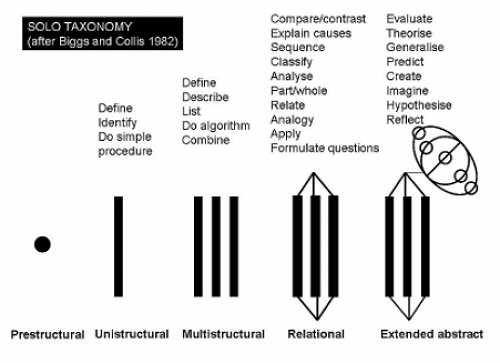
We know that students learn best when they are happy, engaged and have agency over their own learning. Our Deep Learning is further supported by SOLO taxonomy. SOLO Taxonomy (structure of observed learning outcomes) provides a simple, reliable and robust model for three levels of understanding – surface, deep and conceptual (Biggs and Collis 1982). SOLO taxonomy is used as a school-wide model for students to understand their learning.
SOLO taxonomy is a tool used by teachers when designing learning to improve the depth of student thinking. It provides a structure to give feedback and for students to self-assess, helping give direction on how to get from one level to the next. It is a tool for teachers to assess student work and the verbs used in SOLO taxonomy link directly to those used in NCEA assessments.
Further information about SOLO Taxonomy can be found at http://pamhook.com/solo-taxonomy/
Gallery