Japan Tour
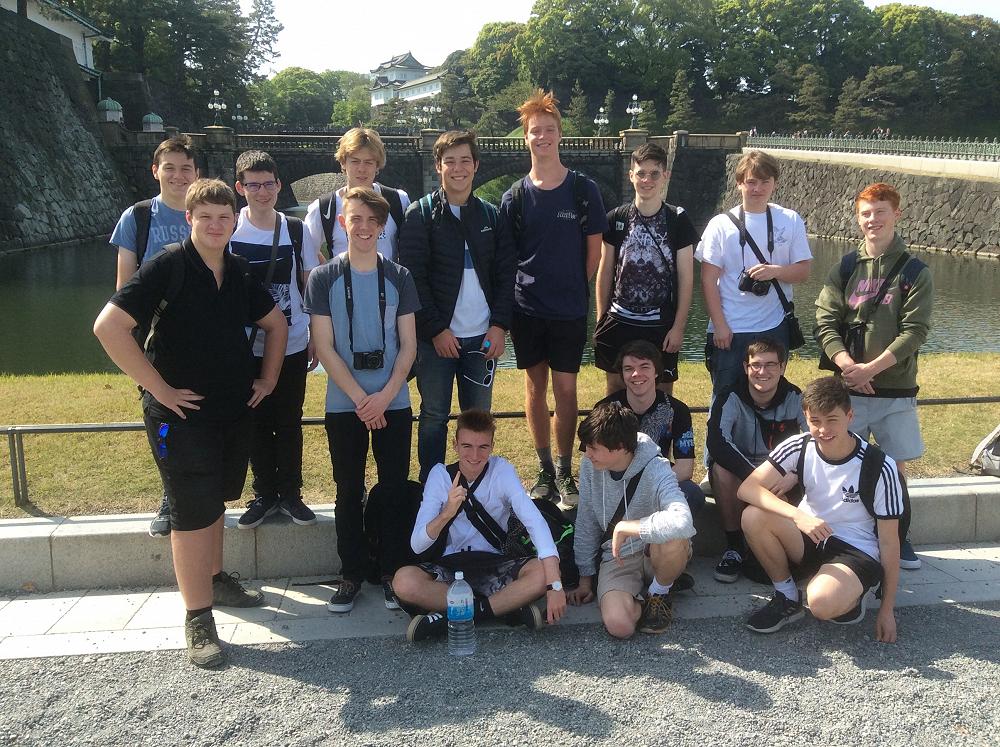
Fifteen weary senior students of Japanese returned from a three-week tour of Japan on Sunday, all saying they are eager to visit again in future, whether to show their families what they have seen, to study on exchange or possibly to live there.
The weather was very kind to our group, as we endured only one wet day in the entire tour. This allowed us to do virtually everything we had planned. However, contrary to what you might expect, it did not stop a nasty head cold bug from ravaging many, so quite a few boys were laid low at some point or other.
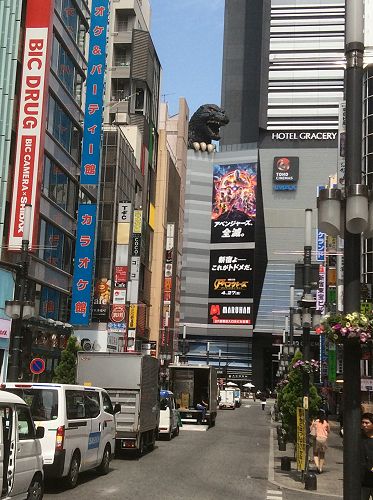
In the first five days, we were based in Tokyo, a city of 35 million people. To say it is busy is an understatement - train stations, temples, shrines, shopping areas and other key tourist attractions were heavily populated but the boys were excited to be in such a thriving environment. While many readers may not have been to Tokyo, some will know such areas as Shibuya, Akihabara, Ueno, Ginza and Shinjuku as being among the most vibrant districts. We visited Yasukuni Shrine (which was very close to our youth hostel), the Imperial Palace, Meiji Jinguu and the more contemporary Asakusa Sky Tree which, at 634 metres high, ranks among the world's tallest structures and affords an incredible view of the city and outlying areas.
From the first day, the boys needed to use their Japanese language skills to select and order food and to buy various souvenirs. While this was easier for some than others, as the tour progressed, confidence levels steadily rose and such occasions became less stressful.
Our first shinkansen (bullet train) ride took us to Sendai, central to the area that was devastated by the 2011 earthquake and tsunami. Happily, the staff at our sister-school Sendai Ikuei Gakuen HS had helped arrange hostel accommodation and we were welcomed into classrooms at the school for some mixed-language interview sessions, which everyone enjoyed. Parent interviews scheduled for the afternoon (in the second week of their new school year!) meant we only had a short visit but gave us the opportunity to travel to Matsushima to see how things had recovered following the 2011 tragedy. We crossed to one of the famous islands and enjoyed the last throes of hanami (cherry blossom viewing), which had arrived much earlier than usual this year further south.
Sendai is famous for kokeshi dolls, nearly 90% of those made in Japan being crafted there. Several boys got the chance to watch a master craftsman in action and, on the following day, sought examples of the dolls as gifts for family members in the extensive, covered shopping district at the heart of the city.
Next stop, Kyoto, for the first of two brief stays. Our hostel was located in the heart of the bustling Shijo-Kawaramachi area, so was central to everything. We were a stone's throw from Nishiki Market, a wonderful food and artisan stall area which runs off Teramachi-doori, another covered shopping area full of interesting eateries and snack stalls. A walk to Gion gave the chance to see the evening habits of Kyoto's more influential and tradition-minded citizens...geisha and maiko entertainers were in close attendance to some well-heeled business people, although they were hard to distinguish through the darkened windows of the Mercedes and Maseratis they were travelling in...
Next day, we walked from Gion through Yasaka Shrine, up Ninenzaka and Sannenzaka hills to Kiyomizu Temple. After a brief tour of the temple and its grounds, we headed to Sanjuusangendo where 1000 statues of kannon (Buddhist attendants) surround an elaborate statue of Buddha. The history of this temple, with its centuries of archery competitions and samurai swordsmanship in the time of the legendary Musashi, gave the visit an extra dimension for those interested in Japanese cultural history.
A couple of bus rides later, we were at Kinkakuji, the Temple of the Golden Pavilion. The boys were fascinated by the elaborate ornamentation, although some were more intrigued by whether or not there were Pokemon to catch on their phones...
Our second weekend in Japan was, as always, a major highlight: a homestay in Kurashiki, Christchurch's sister-city. We were welcomed with great formality by the Deputy Mayor and other dignitaries, formal speeches were exchanged and the boys, having each introduced themselves to the assembly, performed the school haka in appreciation of the hospitality. In the next morning's newspaper, there was an article about our visit and a photo of the impressive haka. Mātua Daniel's excellent tuition really paid off!
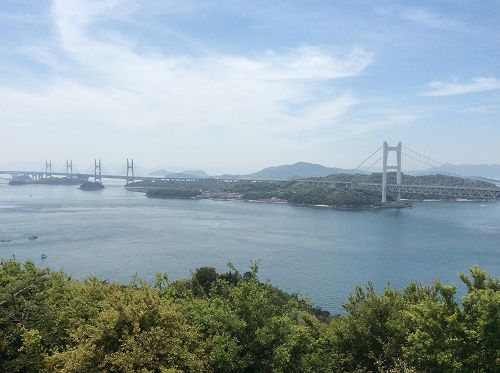
The boys were thoroughly spoiled by their hosts and reassembled on Monday for a tour of some city highlights, including the Seto-Ōhashi, a 12 km bridge that connects Honshu and Shikoku. We then visited a tatami-beri company, which makes the braiding that edges tatami mats when installed in homes. This was fascinating enough, then we had the opportunity to make our own samples of tatami, a really special souvenir of Japan.
Back towards Kyoto later that day, with a stop at Osaka to meet with members of the Japan-NZ Committee who, after offering us lunch and having small group discussions, took us on a tour of Osaka Castle. Over lunch, an editor from Sankei Shimbun newspaper (readership 1.5 million) interviewed staff and boys about studying Japanese in NZ, how our school system differs from Japan and what it was like to be in Japan, surrounded by non-English speakers. His article the next morning was a very favourable one and was another highlight for the boys whose views were quoted.
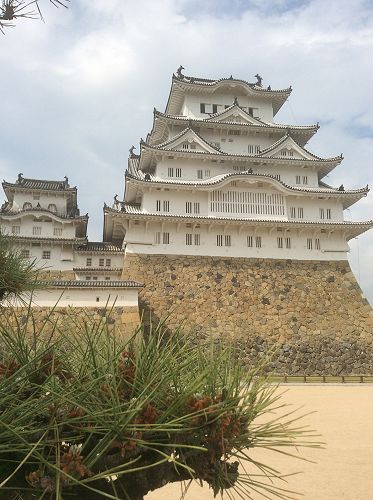
The last stop, Kyoto, was again lovely. The weather was wonderful and the hostel perfect for our needs. We had a day-trip to Nara, site of the biggest seated bronze Buddha in the world, via Fushimi-Inari Taisha, a shrine dedicated to the sneaky fox which features 4,000 torii (shrine gates) which wend their way along paths up a steep hill. On our final full day, we made an early-morning visit to Ryoanji Temple, famous for its zen stone garden and mirror pond, before taking a shinkansen to Himeji to visit Japan's finest castle. Having such strong final memories has hopefully helped encourage so many boys to return to this beautiful country with its charming, generous and gentle people.
Leaving Kyoto for Tokyo to connect with our overnight flight home, the boys were a mix of "sad to be going" and "happy to be getting back to families and pets". All agreed that they were glad they had travelled and that they're looking forward to next time.
In concluding, I would very much like to express my appreciation and respect for the outstanding contribution made by Mr Patrick Coady, without whom the trip could not have gone ahead. His calm and friendly attitude enabled the boys to experience the tour in great spirits. Having stepped in to the role at very late notice, he displayed a caring and supportive manner to every student and his good-natured demeanour helped ensure a highly successful tour. Thanks for everything, Pat!
Gallery