
An Introduction to SOLO Taxonomy: Part Five
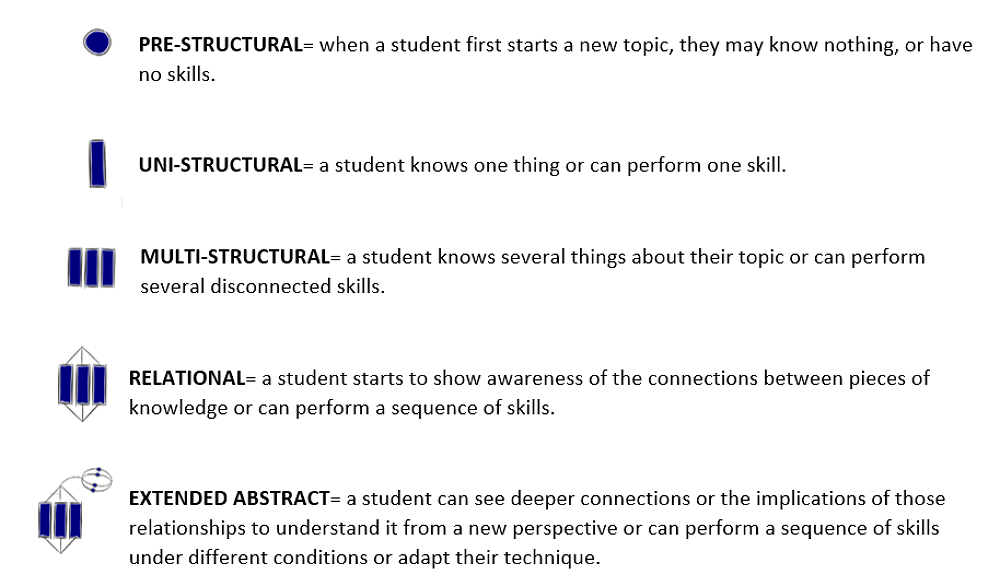
LAST WEEK We looked at how to progress from the MULTI-STRUCTURAL level, where we may know several things, to the RELATIONAL level where we now need to do something with that knowledge using a series of academic verbs like ANALYSE, EXPLAIN, COMPARE, CONTRAST, etc.
THIS WEEK
Today, we will cover the EXTENDED ABSTRACT stage.
EXTENDED ABSTRACT
To move from the RELATIONAL stage of learning to EXTENDED ABSTARCT, we again need to apply an increasingly difficult set of ACADEMIC VERBS to work with the knowledge or skills we have acquired in the previous levels. These verbs include being able to GENERALISE, PREDICT, EVALUATE, REFLECT, CREATE, HYPOTHEISSE, THEORISE, JUSTIFY, ARGUE, COMPOSE or PROVE. The move from thinking at a RELATIONAL level to the EXTENDED ABSTRACT level is a qualitative move, that is the quality of thinking needs to be higher. Also, we are now tending to move beyond dealing with the knowledge itself to create new ideas or understandings or opinions or ideas. To be successful in this stage requires students to really know what these verbs entail. For example, in several Level Three NCEA English assessments, to gain Excellence students need to answer “critically and perceptively”. But what does that look like? It means they might create a GENERALISATION about a piece of literature, and then EVALUATE its worth, finishing with a REFLECTION on its importance to their world. Understanding what these verbs require of them in their different subjects is crucial if students are aiming for Excellence.
AND TO CONCLUDE THIS SERIES…
To help students understand the ACADEMIC VERBS at each SOLO level, and how they might differ in different subject areas, use this GUIDE.