
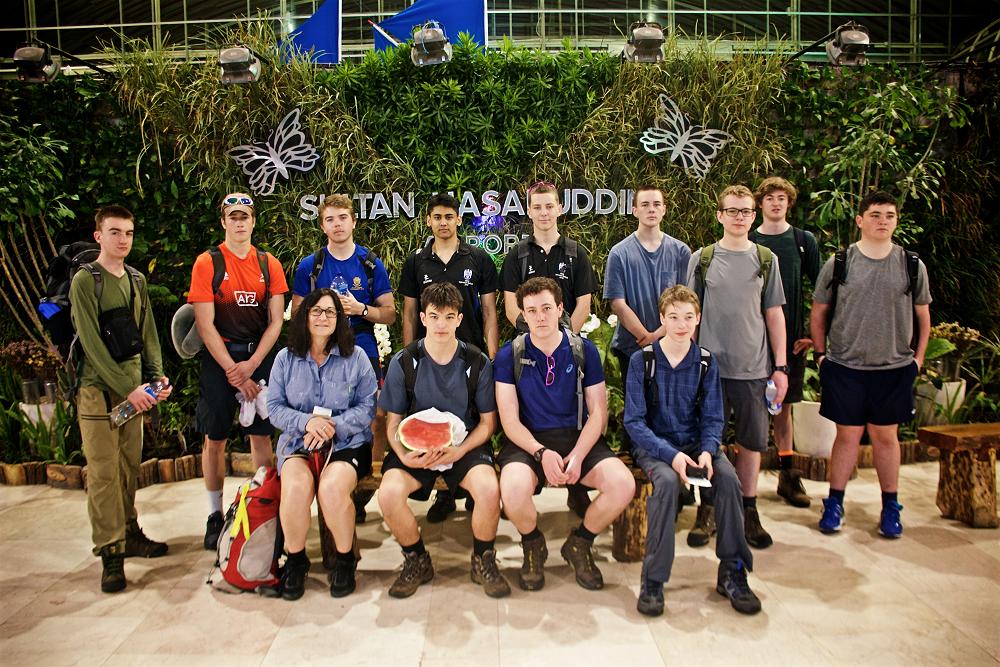
CBHS students help with NASA research
Strange as this may sound, this is oddly true. In the July holidays 12 students and 2 teachers travelled to the remote destination of South East Indonesia to embark on some research for NASA.
This entailed them helping international scientists gather information on the carbon emissions as part of the REDD+ project by measuring trees in a specific location on the tiny island of Buton in Sulawesi. In addition to this, the boys and teachers trekked into the jungle each day and night to record information with a scientist and a local guide on the biodiversity of butterflies, birds, megafauna, reptiles and bats.
How did they get to go on such an amazing trip? Its all part of the programme put together by Operation Wallacea (aka OpWall). This is an organisation that runs a series of biological and conservation management research programmes operating in remote locations across the world. These expeditions are designed with specific wildlife conservation aims in mind—from identifying areas needing protection, through to implementing and assessing conservation management programmes. What is different about Operation Wallacea is that large teams of university academics, who are specialists in various aspects of biodiversity live at the study sites, giving students the opportunity to work alongside them on several surveys that result in a large number of publications.
After 7 days in the humid jungle where trekking in muddy conditions and sleeping in hammocks (under a tarpaulin) were the norm, the students travelled 6 hours on a local ferry to the island of Hoga (in the Wakatobi regency) for a week on a coral reef. Whilst here the boys would get to do the PADI course to become a qualified diver whilst those already qualified would assist the scientists in the marine environment. There was also snorkelling and lectures about the biodiversity of the coral reef, which demonstrated the importance of the reef not only to the local environment but to the whole planet. Here the accommodation was in a wooden chalet and the food was a little more extensive than the very rice-based diet that the group had experienced the previous week.
The OpWall experience was incredibly challenging but an amazing experience where the students and teachers got to operate outside their normal comfort zone and participate in a whole raft of unique activities, which I am sure have broadened their horizons and made them more aware of issues threatening our environments. On a personal level, the students got to challenge their physical and mental resilience. This was truly a life changing experience where new friendships were forged, an appreciation of a different culture established, and the connection between the environment and our need to preserve and appreciate it was formed.
Both Mr Brouwer and I were very proud of the 12 young men that took up the OpWall challenge, travelling together for 18 days and the resilience and character they showed. They were a credit to the school and we were often complimented on the good nature of our fine young men. It is hoped that in two years time we will be able to offer another OpWall trip and give more students the opportunity to participate in this amazing experience.
The highlight of the trip must be the capturing of a three-metre reticulated python that we all got to handle and the great video the boys made!
Be sure to check out this photo and a catalogue of other great pictures from the trip by clicking here.
(REDD+ refers to conservation of forest carbon stocks, sustainable management of forests, and enhancement of forest carbon stocks. The basic concept is simple: companies or forest owners should be rewarded for keeping their forests instead of cutting them down.)