
Pastoral Care - Respond, Don’t React
Respond, Don’t React – A CBHS Approach to Emotional Intelligence
Warren Buffett once said, “You will continue to suffer if you have an emotional reaction to everything that is said to you. True power is sitting back and observing things with logic. True power is restraint.”
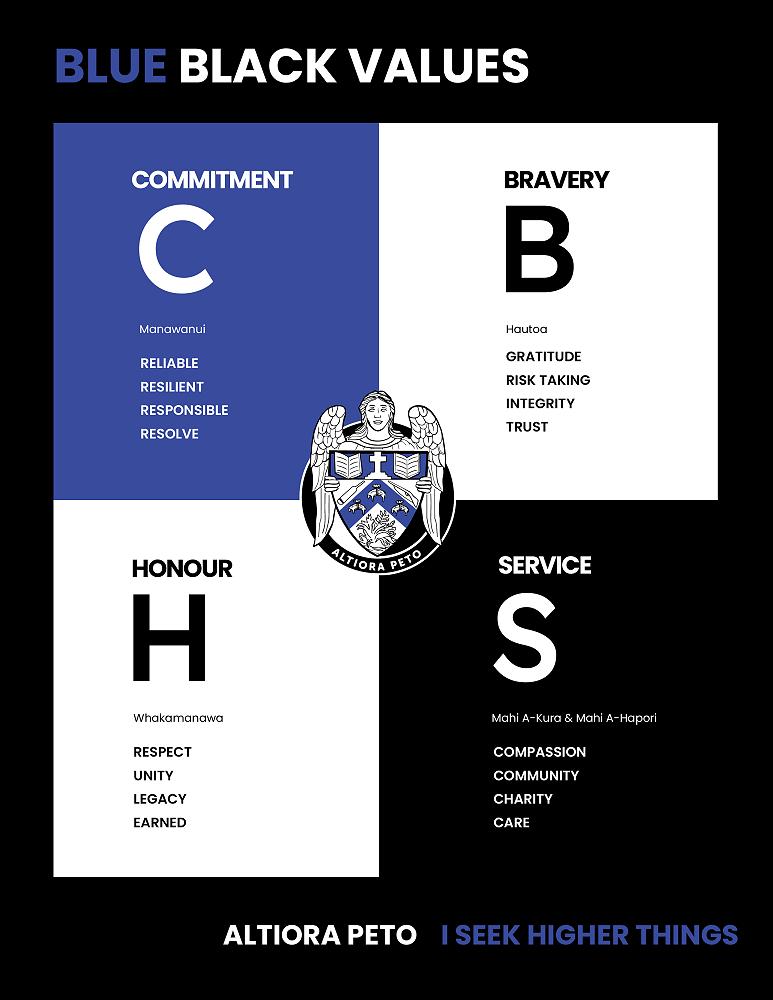
This simple, profound idea offers rich insight into how young men at Christchurch Boys’ High School can grow into emotionally intelligent leaders who live out our core values:
Commitment, Bravery, Honour, and Service.
In today’s world—where impulsive reactions are often encouraged through social media and peer pressure—Buffett’s advice is more important than ever. Emotional regulation is the ability to manage and respond to an emotional experience in a socially appropriate and productive way. Research from the Yale Center for Emotional Intelligence shows that students who develop this skill are more likely to have positive relationships, achieve higher academic success, and demonstrate greater resilience.
At CBHS, we see this in action when a student shows bravery by walking away from a heated situation, or when a young man demonstrates honour by pausing to consider another’s point of view before responding. Emotional control is also a form of commitment—commitment to one’s growth, one’s values, and to behaving in a way that reflects our school’s standards. And it connects to service, as empathy and emotional self-awareness are the cornerstones of being a reliable teammate, friend, or leader.
How Parents Can Support This at Home:
Model the behaviour: Talk through moments where you’ve chosen to respond calmly instead of reacting emotionally. Your example is powerful.
Normalize emotional vocabulary: Encourage your son to name his emotions (e.g., “frustrated,” “disappointed,” “excited”)—a practice shown to improve emotional regulation.
Encourage mindfulness: Simple breathing techniques or moments of reflection after school can help students re-centre and process events thoughtfully.
Ask reflective questions: Instead of asking, “What happened?” consider, “How did you feel about that, and what did you do next?”
Psychologist Dr. Daniel Goleman, a leader in emotional intelligence research, writes that emotional regulation is a key predictor of long-term success—even more than IQ. By helping our young men learn to pause, reflect, and act with intention, we are preparing them to be calm, principled leaders—both at CBHS and beyond.
What conversations have you had with your son around emotional control and leadership?
References:
Yale Center for Emotional Intelligence. (n.d.). The Impact of Emotional Intelligence in Schools. Retrieved from: https://www.ycei.org
This source discusses how emotional intelligence enhances academic performance, relationships, and decision-making among students.
Goleman, D. (1995). Emotional Intelligence: Why It Can Matter More Than IQ. New York: Bantam Books.
Daniel Goleman's foundational work explores how emotional intelligence (EQ) influences personal and professional success, and how skills like self-regulation, empathy, and motivation are essential for leadership.
Gross, J. J. (2015). Emotion Regulation: Current Status and Future Prospects. Psychological Inquiry, 26(1), 1–26.
This peer-reviewed article explains the mechanisms of emotional regulation and its long-term benefits for mental health and interpersonal relationships.
Siegel, D. J. (2013). Brainstorm: The Power and Purpose of the Teenage Brain. New York: TarcherPerigee.
This book gives insight into adolescent brain development, especially in relation to emotional responses and decision-making.