AN OLIVE PICKLER’S EPIPHANY
I have been pickling olives for 20 years with mixed results. Last year they were delicious and here’s why.
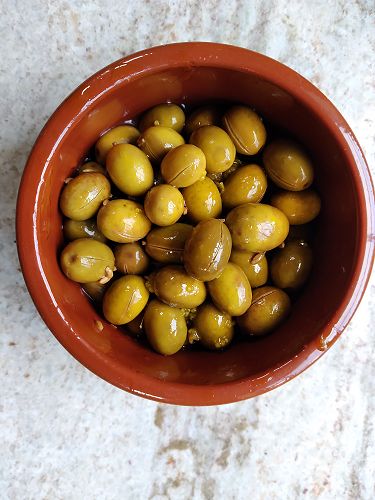
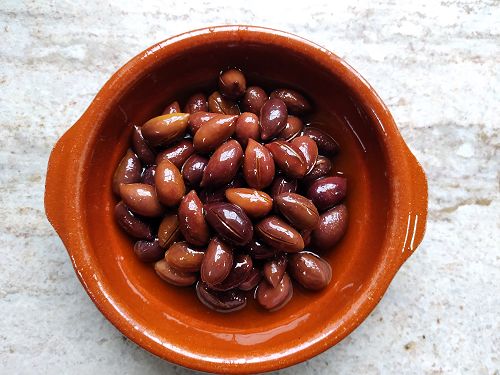
Too salty, too mushy, mould on the top and just not delicious. Tony and I grow fat round Manzanilla and large pointed Barnea varieties, perfect for pickling both green and black. Last year I pickled Nocellara for the first time. Nocellara is the variety from Sicily – you know those huge green a crunch which are so readily available now in our supermarkets. Well, my tree is still very small and the olives are still small also but they were delicious and here’s why.
In October 2022 we spent time in Sicily. The ladders were just going up on some of the millions of Nocellara olive trees, which are all picked by hand for table olive production.
The groves in Sicily were immaculate, ploughed underneath and perfectly pruned and the olives of monstrous size.
We were enchanted. We stayed a few days on a vast olive estate and of course I quizzed the woman managing the accommodation on how the olives were processed and she was happy to share. I will now share this with you, my fellow Central Otago olive growers.
The secret is 8%.
Yes 8%! All the books and YouTubes with Nonna’s recipe tend to stress 10% brine solution for soaking and for the final pickle. But 8% works perfectly and the olives are not mushy, but have bite, and the olives are not salty. My good friend Isla Burgess and I have been trialling many different ways of handling the pickling – just soaking in water, soaking in brine and changing the brine daily, using vinegar in the final pickle etc. but I am very happy with the results and this is my simple recipe.
Joan’s Pickled Olives
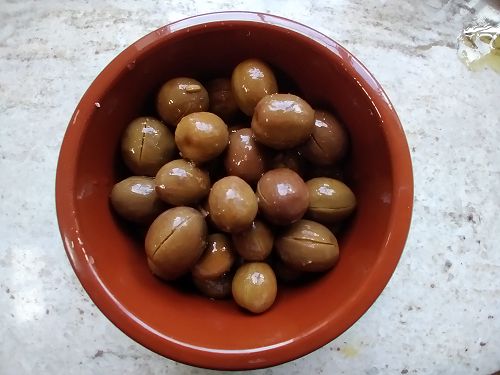
- Wash olives and slit twice with a knife.
- Leave to soak in clean water for a few days, changing the water daily.
- Make up an 8% brine solution. 80gms salt to 1 litre of water. Make sure olives are submerged in solution, put a plate on the top to weigh them down.
- Change brine solution daily. Usually this takes me three weeks.
I sometimes have two large bowls on my bench at a time as I don’t mix varieties. This is not a chore. It is a delight. Taste an olive occasionally to test for bitterness. You will know when they taste like an olive.
To Pickle:
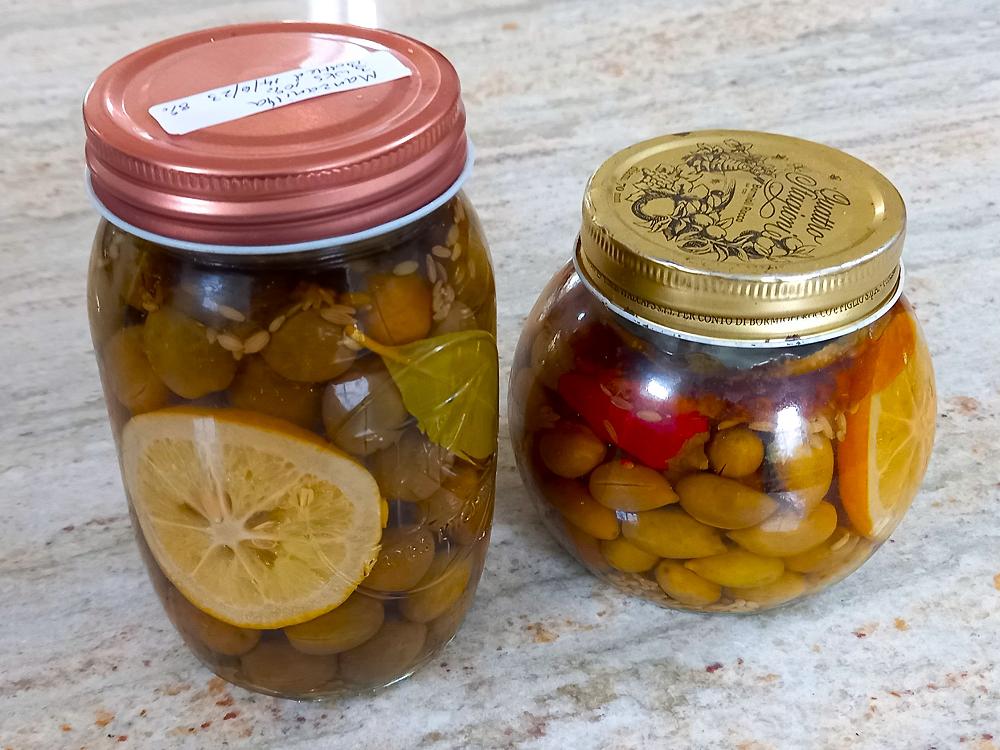
Put olives in sterilized bottles. Don’t fill too much as you need a gap at the top. Pop a bay leaf, some fennel seeds, a garlic clove, a small chilli and a couple of slices of lemon, artfully arranged around the edge, any of the above or just leave it plain. I have been known to put in too much chilli. Pour over the 8% brine solution, add about ½ teaspoon of white vinegar and top with a generous slug of olive oil. This is very important as it seals the olives and prevents any growth of mould.
- However sometimes if a little mould grows, it’s no trouble just to scrape it off.
- Be aware that if you overfill the bottle the oil will find it’s way out and will pool in the cupboard.
- Leave for 6 months.
Please note. This is for home use. If you want to pickle olives commercially check with MPI about registration.
Gallery