FAQ - Frequently Asked Questions
Lots of advice on how to produce top quality Central Otago Olives
Frequently Asked Questions
What is Extra Virgin Olive Oil?
Oil is classified as “extra virgin” when the oil is extracted during the first pressing of olives.
What is cold pressing?
No heat is applied during the pressing process.
What can I use olive oil for?
People use olive oil in cooking, cosmetics, medicine, soaps, and as a fuel for traditional lamps. Olive oil originally came from the Mediterranean, but today, it is popular around the world.
In the diet, people preserve olives in olive oil or salted water. They eat them whole or chopped and added to pizzas and other dishes.
They can use olive oil a dip for bread, for drizzling on pasta, in cooking, or as a salad dressing. Some people consume it by the spoonful for medicinal purposes..
Why Extra Virgin Olive Oil?
Extra virgin olive oil is loaded with heart-healthy fats and antioxidants, making it a great addition to a nutritious diet. It also tastes really good!
Should I save my oil for a special occasion?
Of course we think you should use it every day for its taste and health benefits, but we realise it is special, and making it last is a good idea. Remember its shelf life is about 2 years, and the colour and flavour profile will change over time.
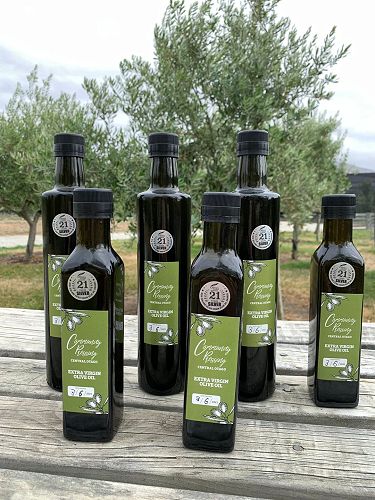
What does the Red Certification Sticker mean?
New Zealand olive oil must meet specific requirements. These include bottling and labelling standards as well as the chemical and sensory criteria.
Why are Otago Olive Oils more expensive than North Island Olive Oils?
The local Olive Groves tend to be boutique, with small batches, high quality, and high cost per litre of production. The unique qualities in Central Otago Oil find it well loved and in high demand.
Gallery