
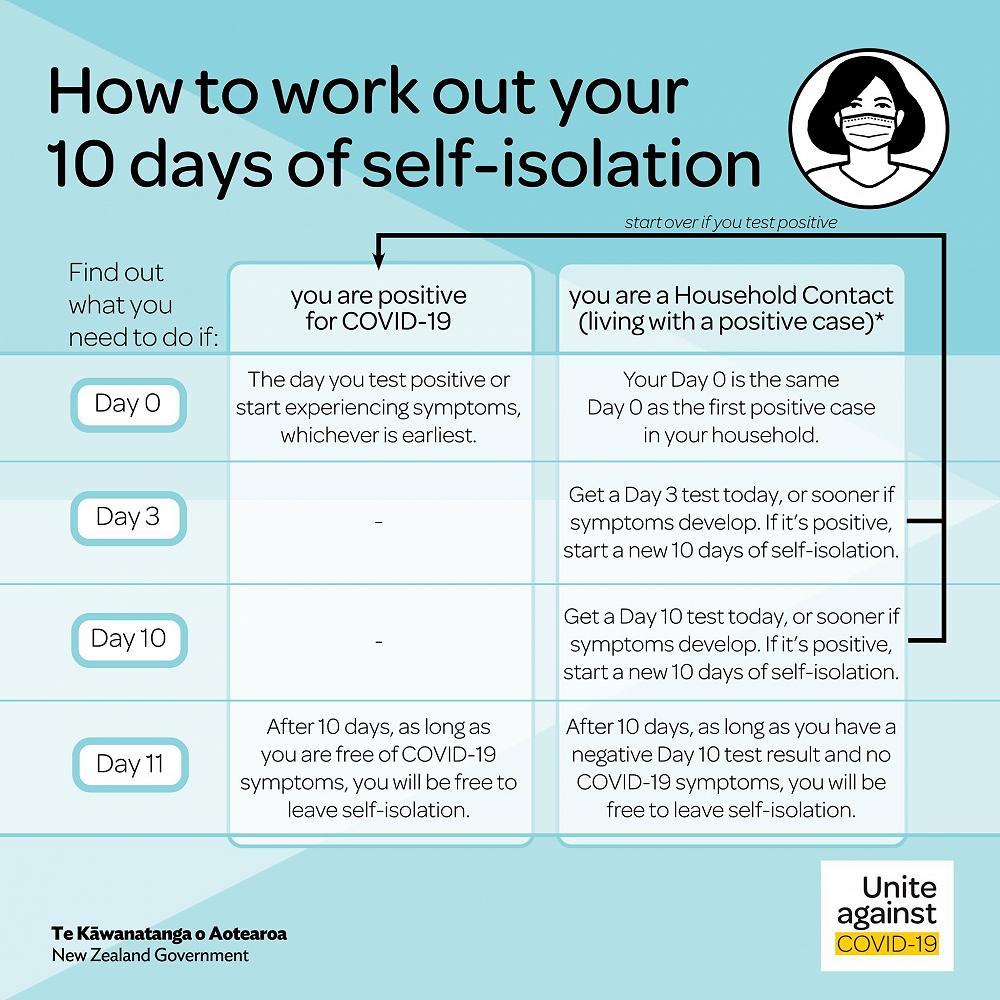
When should COVID-19 cases and contacts end their isolation?
Positive cases of COVID-19
As you know, a person confirmed to have COVID-19 must currently isolate for a minimum of 10 days and until they are symptom-free. If they are still sick, they should stay home until they are well.
Day zero for isolation is from the date they either developed symptoms or were tested if they do not have symptoms.
The case does not need to have any further tests after their initial confirmation test (they have already tested positive).
Household contacts of someone with COVID-19
Any household contacts of the positive case must also isolate for 10 days and take tests on day three and 10 of the case’s isolation period.
If a household contact tests negative on day three and day 10 and is symptom-free, they can return to school on day 11.
A reminder that if someone else in the house tests positive, you do not need to restart your 10 days unless you have tested positive.
There is a helpful tool on the Unite Against COVID-19 website which calculates a person’s isolation period. Find it here.
Returning from isolation as a household contact
We’ve had a number of queries regarding instances where students have completed their required 10 days’ isolation but have had family members subsequently test positive.
Currently there is no legal requirement for family members to remain in isolation beyond the initial 10-day period, once they have returned a negative day 10 test.
Learn more: What does it mean if I’m a household contact?
To manage this risk, it is important that if the student develops symptoms they stay at home until they are symptom-free and have returned a negative test result. Alternatively, they could be managed as a case without any need for testing.
It’s important that anyone with symptoms remain at home until they are symptom-free for at least 48 hours.
Please be assured that the current measures in place (masks, physical distancing and ventilation of rooms) in schools continue to provide high levels of protection from infection in a school environment.