
Advocating for change: A personal win for accessible travel with Crohn’s
For anyone managing Crohn’s disease or other chronic conditions, travel can be a daunting experience. Our dietary needs are not merely preferences but essentials to avoid painful or even severe symptoms.
Sadly, these needs are often met with misunderstanding or inflexible systems, particularly within the travel industry, where accommodations for chronic conditions are still catching up.
For me, travel was once second nature. Before my diagnosis with Crohn’s Colitis, I explored many destinations. However, during a stopover in Peru years ago, I accidentally consumed the local water, leading to a harrowing illness from which I never fully recovered. This incident marked the beginning of my journey with Crohn’s Colitis. I went from someone who loved to travel to someone too fearful to leave the house due to the unpredictable symptoms of my condition. Over time, however, with careful research and planning, I gained the courage to travel again. Now, with family in the UK, including my son, I was determined to fly long distances again.

Recently, however, I encountered substantial hurdles with not one but two different airlines while trying to secure a meal that met my dietary needs for a long-haul flight. I’d requested a meal free from gluten, dairy, red meat, and hot spices - essential restrictions for me to prevent a Crohn’s flare-up. Yet instead of a simple confirmation, I was asked to provide a fitness-to-fly certificate from my doctor. While I understand that airlines need to ensure passenger safety, this request felt excessive and irrelevant to my situation. My only ask was a meal that wouldn’t make me unwell.
The process dragged on for weeks, with emails going back and forth, and I was still without a clear answer as my departure date approached. Like so many of us with dietary restrictions, I had already spent considerable time finding accommodations where I could prepare my own food and combing through restaurant menus to ensure I’d have safe options. Yet the uncertainty around the in-flight meal added a layer of stress that felt unnecessary.
Through various online Crohn's and Colitis support groups, I soon realised I was far from alone. Many members shared similar stories about inadequate airline accommodations, often met with suggestions that they “bring their own food”- an impractical solution for long-haul travel. One member shared, “I’m currently having a similar issue with long-haul travel. I was advised to take my own food. When I mentioned that I have four flights to and from my destination and asked how to get food through customs, I was told that’s not their issue.”
Eventually, after additional follow-ups, the first airline did agree to provide the meal I needed. And recently, I succeeded in arranging a suitable meal with the second airline as well, though not without the same drawn-out process. Although it felt like a small victory, I was left wondering why it should take so much persistence to arrange such a basic accommodation. For travellers with chronic illnesses, I believe that accessible meal options should be as straightforward to request as any standard travel service.
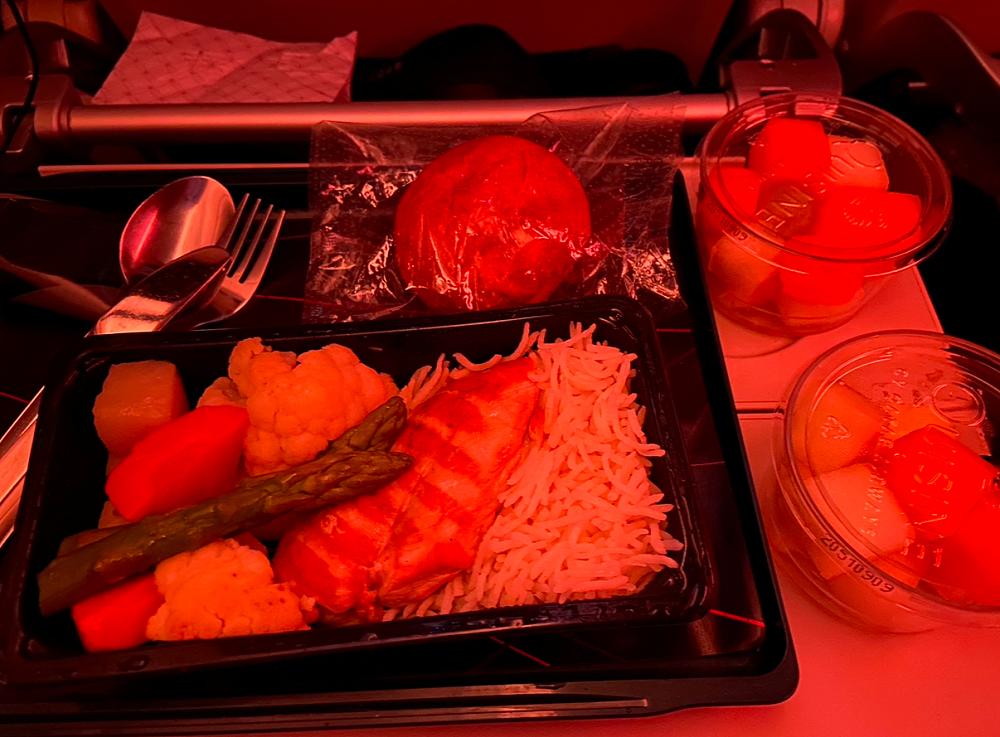
My experience highlights the struggles many of us face in securing safe and basic accommodations for travel. It’s encouraging to see organisations like Crohn’s & Colitis NZ support us in raising awareness, and to know that others in the Crohn’s community are sharing their stories to push for change. With enough voices, perhaps airlines and other service providers will understand that safe, accessible meals are not a luxury - they’re a necessity for a portion of their passengers.
In the meantime, for anyone planning their own travels, my advice is to start your arrangements as early as possible, document all communications, and connect with support groups who understand these challenges. Let’s continue advocating together - our health and comfort are worth it!