
Photo by Melinda Bennett
2017 Strategic Actions
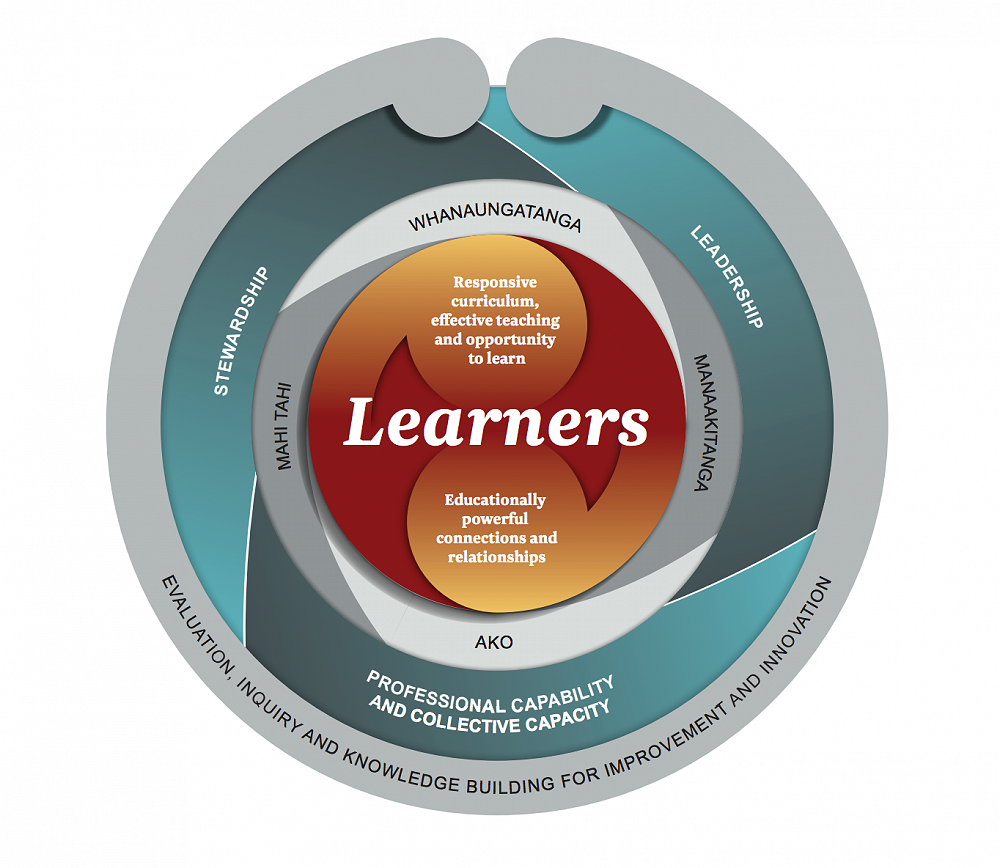
We have grouped our key strategic actions for 2017 under the concepts of Whanaungatanga (belonging/connections), Manaakitanga (respect, hospitality & support), Ako (to learn and teach) and Mahi Tahi (collaboration towards a common goal). These concepts are drawn from the Education Review Office's School Evaluation Indicators document and collectively provide the foundation for an approach to education that is culturally responsive and challenges educationally limiting deficit theorising.
Whanaungatanga & Manaakitanga
- Building educationally powerful and culturally responsive connections and relationships.
Whanaungatanga describes the process of establishing links, making connections, and relating to the people one meets by identifying in culturally appropriate ways. Applied to the school context, whanaungatanga demands quality teaching-learning relationships and interactions and that the teacher take agency in establishing a whanau(family)-based environment that supports engagement and learning.
Manaakitanga embodies the concepts of mana(authority) and aki(to encourage and acknowledge). Manaakitanga describes the obligation of the host to care for their visitor's emotional, spiritual, physical and mental wellbeing. In the school context, these understandings point ot the need to care for children as culturally located human beings by providing a safe, nurturing environment. This will include developing and sustaining the language, culture and identity of every student to ensure that they have the best opportunity to learn and experience educational success.
Ako
- Developing a responsive curriculum, and reciprocal teaching and learning relationships through assessment capability and teacher inquiry.
Ako describes a reciprocal teaching and learning relationship "where the child is both teacher and learner" and the teacher also learns from the child. Ako recognises that the student's whanau(family) is inseparably part of learning and teaching.
Mahi Tahi
Developing a shared and documented understanding of:
- assessment capability
- cultural responsiveness
- e-learning
- building learning power
Mahi tahi describes the unity of a group of people working towards a specific goal on a specific task. In the school context, mahi tahi describes the business of working together collaboratively in the pursuit of learner-centred education goals.