What are Creative Commons Licences?
Want to find content but don't want to breach copyright? Or are you happy to share your work, as long as no-one uses it to make money? Learn how the Creative Commons Licences can help you.
Traditionally, when work was copyrighted it was with 'all rights reserved'. This means that only the creator had the rights to copy the work, adapt/change it, distribute or publish it, perform the work in public, and the right to display the work.
Creative Commons (CC) Licences were developed by Creative Commons (a not-for-profit organisation in America) to provide a balance between retaining copyright, but allowing others to utilise the work promoting creativity and an 'open' environment.
In other words, CC licences are a group of public copyright licences which allow the free distribution of copyrighted work under specific conditions. These conditions include things such as whether you can change the work, how you are able to share it and whether the creator requires credit.
For example, a photographer could let people share and use his photos, but not allow companies to sell them. Or a blogger could allow his blogs to be reposted as long as he is credited for the work.
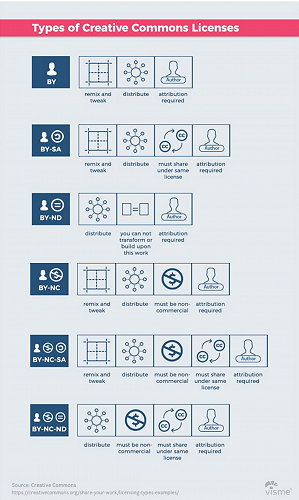
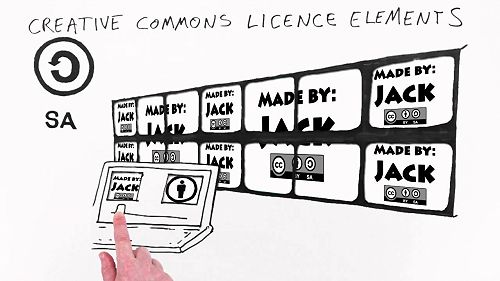
Check out the video at the bottom of this article for a great explanation of how to combine Creative Commons Licences. Also at the bottom of this article is a great visual explanation of the 6 types of creative commons licence, created by Visme - take a look at their blog for more information.
Gallery