Dunedin’s Flu Tsar and Ju-Jitsu Parson
Warwick Brunton's article in a recent edition of South Calling prompted Fr. Hugh Bowron (Caversham Parish) to share some of his recent research into Rev'd Vincent Byan King junior.
(Article also attached below for printing)
Dunedin’s Flu Tsar and Ju-Jitsu Parson
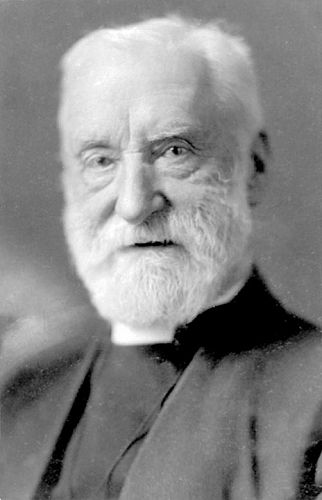
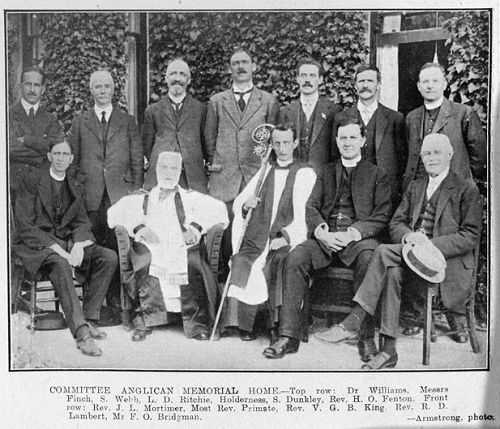
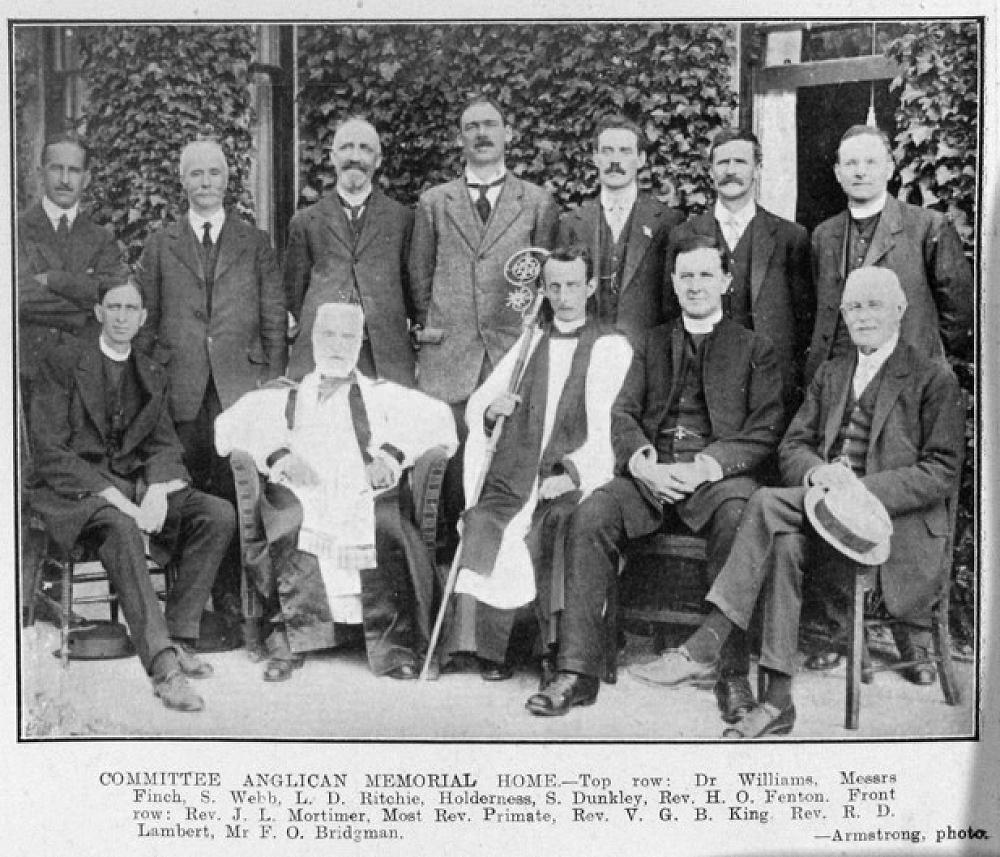
A photograph in the December 1918 edition of the Dunedin Diocesan magazine The Church Envoy shows the committee of the newly opened Memorial Home for orphaned boys in Vauxhall, Waverley at the opening ceremony. Seated next to Bishop Nevill is his Chaplain, a tall, thin, bespectacled man who looks somewhat frail.[1] This is the Revd Vincent Bryan King who had already become one of the most well-known and respected clergyman in Dunedin, whose prestige would increase still further in the inter war years as he became the Dunedin Diocese’s premier social worker priest.
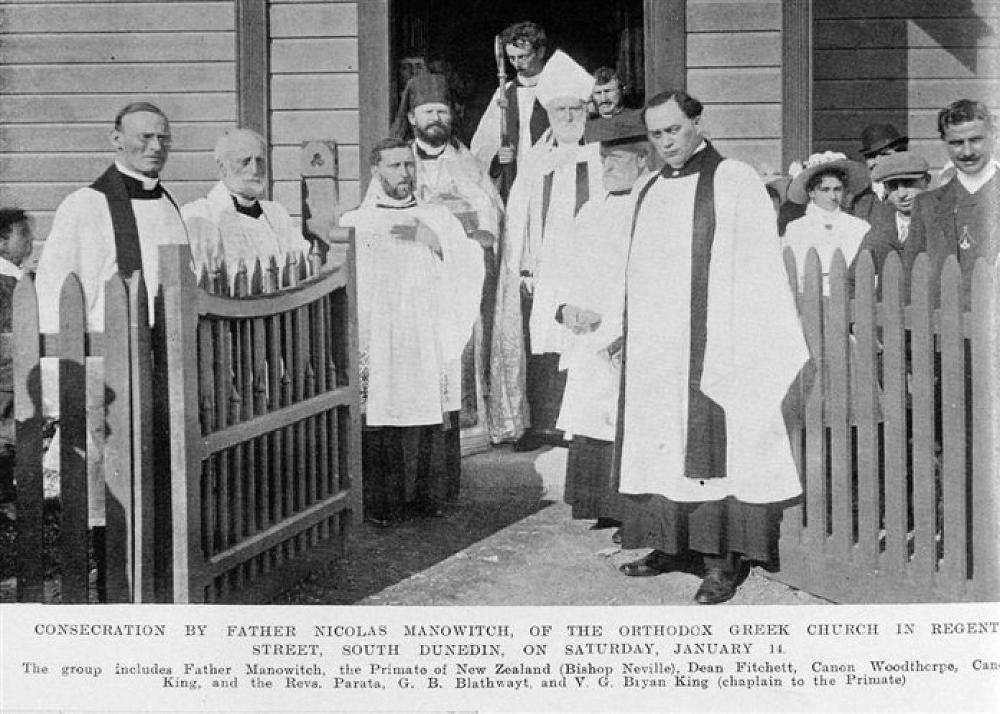
He had come from a remarkable lineage of Anglican clergy whom we will refer to later. His father was the Revd Bryan King, the priest who brought ritualist religion to St Peter’s Caversham and who established that parish’s Anglo-Catholic character that would endure down the generations. Vincent Bryan King became his father’s co-worker as the Superintendent of the St Peter’s, Caversham Sunday School and as the assistant of the Revd Woodhouse, the Curate responsible for the Forbury Mission that would morph into the nascent Anglican worshipping community in St Kilda, the Mission Church of Holy Cross.
King junior would be ordained a Deacon in 1904 licensed as a private Chaplain to the Bishop, a most unusual position for a newly ordained clergyman to hold. He appears to have enjoyed a close relationship to the Nevill’s because when the Bishop’s first wife, Mary Susannah, died in 1905 she left him a bequest of 2,000 pounds, equivalent to 6 to 7 year’s stipend for a reasonably remunerated Vicar.[2]
In 1906 he was licensed as Chaplain Visitor to Public Institutions, which gave him specific pastoral responsibility for the hospital, the prison, the law courts, the industrial school and the benevolent institution. He appears to have been a man of prodigious energy for he soon became President of the City Relief Association, Chairman of the Red Cross and the St John Ambulance Association, a member of the Committee of the Society for the Protection of Women and Children, on the executive of the Hospital Saturday Association and Brigade Chaplain to the Boys Scout organisation.[3] At the same time he appears to have had problems drawing boundaries around himself for he continued on as St Peter’s Sunday School Superintendent until 1909, which suggests he may have continued helping out at his father’s parish for a few years. Unusually he was not priested until 1909.
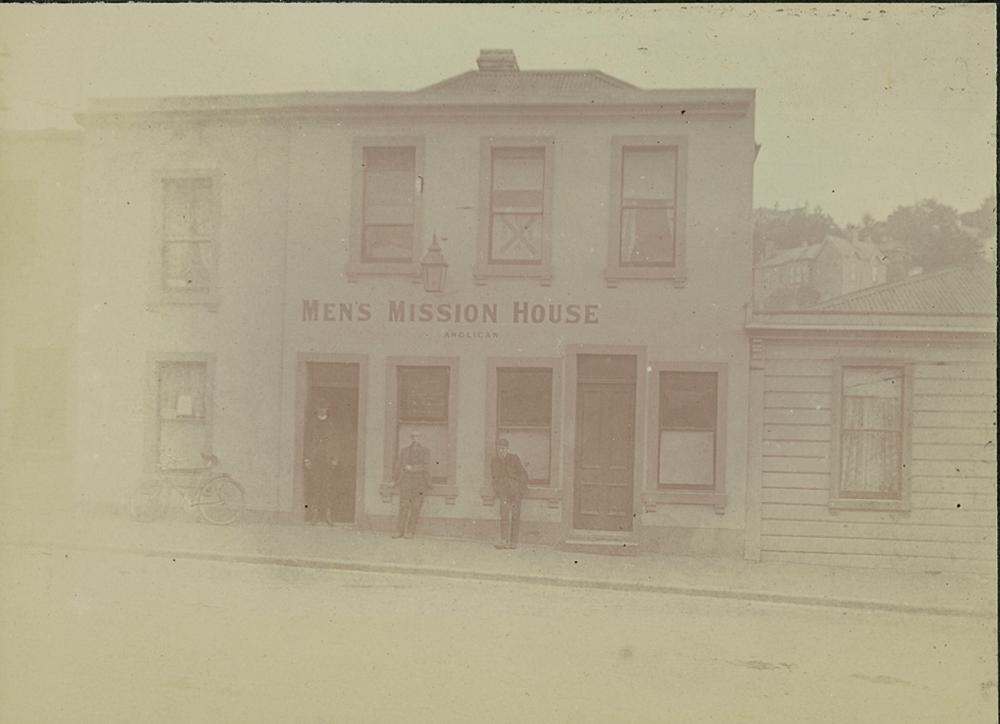
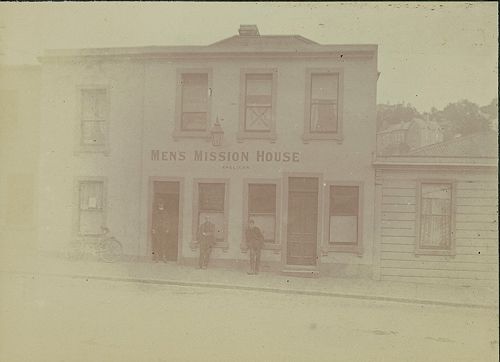
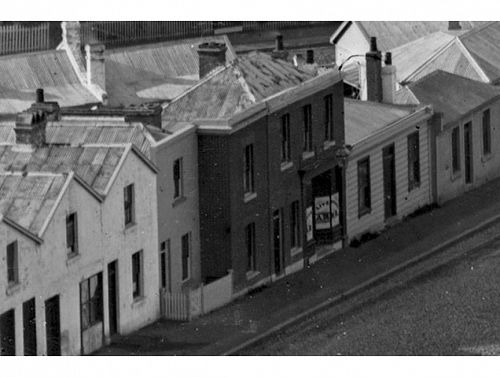
In that year he opened a Mission House in Filleul St, the first of his major achievements. 46 Filleul St had formerly been the Liverpool Arms. It lost its licence in 1894 and became one of the most unsavoury houses in a quarter of Dunedin with a bad reputation. In Kings words, “It had become tenanted by rogues, vagabonds, gamblers and half-caste Chinese girls. It was filthily dirty; when it was being cleaned the accumulation of years had to be scraped off the floor with spades. In an upstairs room 12 or 14 ferrets had been kept, and long after their removal there remained in their vicinity an odour that forcibly reminded one of the polecat tribe.”[4]
The Mission House provided meals and a letter writing service, dispensed clothes and furniture, offered some accommodation, and had a games and reading room. A Service was held there on Sunday evening. King acted also as an employment agency and provided railway tickets to those en route to a job opportunity. He was renowned for his ability to discern the difference between a bogus hard luck story and a case of genuine need,[5] and was forthright in strongly advising the public against indiscriminate giving to those who lived off the gullibility of the naive.[6] Much of the manpower to staff the Mission House was provided by the Brotherhood of St Andrew, an association of idealistic, altruistic young Anglican men united around a service ethic and a rule of life.[7] The Mission House would evolve into a City Mission and would remain in continuous existence until 1944 when it closed a year after King’s retirement.
Ju-Jitsu Christianity
However, the local roughs and toughs did not take kindly to the opening of a Mission House in their immediate vicinity and immediately challenged its right to be there.[8] King would be obliged to reveal a side of his personality unusual in a clergyman:
Not once, but several times, gangs of roughs invaded his premises and made a wreck of the furniture. (Mr King conducted the reporter to a back shed, where there were broken tables, chairs, washstands, etc.) Mr King had had practically all his furnishings presented to him – he regards himself as a “champion beggar” – but he was not prepared to tolerate such treatment as that. And it would seem that several interesting trials of strength and skill – “fights” is a harsh word – took place. Mr King, as a Churchman and a lover of peace, strongly deprecated these contests, and any discussion therein, but he was not prepared to say that he took no part in the protection of his mission house. Now, Mr King is tall and pale and slightly built. The reporter was curious to know how he fared in these unwished-for encounters, and he put the question. Mr King smiled, and pointed to a couple of boots lying handily. “Ju-jitsu?” said the reporter. “Precisely,” said the clergyman. “My best friend. I learned it long since, and have used it frequently. Useful. I would be almost helpless without it.” He gave a demonstration. In a flash the pressman was caught in a grip that was not to be gainsaid. He lost all idea of the position of his right arm – it was fastened up somewhere out of sight. The left arm was painfully bent back and across, and the subject yelled for release. Mr King, well satisfied, sat down again. He said that ju-jitsu enabled him to deal easily with some of the roughest visitors to his establishment. “I have had some of the biggest wharf labourers in Dunedin tackle me at different times,” he said, complacently; “but I survived. No – no damage. But one has to be careful with the ju-jitsu system. Just the least degree too much pressure, and an arm or leg is broken.” In course of time the roughs ceased their attacks, and, from being an object of dislike in the neighbourhood, the mission-house has become the rendezvous for a large number of men, who congregate there in the evening and indulge in social intercourse, games, reading, etc…[9]
A landmark trial of strength and skill secured King’s reputation as one whose authority was not to be challenged and as one who had the knack of turning foes into allies. A large man refused to leave the mission house at closing time and after arguing the toss with King, “declared his entire independence, and said that he would be gratified to meet the person who could eject him. Then ju-jitsu was brought into use, and the big man found himself suddenly and unaccountably outside. He came back and shook hands with Mr King. “Parson,” he said, “you’re something more than you look. After this I’m your man,” and so he proved to be.”[10]
Why might Vincent Bryan King have made himself proficient in Ju-Jitsu? We can only speculate but an incident had occurred in his growing up years that suggests a possible answer. In November 1899 the Otago Daily Times carried a report of an assault that had taken place near the King’s family home.
A case of alleged assault at the corner of Cargill road and Brunswick street,South Dunedin, has been reported to the police. Mr Charles King, son of Canon King, and Mr Wm. Bridger were returning to their homes, after visiting some friends, about a quarter past 10 o'clock on Tuesday night, and when nearing the locality named were interfered with by a man standing there. It is alleged that he first attacked Mr King, and subsequently turned his attention to Mr Bridger, who took his friend's part. Mr King went away for assistance, and during his absence a prolonged tussle [sic] took place between the other two men, Mr Bridger getting the worst of it. The assailant, who is described as a man exceptionally well dressed and of powerful build, at the conclusion of the encounter made off. The police are inquiring into the matter. [11]
It may well have been the case that this assault motivated Vincent Bryan King to equip himself with the skills of unarmed combat so as to be able to deal with any future such incidents in what was a rough industrial working class suburb. We can note here also the family background of intense conflict in the course of parochial duties and of mob violence directed at his Grandfather, a Victorian clergyman who was a heroic martyr to some and an infamous object of scorn to others.
St Georges in the East
Here it is necessary first to give an account of his remarkable family background within the fiery conflicts over ritualism in the East end of London. The second phase of the Oxford Movement, that of ritualism, and of its heroic phase the ritual riots, is generally supposed to be have been initiated by the ritual riots that occurred at St George’s in the East from 1859 to 1860. The tumultuous events that disrupted Sunday Services there drew in supporters from polarised extremes of the Church of England and local opinion, together with fitful attempts by police constables to bring the troubles under control. At the end of this proxy struggle the Rector, the Revd Bryan King, was driven off to the quiet country living of Avebury where he would end his days. Anglo-Catholic hagiography would henceforth hail him as a martyr of ritualism.
The Inscape of Bryan King Junior
Bryan King junior, who would go on to change the religion of St Peter’s Caversham forever, and who was the father of Vincent Bryan King, was the oldest of nine children and was named after his father. He was born in the St George’s Vicarage and would have been a teenager at the time of the troubles. What interests us here is his inscape on these events and his father.
Included in his papers held in the Dunedin Anglican Cathedral is one of the hagiographical accounts of the trials and tribulations of Bryan King senior. It is clear that Bryan King junior was a convinced Anglo-Catholic who arrived at St Peter’s Caversham with a ritualist agenda and was to some extent an admirer of his father. He wore his father’s Eucharistic vestments there and set out to do what his father had done at St George’s in the East. However, it would have been hard for him to ignore some of the contemporary critical assessments of his father’s ministry there that had lead after all to a failed and rejected ministry. Sociologist John Shelton Read has brought all this contemporary criticism together when he writes:
The Time’s intelligence report had also observed that “in private life he is as remarkable for his extreme pride and hauteur, as he is notorious for want of propriety and discretion in the administration of the duties appertaining to his public function,” and the facts that the riots continued after he agreed to give up the disputed practises, and stopped only when he left the parish, suggests that the issue was as much the rector himself as his ritual. For most of the protesting parishioners, the innovations were an excuse to protest, a stick to beat an unpopular clergyman with…Mackonochie’s biographer has written of King, sadly: “He was not without courage; he showed patience and forbearance, and behaved with considerable dignity in some trying situations. But it is difficult to escape the impression that he was something of a noodle.” At the time of King’s greatest troubles, the Daily Telegraph was less temperate; it called him a “silly, effeminate, carnal man.”[12]
More recent scholarship has been kinder to Bryan King. Nigel Yates has pointed out that to some extent he was blamed for what others had done. The Society of the Holy Cross, a militant defence association of ritualist priests, had persuaded him to allow the creation of the mission church of St Peter’s London Docks within his parish boundaries, where its 2 founding SSC (Societas Sanctae Crucis) clergy, the Revds C.F. Lowder and J.N. Smith, practised an advanced style of ritualist liturgical religion from the start of their ministries there, including the first use of vestments within the diocese of London. A little later King was presented with two chasubles, one white and one green, presumably the ones his son would wear at St Peter’s, Caversham, which he agreed to wear with some misgivings. Having been egged on in these two ways he would soon discover that these provocations inflamed an already tense parish situation originally caused by rather more modest liturgical changes.
Moreover, Bryan King was prepared to compromise in his next living of Avebury in order the meet the concerns of its lay patron Lord Westbury, the Lord Chancellor, that the congregation would not have changes in their worship imposed on them without their consent.
Bryan King junior would succeed in introducing ritualism to St Peter’s Caversham without conflict, and given his popularity amongst both his parishioners and the wider community would seem to have done so in part because he had the emotional intelligence and ability to get on with people. The events at St Georges in the East in 1859-60 would have no doubt given him considerable food for thought about how to learn from his father’s painful experiences there. In any event as an oldest son Bryan King junior would have been highly motivated to do well in the parish that would turn out to be his major life’s work.
Early Career Bryan King Junior
King junior’s working life began in commerce when he joined the mercantile firm of George S. King based in Liverpool and Bombay. By 1863 he was located in Bombay and would be head of the firm there for the next five or six years. In 1869 he was admitted as a partner. Here was an advantage for his later life in ministry, a working knowledge of business, administration and finance together with the experience of living and working in a different culture.
In 1874 he resigned from the firm and returned to Avebury to prepare for the ministry studying for the next 4 years under the direction of his father. In 1878 he proceeded to Perth in Western Australia where he was ordained and then had 5 years of parish experience serving both in WA and Tasmania.
Dunedin Beginnings
In 1885 he arrived in Dunedin to become the theological tutor for ordinands, a position he would hold in tandem with being Curate in charge of St Martin’s North East Valley. This was a significant appointment, since Bishop Nevill believed that the only way to keep clergy in the diocese and end the instability of high ministry turnover was to train local ordinands locally for local conditions. King was moving closer to Nevill becoming a trusted lieutenant as reflected in his additional responsibilities as Diocesan Registrar. The stage was now set for King’s advent at Caversham in 1892.
St Peter’s Caversham was a parish drowning in debt. The decision to relocate the parish church and to rebuild it in brick had escalated the parish’s debt problems to the point where the animator of this move, the Revd Ronaldson, had been obliged to resign the living. His successor, an inexperienced and under trained priest, had also been overwhelmed by the debt crisis and had been obliged to leave. Bishop Nevill resolved to take action to save St Peter’s Caversham. He determined that the parish was so insolvent and so lacking in lay governance that he had the right to impose his choice of Vicar on it. In his Presidential address to the 1915 Diocesan Synod, shortly after King’s death, the Bishop summed up King’s ministry in this way:
It may not be known to all that he (King) accepted the charge of St Peter’s, Caversham, at my request entirely as an act of faith. There was at the time no Vestry, and no stipend could be offered. He never had robust health, but his unfailing courage and manifest sincerity first attracted to his side a band of earnest ladies, and later the parish organisation was restored, the terrible debt grappled with, and, as a reward of many years of patient effort, the late Canon had the happiness of seeing when he retired a strong and well-equipped parish with many additions to its property and its debts reduced.[13]
King faced a formidable set of challenges but he had several advantages in his favour. He had experience having been in charge of three parishes before this one. His pre-ordination business career in Bombay would have given him financial and administrative skills. He could count on the whole hearted support of his Bishop in the event of a showdown with his parishioners, support that would soon be put to the test. There were no lay popes or Orange order extremists to oppose him. Perhaps most crucially, the parish was desperate. This was a ministry that had to succeed if they were to continue to exist as an Anglican faith community with any kind of coherence or a future.
The issue of debt reduction would continue throughout King’s ministry. He would succeed in bringing it down by a substantial margin. For now we will content ourselves with two observations.
When Nevill said of King that “he attracted to his side a band of earnest ladies” he was referring in large part to the Guild, the women’s organisation that could be counted upon to be a cash cow that indefatigably fund-raised for the parish on an almost continual basis. Perhaps women didn’t have the vote at parish meetings but they had indispensable economic power. Maintaining a relationship of co-operative goodwill with them was essential for clergy survival in marginal parishes. King was clearly able to do this.
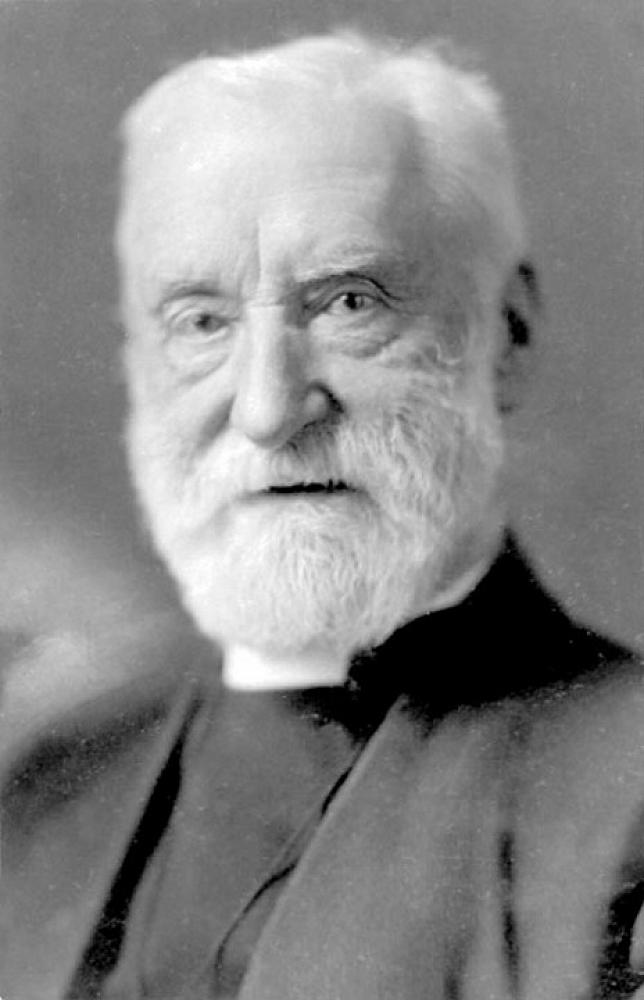
Amongst the Caversham debenture holders was Nevill himself. He put his money where his mouth was and backed his parish priest to the hilt. What was more he had money for he had married it and used it in generous measure to resource his struggling diocese.[14]
Historical accounts of the beginning of the Dunedin diocese and of Nevill’s ministry often get bogged down in the Jenner affair. They miss the point. Jenner was a gentle soul who after being blocked as first bishop of Dunedin because of his perceived ritualism retired to a country parish where he wrote hymns.[15] Nevill was a difficult man, irascible, combative, often quarrelling with his clergy, but he had energy and drive and money, lots of it, and he used this private wealth to make things happen in his diocese. If Jenner had become the first bishop the diocese may well have not got off the ground. For all his faults, Nevill was the generator and saviour of the diocese.
One of the pre-requisites for the successful installation of a ritualist ministry was for the newly arrived priest to have control of the cash flow situation. King had achieved that, though not without difficulty. The arrival and embedding of his ministry in the parish seems to have been achieved without major conflict. It was more in the nature of “entryism.”
When in 1911 King announced his intention to retire, the parish would raise a generous sum of money to top up his pension.[16] He would leave a much loved parish priest. He had told the 1894 parish AGM that in, “seventeen years of pastoral work in three colonies and four parishes I have never had such overwhelming difficulties as in this parish; but, on the other hand, I have never had such promising and hopeful results.[17]” He had made those promising and hopeful results happen.
The Flu Tsar of Dunedin
As the November 1918 influenza pandemic spread throughout the country Dunedin showed more initiative than any other New Zealand city, getting in ahead of the Minister of Health’s telegram to all mayors on 12 November authorising local government to set up epidemic relief organisations. Dr Irwin Faris, the District Health Officer, took it upon himself to bypass the mayor and directly approached King in his capacity as local president of the Red Cross and St John Ambulance Association asking him to be the city’s chief organiser of epidemic relief. This turned out to be a good call as many of the council’s staff, including the town clerk and his assistant came down with the flu.
King swung into action making the Red Cross shop in the old post office building his headquarters. This central bureau rapidly developed into a considerable organisation of several hundred volunteers with a nerve centre and office staff of ten.[18] King was answerable only to Dr Faris and the hospital board chairman W.E.S. Knight, with the three of them functioning as an informal steering committee. King was authorised to incur any expenses he thought necessary. He had become almost overnight the Flu Tsar of Dunedin.[19]
The best source of information about the 1918 influenza pandemic is Geoffrey Rice’s Black November: The 1918 influenza pandemic in New Zealand, a Canterbury historian who taught me his Crusades paper at Masters level in the mid-1970s. Interestingly he confuses Vincent Bryan King with his father Bryan, who had died in 1915, a surprising mistake for a professional historian.
The central bureau received all the requests for invalid food and household help. It had a large pool of volunteer motorists who ferried helpers and relief supplies to stricken households. It also handled the many hospital admissions. By the 14th of November there had been 80 hospital admissions and the hospital was overflowing with 6 deaths having already occurred. Two temporary emergency hospital venues were opened just in time for the climax of the emergency on 22 November when 247 cases were under treatment. The problem was of course that doctors did not know what to do to treat the viral disease effectively. Many remedies were desperately tried ranging from quinine, aspirin, bronchitis vaccine, mustard poultices, turpentine inhalations, alcohol, morphine and heroin. The only nursing assistance that was in fact helpful was sponging the patient down to try and reduce their temperature and supplying lots of fluids. Fruiterers did a roaring trade in citrus fruits and were frequently accused of profiteering.
On the 20th of November Dunedin was divided up into 16 blocks to save much wasted effort and travel time. While the central bureau still operated as the nerve centre and communication hub the 16 hubs acted as distribution points for emergency food and clothes and doctor visits.
Dunedin was fortunate in having just over half the death toll of Christchurch and was the least affected of the four main centres. 701 flu victims were admitted to Dunedin hospital, 530 of which were pneumonic with 172 deaths resulting. It was different too in having a more gradual build up to the pandemics peak and a slower return to normal. The worst day came on 26 November 1918 when 16 people died.
It is impossible to say whether Dunedin’s early and well organised preparedness was an important factor in this lesser mortality. The death rate declined the further south the disease spread. However, the people of Dunedin were clear where their debt of gratitude lay. In early 1919 Vincent Bryan King was presented with a cheque for 1,000 pounds raised by public subscription, together with a new motor car to assist with his continuing social work ministry. The money would have been appreciated because King was paid the princely annual sum of 102 pounds, way below the usual Vicar’s stipend.[20]
Subsequent Career
King would be prominent in organising relief efforts after the two major floods of 1923 and in the South Dunedin flood of 1929, visiting house to house in 12 streets. He would receive the Prince of Wales at the Monticello Home for war veterans in 1923 and the King in 1927. His name would appear with dreary frequency in the court pages in cases relating to wife desertion and non-payment of maintenance orders where his testimony, based on his extensive pastoral contact with broken families, was often the basis of judicial decisions. He appears to have taken a very hands on approach to resolving these difficult pastoral matters and had a sense of ironic humour about the unexpected outcomes of some of these interventions. He explained one such case in this way to the Witness:
A woman was being cruelly ill-treated by her husband, and he wished to get her away and obtain a summary separation order on her behalf. The husband in question was a truculent ruffian — quite possibly he would fiercely resent any interference with his domestic arrangements. One night the clergyman, on hands and knees, approached the house through the grass surrounding it, and ascertained that the husband was out. He went in, hurriedly collected the woman and her children, took them away, and spent a portion of that night finding them suitable lodgings in another part of the city. The next day he took the wife to the Police Station in order to set the machinery of the law in motion. And here, to his surprise, the lady turned fiercely on him, blamed him severely for his action, and accused him of maliciously separating her from her husband. And she actually returned to the man referred to.[21]
He would also be at the organising centre of relief work projects for the unemployed. “Things are bad” he would tell the unemployment committee in 1926.[22] In 1929 he would report that “never in his 25 years’ experience in Dunedin had he seen such hardship in the city and suburbs as existed today. In the past there had been unemployment and consequent distress, and they had been able to meet it, but the present position was overwhelming.”[23]
Given his tendency to spread himself too thin it is not surprising that his health collapsed in 1922, 1923, 1929 and then so seriously in 1930 that he would be granted 12 months leave of absence for a holiday in England with his son.[24] There he would visit St Georges in the East, London where the King ritualist saga had begun. His wife had died the year previously.[25]
King retired in 1943. The Mission House would close in 1944. He died in 1945. His son Meyrick Vincent Bryan King was ordained in 1948 but would rarely function in ordained ministry being of a neurasthenic disposition. When he died in 1988 his tombstone in Broad bay cemetery read “In memory of Meyrick Vincent Bryan KING 1912-1988 priest, Psalm 31: 7 “I will rejoice…because Thou hast taken heed of my adversities.”[26]
At the beginning of Vincent Bryan King’s ministry the Chair of the Advisory Board for the Men’s Mission had spoken of his “accustomed self-denial, vigour and tact.”[27] At the midpoint of his ministry the New Zealand Truth, not a newspaper noted for its enthusiasm for the Church, wrote of him:
"Dunedin is fortunate in the possession of a fine band of social workers, and it is nothing to the detriment of the others to say that Bryan King is king of them all. He wears the clerical garb of the Anglican priesthood, but there is no such thing as a barrier of creed in his mission of mercy. He has a penchant for finding the most needy cases, and he responds to the cry of distress at any hour in the twenty-four, the motor car with which he was presented by his host of admirers seeming to be always on the road. His pet hobby appears to be the straightening out of domestic differences, and many a broken hearted wife has had occasion to bless him for turning the footsteps of her wayward husband into the paths of rectitude again. Every movement and society that has for its object the uplifting of humanity generally has his active support, while in him the war-battered inmates of Montecillo Home have the warmest of friends. His aim in life is to bring a little sunshine into the lives of those burdened by sickness or sorrow, and in this, judged by the Biblical pronouncement, “By your deeds shall ye be known” Bryan King is a man among men.”[28]
His obituary in the diocesan newspaper harked back to his ritualist origins and concluded, “Mr King tried in his life to show the social implications of the Catholic faith.”[29]
[1] Church Envoy, 15 December 1918, 258.
[2] Blain Biographical Directory, Nevill’s first wife was the source of the substantial private income with which he would finance much of his struggling infant diocese. She had been ailing for some time and was cared for by a companion Miss Fynes Clinton, the daughter of a diocesan clergyman. Nevill would marry her in late 1906.
[3] Evening Star, 25 October 1916, 8.
[4] Otago Witness, 10 November 1909, 89.
[5] Evening Star, 30 March 1911, 4. 11 July 1913, 7.
[6] Evening Star, 20 July 1910, 6.
[7] Mataura Ensign, 29 October 1909, 3.
[8] The Police had warned King against opening the Mission House in that locality. Evening Star December 1916, 11.
[9] Ibid.
[10] Ibid
[11] ODT, 9 November 1899, 4.
[12] .John Shelton Reed, Glorious Battle: The Cultural Politics of Victorian Anglo-Catholicism (Nashville: Vanderbilt University Press, 1996)."Principal Clergy of London classified"...Reyonolds, Martyr of Ritualism, 51...Quoted in Henry T. Brandreth, Dr Lee of Lambeth: A Chapter in Parenthesis in the History of the Oxford Movement (London: S.P.C.K., 1951), 21.
[13] Minutes of the Proceedings of the First Session of the Seventeenth Synod of the Diocese of Dunedin. First Day: Monday, 7th June 1915. (Dunedin, J. Wilkie and Co Ltd Printers and Stationers), 13.
[14] He paid for the building of the Episcopal residence, gave generously to the building of Selwyn College and was a major contributor to the Church Fund, the diocesan fund that subsidised poorly paid clergy in struggling parishes. He was also a successful solicitor of donor funds in his visits to Britain.
[15] Most notably “We love the place O God,” a great favourite at induction Services for Anglican clergy.
[16] Vestry Minutes 7 December 1910.
[17] Evening Star, 20 July 1894, 1.
[18] Information derived from Geoffrey W. Rice, Black November: The 1918 influenza pandemic in New Zealand, (Christchurch: Canterbury University Press 2005), 124-125, 131, 133139-140.
[19] ODT, 14 November 1918, 4; Evening Star, 14 November 1918, 6; 15 November 1918, 4; 18 November 1918, 4; 19 November 1918, 4; 21 November 1918, 4; 27 November 1918, 4; 14 December 1918, 9.
[20] Otago Witness, 22 June 1910, 16; Evening Star, 25 April 1919, 2.
[21] Otago Witness, 10 November 1909, 89.
[22] ODT, 12 August 1926, 10
[23] ODT, 14 March 1929, 6.
[24] ODT, 21 October 1922, 4; 8 May 1923, 8; 2 February 1929, 8; 17 March 1930, 10; 27 March 1930, 12; 20 May 1930, 3.
[25] ODT, 17 December 1929, 10.
[26] Blain Biographical Directory, Accessed 12/4/18.
[27] ODT, 22 June 1910, 16.
[28] NZ Truth, 12 April 1924, 6.
[29] Church Envoy, July 1945, 86-87.
Gallery