Dr Tony Fitchett's life of service to the Church
In the second of two articles, Dr Tony Fitchett reflects further on his extraordinary involvement with the Anglican Church in Aotearoa - New Zeland and Polynesia.
Tony Fitchett and the Anglican Church - Part 2
Click here for Part 1 of this article
A New Zealand Prayer Book He Karakia Mihinare o Aotearoa
In 1987 a Special Session of GS was held at College House in Christchurch to go through the draft new Prayerbook, finalise the text, and pass it through the first stage of its authorization under the Church of England Empowering Act 1928. That meant spending almost the whole Session in Committee, so as Clerk of Committee I was concentrating on the text word for word all day and until Synod rose at about 10.00-10.30pm each evening. The rest of Synod had a drink and went to bed, but George Connor and I went through what had been passed that day to check the spelling of the Māori . Then George went to bed and I went through the Committee Book transferring any changes made to the Deposited Copy, from which the printer would work, and got to bed about 4.00am – and got up again at about 7.00am.
It was the hardest work I have ever done, even worse than being a paediatric house surgeon at Waikato Hospital in the winter, when one night, after working all day, I didn’t get any sleep through one night. After three and a half days of that, Synod concluded at midday, with a Standing Committee meeting scheduled for the afternoon, then Ken Booth and Stephen Brooker were to head back to Dunedin with me in my car. But when SC met John Paterson, General Secretary at the time, said to SC “I don’t think we have been caring properly for our Clerk of Committee” and suggested that I be given leave of absence, to get some sleep. So Ken and Stephen drove me home while I slept in the back seat of the car.

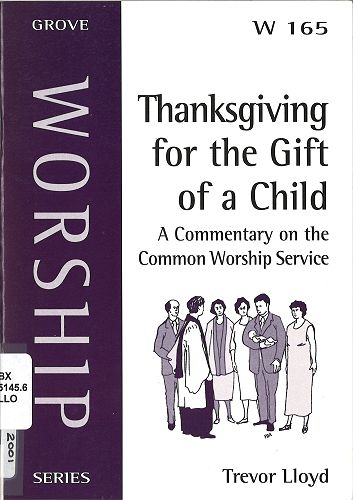
At the 1978 Special Session I managed to persuade the GS to retain as a Formulary one of the BCP services that the Prayer-book Commission wanted to delete – ‘The Thanksgiving of Women after Childbirth Commonly Called the Churching of Women’. It was originally, in the First Prayer Book of Edward VI, ‘The Purificacion of Women’, but the BCP service has no suggestion of uncleanness or purification. There was no equivalent new service proposed – just a service of “Thanksgiving for the Gift of a Child”. As an obstetrician I was well aware that some women, who lose a child during birth, survive ‘the great danger of child-birth’, and may want to give thanks for their survival[5]. The GS accepted that, so the service is still a Formulary of this church. That BCP service also triggered, years later, the only letter I have had published in the London Review of Books, challenging some comments about it in an article by well-known church historian Diarmid McCulloch.
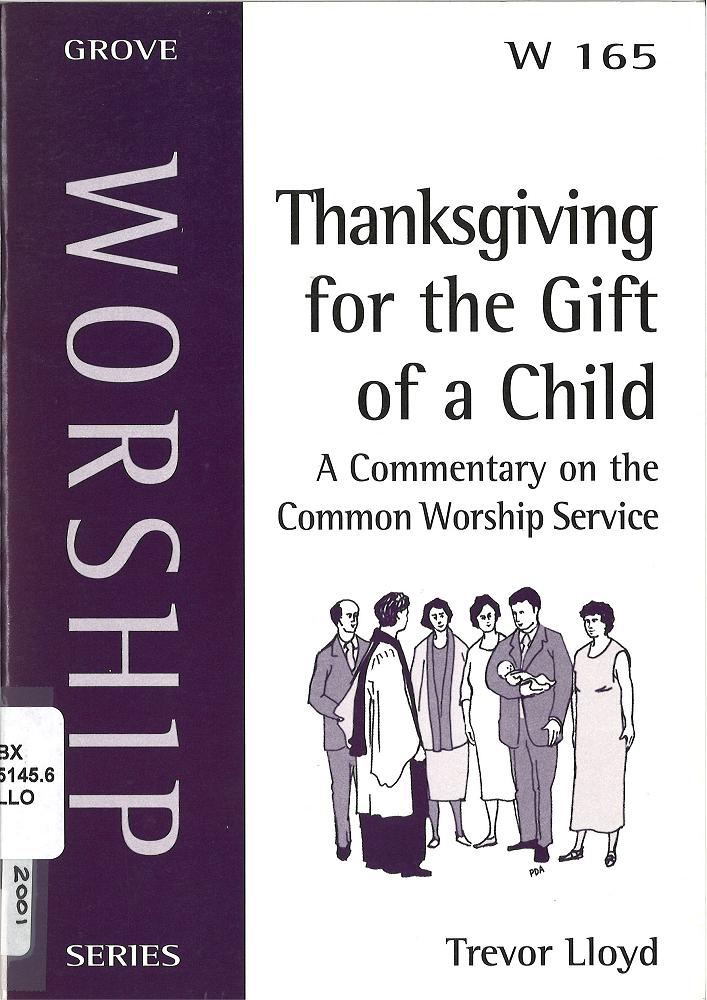
I was unsuccessful in asking for the Service of Thanksgiving for the Gift of a Child to include an optional prayer for the birth mother if the child was adopted – Bishop Brian Carroll [Assistant Bishop in Wellington Diocese, based at Palmerston North, and father of Peter Carroll, later Bishop of Christchurch], who I think was Chair of the Prayerbook Commission at the time, spoke very strongly against it, without giving any reason, other than that the Commission had decided against doing so.
At the 1988 GS a move was made to rationalize the complicated rules about admission [especially of children] to communion, and the Bill to do that included a provision welcoming to communion in Anglican services baptized members of other Christian churches, “subject to the disciplines of those churches”. I successfully opposed that proviso [at the time there was a Roman Catholic family attending St Paul’s Cathedral], and that triggered me to think more deeply about admission to communion. At the next GS I brought a bill to replace the complicated Title G Canon VII with the present wording: “All the baptized may receive the Holy Communion” – the shortest Canon in the Code, of which I am quite proud.
The 1990 Ordinary Session of GS was in Suva, Fiji – the first time it had been held in the Diocese of Polynesia.
One of the Bills was to adjust the boundary between Nelson and Christchurch dioceses, and it included recitals of the whole of both boundaries. Part of that was the boundary between Christchurch and Dunedin dioceses, taken unchanged from the old version, based on the original gazette of the provincial boundaries. It referred to “a right line [from somewhere on the West Coast] to the source of the Waitangi” and then down the “Waitangi”. It was supposed to be the Waitaki, but the drafters of the Gazette used northern dialect [Waitangi] rather than southern [Waitaki]. But there is a tributary of the Waitaki, on the Canterbury side, called the Waitangi River. One of the Dunedin clergy [either Bob Mills or Bernard Wilkinson] stood up and asked, with an innocent air, “What is the source of the Waitangi?”, and then explained about the Waitangi. There was considerable lighthearted discussion, including an offer from Tom Brown to lead a jet boat expedition to discover the source of the Waitangi. Some complained of time wasting, but I think it was quite useful, in relaxing people after a hot, busy afternoon’s work.
A revised Constitution / te Pouhere
In late 1990 there was a Special Session of GS to work through the first stage of adopting a revised Constitution for the Church, incorporating biculturalism and the three-tikanga structure.
At one stage during that Session I was speaking about a clause which I felt needed amendment when Taki Marsden, one of the Co-Chairs of the Commission that produced the draft Constitution, shut me up by having a stroke. I dropped my papers and went to help – we took him to an adjoining room, and I stayed with him until we got him to hospital. By the time we got back the relevant clause had been passed unamended, and a lot more progress made. I also took another member of the GS to hospital, as it looked as if she was developing laryngeal obstruction – thankfully I didn’t have to do a tracheotomy on the way.
In 2002 I was elected this church’s Lay Rep to the Anglican Consultative Council, and attended my first ACC meeting in 2005, at Nottingham, parts of which were decidedly un-Christian – it was the first ACC meeting after the consecration of Gene Robinson, who was in a same-sex relationship, as a bishop. For details of that meeting, during which I was a member of the Resolutions Committee, and the 2009 meeting in Jamaica, where I chaired that Committee, see ‘An Innocent Abroad’, in ‘To the Church To the World - Essays in Honour of The Right Reverend John C Paterson’. (See endnote for more about this - full extract of "An Innocent Abroad" attached at the end of this article)
At the 2009 ACC meeting I was elected to the Anglican Communion Standing Committee, which meant a meeting in London each year at St Andrew’s House, the ACC head office, which had accommodation attached. It was an ‘interesting’ time, with ongoing disputes regarding same-sex relationships, and the proposal for an Anglican Covenant, which I opposed for its proposed ability for Provinces to be ‘disciplined’ by the Communion (and was consequently described by a contributor to a hardline blog as “a treacherous scumbag”). I also spoke against action taken by the Archbishop of Canterbury, Rowan Williams, under pressure from ‘hardline’ churches, to exclude TEC and Canada from Anglican commissions and such – and gave notice to Rowan that I would be doing so. A couple of ‘hardliners’ withdrew from the SC because they didn’t get their own way on everything, but generally we worked together well even when disagreeing about some matters.
Much of my energy at my last few synods, diocesan and provincial, were, in addition to reporting from ACC, related to working, with others from, particularly, Auckland, Waiapu, and Te Pihopatanga, for an inclusive church, and against acceptance of the disciplinary parts of the proposed Anglican Covenant, which would have effectively created a sort of central magisterium to control and discipline Provinces.
Bron and I decided I would retire from Synod and the General Synod/Te Hinota Whanui when my term on the ACC finished after the ACC meeting in Auckland late in 2012. So the 2012 GS/THW in Fiji[6] was my last, and the 2012 Diocesan Synod supposed to be my last [though I was part of a later session as an alternate for a lay rep unable to be there]. I was farewelled by the 2012 Diocesan Synod with the gift of a lovely model of a stone church, made from small flakes of stone – very topical at a time when the Canterbury earthquakes had drawn our attention to the number of unreinforced masonry churches in the Diocese!
The Dunedin Diocesan Trust Board
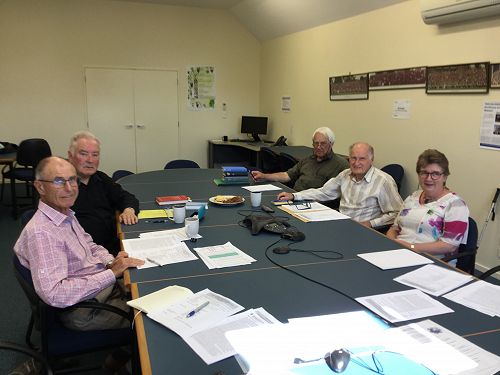
In recent years my only administrative contribution to the church was membership of the Dunedin Diocesan Trust Board, and for some of that time of its Investment Committee [recently as its Chair]. In January 2023 I resigned from the DDTB and IC for medical reasons, but remain a parishioner of the Cathedral District, and a Lay Canon Emeritus.
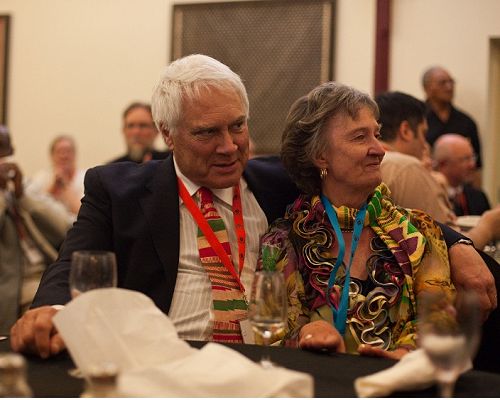
It must be realized that I couldn’t have undertaken my work for the Church without support from Bron, who, as well as studying for her Bachelor of Theology degree, a unit at a time, from the mid-1970s, and then tutoring in Biblical Studies for 10 years after she graduated in 1985, was, for much of the time, looking after four children, and a husband who was on call 24 hours a day[7] every day except when out of town.
Endnote:
It may be helpful to give some explanation of the background to the Rachael Gloag and Marcus Fitchett Memorial Medical Education Trust, and the publication of "As Well as Joy".
Our eldest son Marcus gained a Junior University Scholarship and Preferential Entry to Otago University Medical School. While doing his MBChB course, and a one-year BMedSci research degree between 3rd and 4th years, he also acquired a BA in Philosophy and an MSc [with Distinction] in Cognitive Science. After a year as a house surgeon at Kew Hospital Invercargill he and his partner Rachael, a nurse, headed overseas. On their way to the UK they both died in a motor vehicle accident in Canada, in 1996.
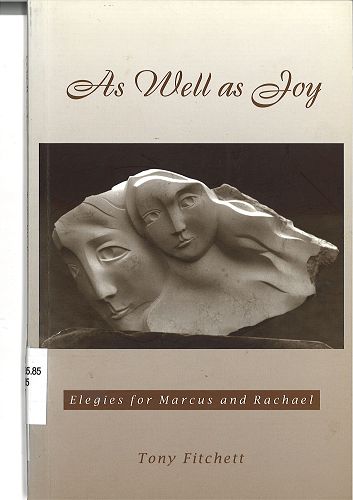
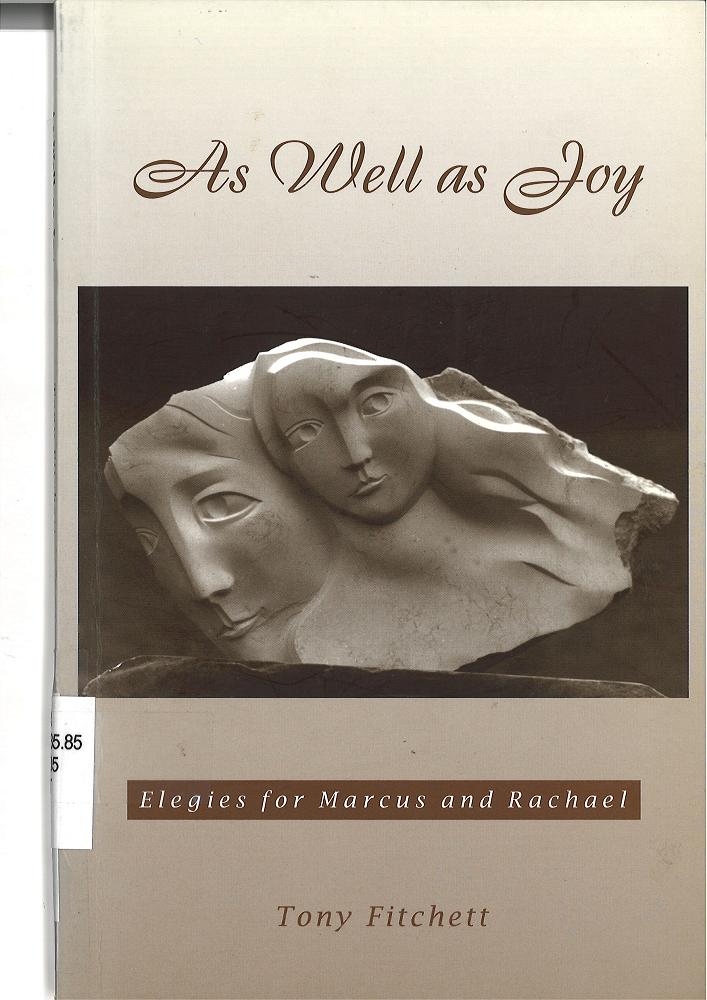
We were shattered - for some idea of how we were affected, see "As Well as Joy".
in 1997 Tony Gloag, Rachael's father, suggested that the two families set up a memorial fund to help impecunious medical students from low-income backgrounds - Marcus and Rachael had discussed with him the problems such students faced.
We decided, after advice from my 3rd form English teacher, and Longacre Press, that publication and sale of the verse that I had written in the first year or so after the accident could raise funds for the Trust, and that proved to be correct - the book "As Well as Joy" elicited some substantial donations as well as income from sales, and it has raised over $80,000 for the trust. It was sold through bookshops [I still occasionally get requests from shops] but the bulk of sales were from direct advertising to church congregations, Synods, General Synod/Te Hinota Whanui, medical groups, and anyone else I could think of - one can be shameless in promoting something with a charitable purpose.
The Trust has made grants from its investment income each year since 1998 - I am a member of the Med School committee that goes through applications for it and other trusts and makes recommendations regarding grants.
When I became involved in mentoring medical students in their Professional Development course, which included journalling about high and [particularly] low points during their training, I realised that's was what my verse writing had been for me, and in 2002 I gave a paper "Journalling as a response to loss and grief", based on my experience, to a WONCA (the world association of GP colleges) Europe meeting in London - that was reported on years later in the Church Times for 3 November 2017. (A copy of "As Well as Joy" - is held in the Resource Centre at Peter Mann House).
Footnotes
[5] I’m only personally aware of two women who have used the service
[6] It was personally notable because Bron, who has bronchiectasis, contracted there a pneumonia resistant to all the usual [and funded] antibiotics – I suspect antibiotics may be too easily available in Fiji, which would encourage the development of resistant strains of bacteria..
[7] For deliveries, while doing obstetrics, up until 1997, and for the Little Sisters of the Poor old people’s rest-home and hospital, for which I was the doctor for 40 years.
Gallery