
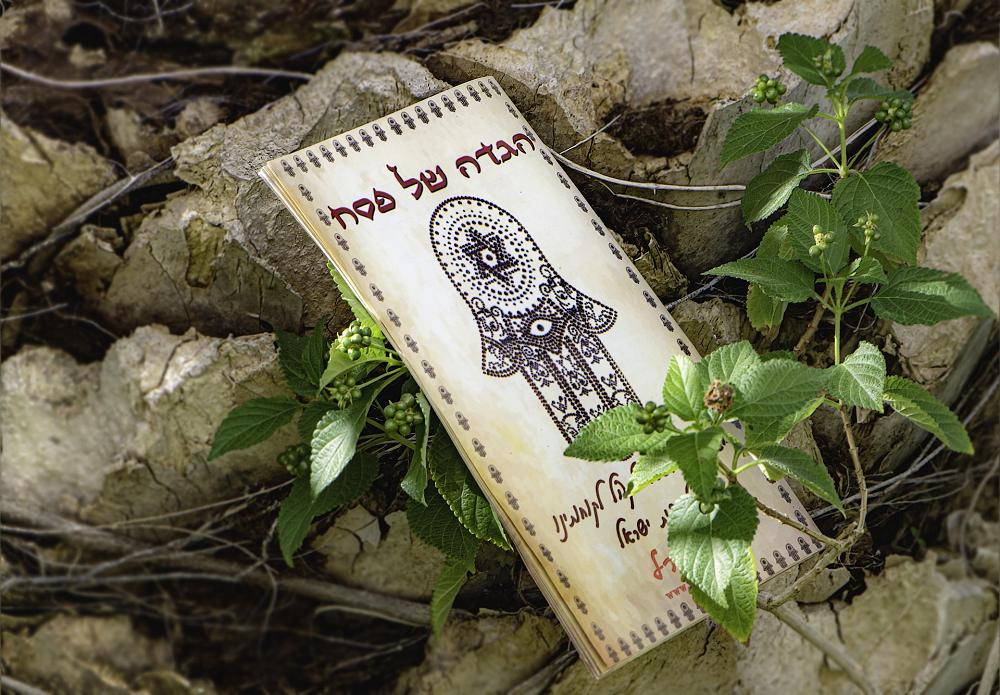
Joint Statement on "Christian Seders"
The following has been received and approved for circulation by the General Synod Standing Committee.
Celebrations of the Jewish festival of Pesach (Passover) and the Christian feast day of Easter are always celebrated close to one another. For many Christians, familiar with the narratives of the Christian Scriptures about passion, death and resurrection of Jesus Christ, this Jewish festival is an organic part of the narrative of the celebration.
Centuries of Jewish – Christian relationship have been burdened with antisemitism, persecution and, often, mutual misunderstanding of the other’s beliefs and traditions. Recent decades of interfaith dialogue have brought new vigour of respect, understanding and study about each other.
Some Christians have learned about seder meals, the central celebration of Pesach in Jewish homes and synagogues. Often out of the sincere wish to learn and connect with the traditions of Judaism and to connect with the
experiences of Jesus, seder meals have been taken out of their natural context of Jewish worship and celebration of the liberation of the Hebrew people from the slavery of Egypt, and transformed into celebration of ‘Christian seders’.
As superficial attempts of appropriation of the religious traditions of another religion, ‘Christian seders’, if fact, not only disrespectfully approach the Jewish festival, but also trivialise celebration of the Christian holy days; by banalising their content in both traditions, they also obscure the real meaning of seder meals. In recent years, there have been good attempts to draw attention to the fact that the celebration of the Christian ‘seders’ isn’t a good idea, however
well intentioned. The Council for Christian and Jews in the UK in 2023 published a reflection titled ‘Why ‘Christians seders’ are not a good idea – a brief explainer’, which we recommend to all for further study and information.
Anglican priest Rev’d Bosco Peters has, over the years, written about why celebrating ‘Christian seders’ isn’t a recommended and desirable practice from the Anglican liturgical perspective. See more, at his website liturgy.co.nz
While there is discussion whether the Last Supper was or was not a Passover meal (John’s gospel suggests that it was celebrated as a meal on an evening before Passover), we know with certainty that the Last Supper was not a seder meal. Seder meals developed later in history, during rabbinic Judaism. The Christian Scriptures and early Christian texts clearly use terminology that relates to the leavened bread in the context of Last Supper, whereas matzos (unleavened bread) are essential for seder meals.
For some of the Christians, ‘Christian seders’ have become an evangelistic tool, used to proselytise among Jews in order to convert them to Christianity.
Replacement theology/supersessionism, a position that Christian church has in fulness taken the place of the Jewish people of God, was and continues to be a source of contention between Jews and Christians. From the Christian
perspective, while believing that God has in Jesus Christ made a new covenant, the first covenant with Jewish people has never been revoked and replaced.
The liturgy of Good Friday prays: “Lord God of Abraham, bless the children ofyour covenant, both Jew and Christian; take from us all blindness and bitterness of heart, and hasten the coming of your kingdom, when the Gentiles shall be gathered in, all Israel shall be saved, and we shall dwell together in mutual love and peace.”
Knowing that the superficial use of religious practices and symbols can be offensive to the practitioners of that religion, together as Christians and Jews, through our common interfaith work with the Council for Ecumenism of the Anglican Church in Aotearoa, New Zealand and Polynesia, we wish to extend our recommendation and invite all Anglican Christians in Aotearoa, New Zealand and Polynesia, to abstain from organising, promoting and participating in ‘Christian seders’. In this time of division and diminished dialogue, more than ever, it is important to build the bridges of mutual understanding. Therefore we encourage all to establish relationship and close bonds of affections with Jewish congregations, families and individuals. If one wishes to experience a genuine seder, an invitation from Jewish friends will be the highest symbol of appreciation and respect that we as people of different faiths have for one another.
Council for Ecumenism, Anglican Church in Aotearoa, New Zealand and Polynesia
Rabbi Dean Shapiro
Beth Shalom: The Progressive Jewish Community of Auckland
March 2025