
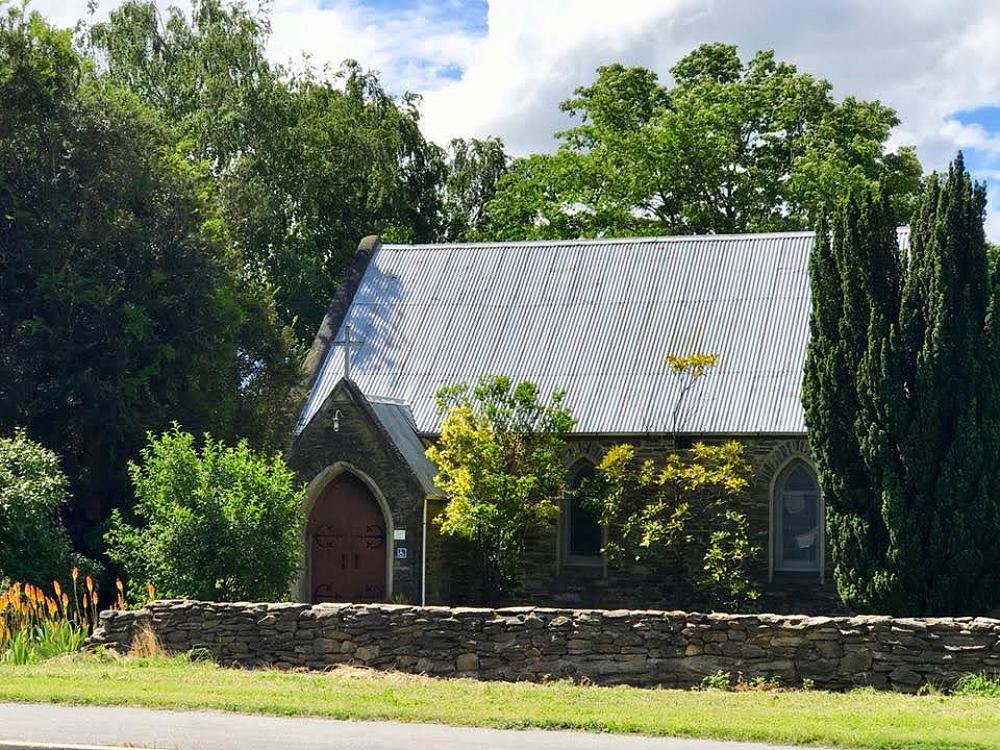
St Andrew's Cromwell 150th Birthday #3
Another article on St Andrew's in Cromwell leading up to its 150th celebrations in November: how can you make an old stone church strong?
After the 2011 Christchurch earthquake, the future of St Andrew’s Church building became uncertain.
Built in 1874 on land donated by John Marsh, the building was made from schist stone and sat on larger stones.
In 2001, during the replacement of the original Baltic pine floor, it was found that the church had no proper foundations, and the concerns of a Clyde Dam engineer was that the walls may start sliding outwards “like an old lady doing the splits”.
To act as a gauge for wall movement, pieces of glass were placed high up on outside walls and to this day that glass has not broken.
Channels for concrete were dug across the width of the building and extended under the walls to act as upside-down beams, before all the floor was replaced with concrete.
The 2012 engineering report noted much needed to be done to reach 34% NBS. Initially it seemed insurmountable because of the enormous work and cost, but then, up to date solutions were employed by engineering firms and St Andrew’s attained its Code of Compliance in September 2017.
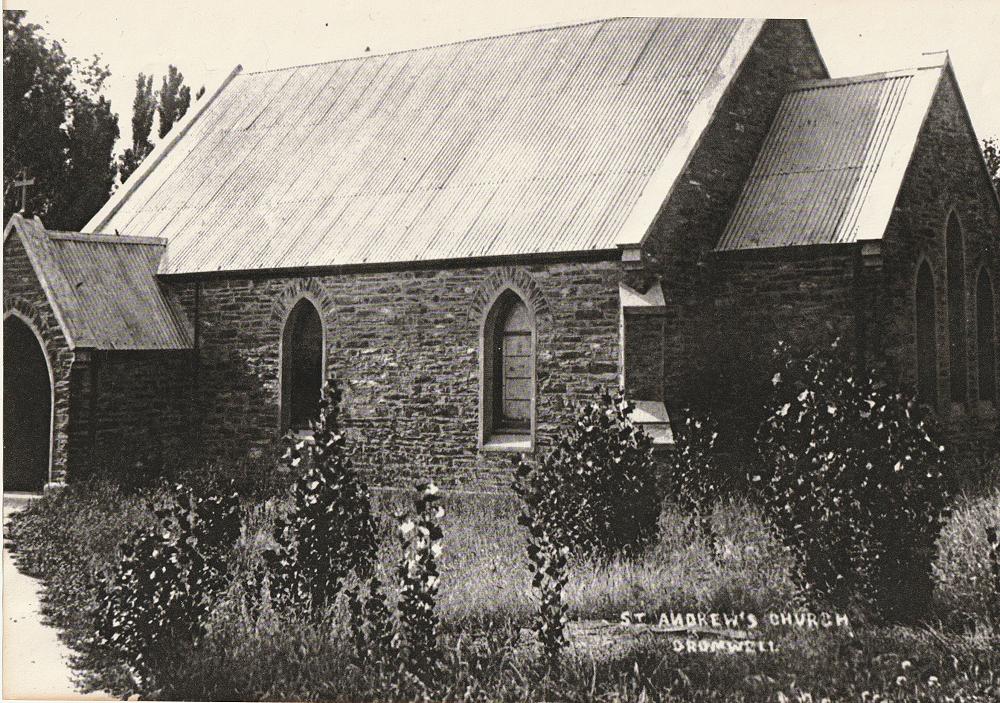
The grounds have gone through many changes; the fence line was once marked by poplar trees, the suckers of which can be seen in the black and white undated photo.
Age has caught up with many of the trees, some of which were replaced in 2023 by the Spiral Garden, designed with peace and contemplation in mind.
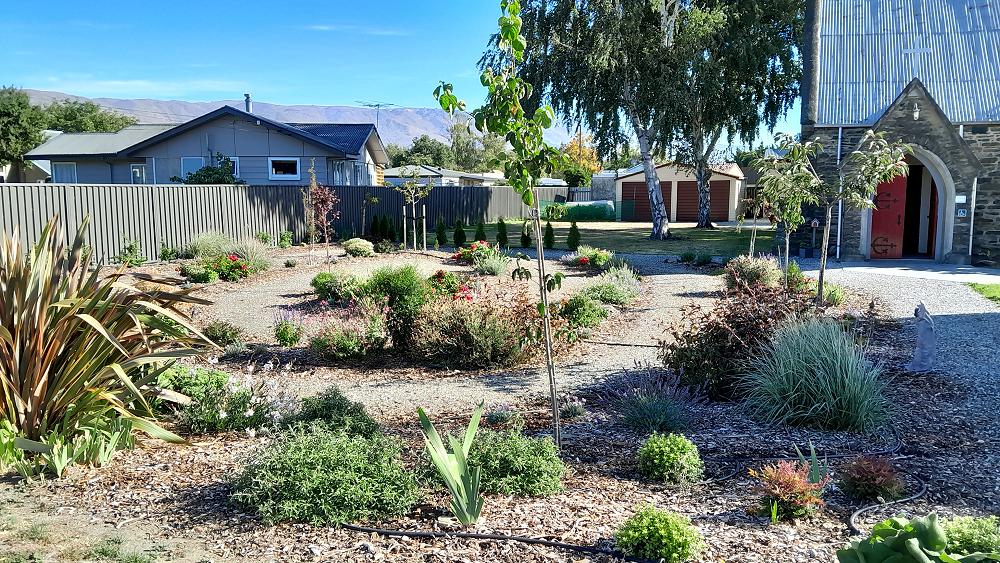
With a strengthened building and a garden to enjoy, St Andrew’s is well prepared for a community facing role in the future of Cromwell.
For information on the 150th event phone 445 1157 or 4453356
Noeline Watson