
North Dunedin Spatial Plan Project
The North Dunedin Spatial Plan project aims to ensure there will be enough housing, of the right types, to meet everyone’s needs over the next 30 years, to enhance students’ experiences while living and studying in Dunedin.
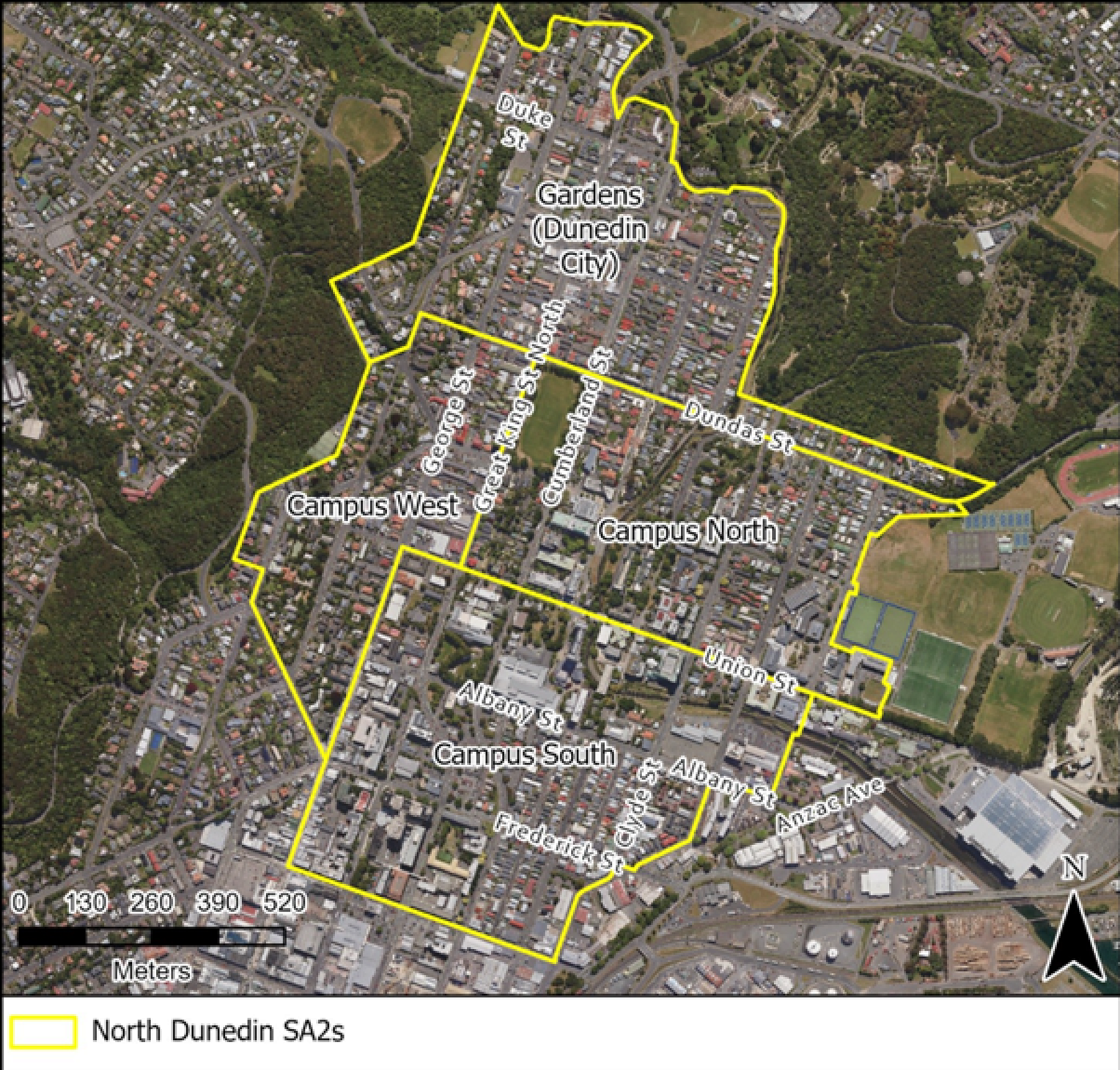
The project focuses on the area between Dunedin Hospital and the Dunedin Botanic Garden, shown on the map below. However, the project is also likely to touch on student housing outside this area, and rental housing across North Dunedin and in surrounding suburbs.
The aim is to understand whether there is sufficient housing capacity in North Dunedin to meet demand over the next 30 years, and to develop options to meet any shortfall. This includes understanding what students want, what the barriers to development are, where new, more intensive development should be encouraged, and where the existing character should be retained.
While the DCC will not be funding or building new housing, the findings will guide future land use and infrastructure planning for North Dunedin. Specifically, the results will inform an update to DCC’s housing capacity assessment, which will be completed later this year, and the DCC’s water services strategy and 10 year plan in 2027. The work will also feed into the new Regional Spatial Plan and new land use plan that are proposed under the new Planning Bill.
The team is engaging with tertiary education providers, landowners, developers, real estate agents, design and planning professionals, and students.
We are currently seeking input through several questionnaires that are open until Friday 22 May 2026.
If you are a developer that has undertaken housing development in North Dunedin or has an interest in doing so we encourage you to complete our developer’s questionnaire.
For anyone else who wants to share their views on the type and scale of development that should be encouraged in North Dunedin please share your views through this questionnaire.
For more information on the project visit: North Dunedin Spatial Plan - Dunedin City Council