Coding at School
The statistics about the changing work place are clear, in the next decade automation is going to radically change the type of jobs that will be available to today's primary school children. We need to prepare them now and it is never too early to start.
Over the last two or three years a growing movement of educators have been calling for a more formal approach to teaching our children computational skills and understanding. In the UK, the teaching of coding is now part of the curriculum!
There are calls for Australia to follow the UK's lead and New Zealand risks being left behind if we don't start making some strides in this area. Many New Zealand schools, including here at Fendalton, are now running code clubs to help expose students to the skills of coding. Whilst this is a great start, it should not rely on the passion and interests of individual teachers in schools to set up code clubs, we need all our children to be exposed to this.
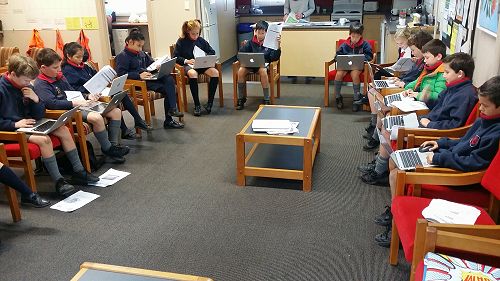
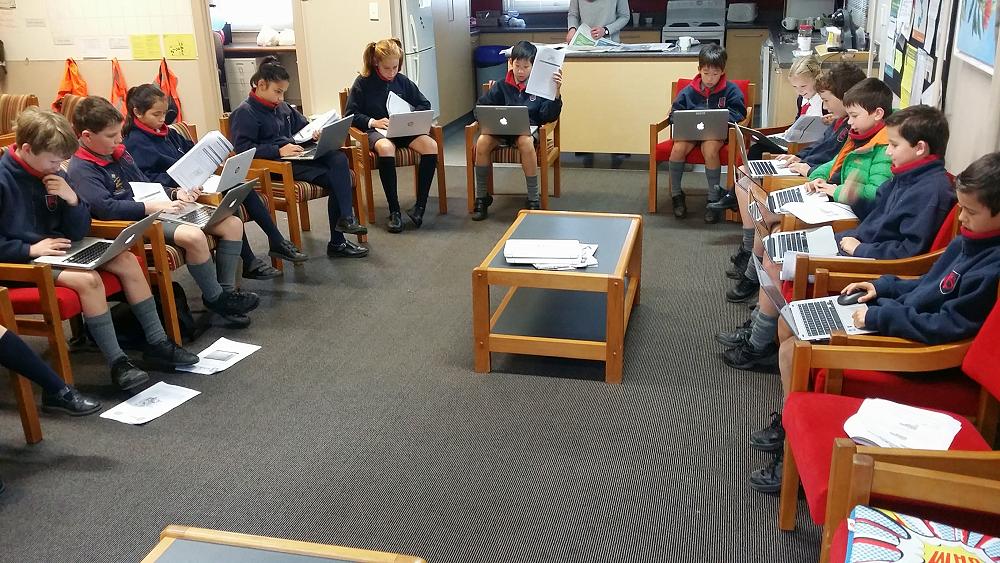
Many online tools exist to make the teaching of coding easy and to reduce the stress on teachers. My experience of running Code Club at FOS is that the children need very little help and support and it is often their peers who help them out well before they need my help. Genuine peer teaching and collaborative solving is a wonderful outcome of giving children time to code.
Coding is fun because it is based on problem solving and creation, two of the key skills that we need our children to learn. In fact coding fits neatly with each of our FOS Key Competencies; Team Player (collaborative problem solving and support), Dream Maker (the need to keep going when the going gets tough), Thinker (Solve complex problems that often require rethinking the whole scheme), Communicator (sharing the learning and communicating ideas) and Sparkle and belong (coding gives all children a chance to sparkle and feel a sense of pride when they complete a project).
My challenge as a school leader is to move coding from a 'club' for the few children who were interested into something that can permeate the curriculum.
What are the barriers to coding in schools?
There are three main barriers to regular coding:
1. Teacher understanding
2. Resources
3. Finding the time in a busy curriculum
None of these are insurmountable and I have some ideas about how we will tackle these at Fendalton.
In many ways teacher understanding is a moot point as the students will inevitably self direct their learning in this regard and teachers just need to be willing to let go of control and let the children go for it! Of course, the teachers need to place a structure around this learning and there is a myriad of tools online to help with this. Teachers still need to develop their own understanding and learn alongside the students so that they can provide guidance and facilitate progression. As a leader I must ensure that I support the teachers with this new learning.
Resourcing is always an issue in schools especially when looking at technology. One interesting solution that has many extra problem solving benefits is the Raspberry Pi.
The Raspberry Pi has been a round for a while but EduTech was my first opportunity to get my hands on one. This is a very cheap computing solution, the one I purchased at EduTech was only $50 and when coupled with a cheap keyboard, mouse and tv screen we have a tiny yet powerful computer that can run most of the coding environments that we are likely to use at school.
As with money, time is another scarce resource in schools. However coding can fit neatly into most learning that already takes place in schools, it just requires a little creative thinking.
Gallery