Enviroschools Lyttelton Port Saddle Day
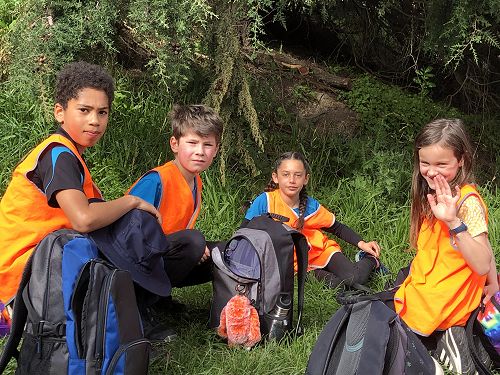
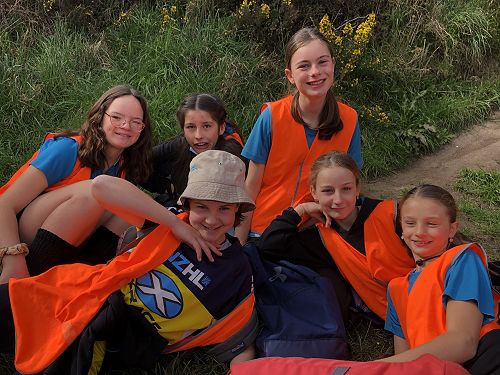
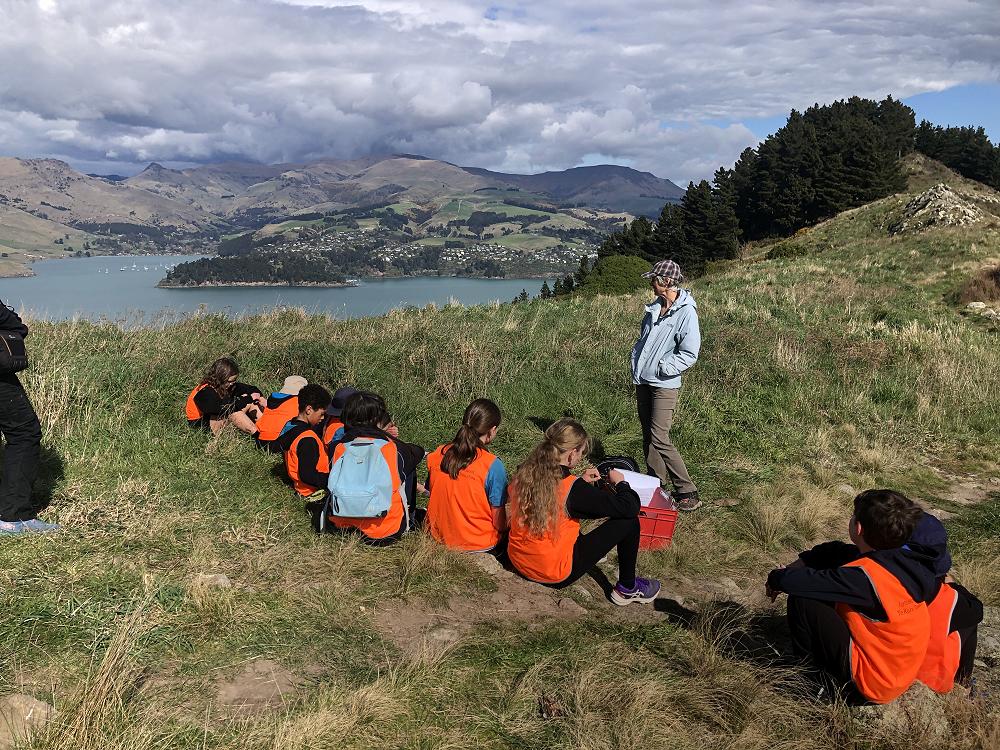
On Thursday 8th of September ten people went to the Enviroschools Port Saddle walk. We drove to Lyttelton Primary and met up with Diamond Harbour School, and Lyttelton School. From there we walked to the Port Saddle track, wearing bright hi-vis vests. As we walked the track became steeper until finally we came to a clearing. There we split into our schools and set off into four rotations.
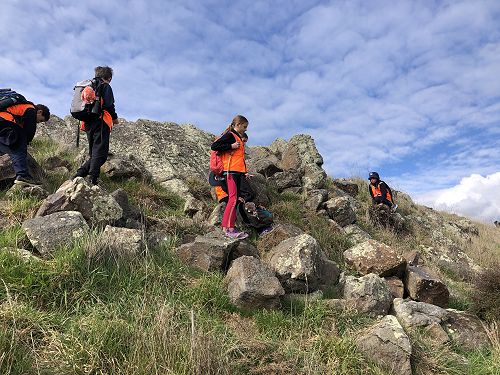
The first lesson we got to do was the Skink and Gecko identification. We learnt how to identify the two species and compare them, as well as learning some crazy facts. After that we looked at some tracking ink pads that had mice, weta, hedgehogs, and other foot prints. The best part was after that when we went hunting for skinks. We looked for them in a big tower of rocks and boulders that had made great homes for them. At first we found none and were starting to pack up, and then suddenly there was a screech. “I found one! I found one!” came bellowing through the field. It was a skink, around ten centimetres long!
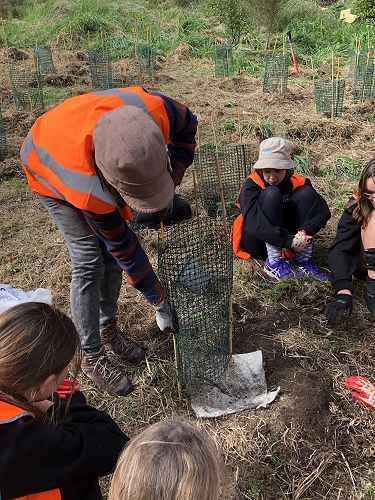
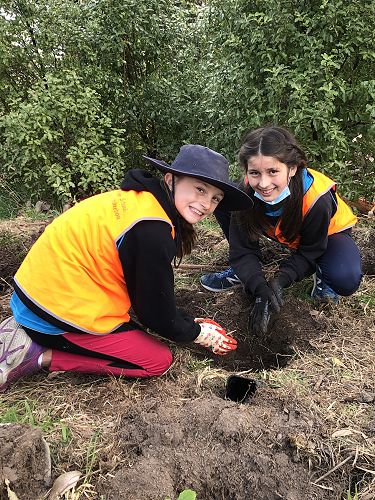
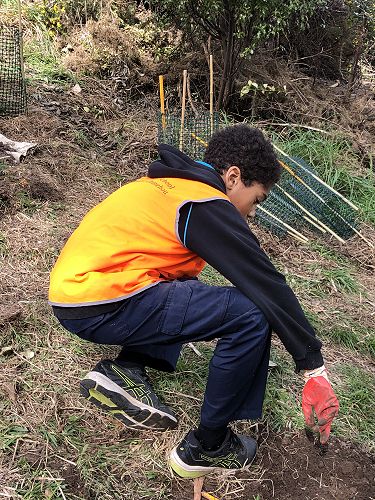
Soon after we moved to planting trees, we got into pairs and slipped on sticky gloves. In our pairs we planted two trees. There was a specific way to plant them to make sure they get enough water, and no pesky weeds can get to them. After that we had to water them and put a fertiliser tablet in the soil that helps it grow.
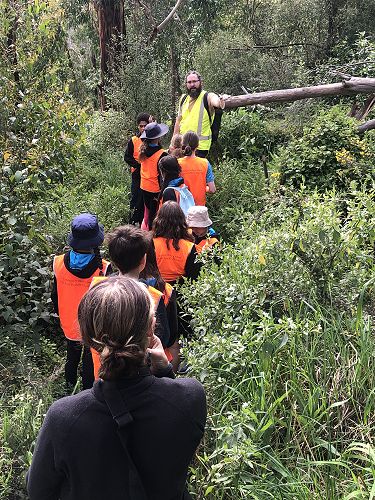
Our third rotation was about traps, some of the local plants, and pest control. We walked a track through a small jungle- like forest and as we went we were told about some of the plants and animals that eat them. Also we found traps on the way and the instructor explained how they worked and what they did. At the end of our walk we talked some more till we came to an epic jungle gym. It had hammocks, rope swings as well as tyre ones, and it was all in the canopy of a thick pine tree forest. Our instructor said the ropes were electrified and warned us not to touch them, but immediately that's exactly what everyone did. Of course they weren't electrified, so everyone started staring longingly.
Our final lesson was about the local birds, and things we can do to get some species to once again thrive in Banks Peninsula. First we looked at some of the ones that already live here, and the sounds they make. We soon got put into pairs once more, and got given a sheet of paper to record the birds we saw and heard. Overall Pīwakawaka was the most common.
As we walked back down to the clearing we said thankyou and goodbye and strode back to Lyttelton Primary. We drove back to school and played till it was home time, and when we got home we had quite a long story to tell.
By Aria Wallace
Gallery