
One of the Greatest Things That Could Have Happended to Our Neighbourhood
by Shirley Bastin
We all know what a little gem Harewood School is, and being one of the first primary schools established in Christchurch makes it even more special. I feel it is important to acknowledge the foresight and efforts of those early settlers in Harewood who made education a priority for their own children, and for all those who followed.
Prior to a school being established in Harewood, the only option was for children to walk 5 kilometres or so down Harewood Road to attend a church-run school in Papanui. At that time the road was actually just a track, through land that was swampy in places. As well as being difficult to get to, attending the school at Papanui was an expensive option. One family which prioritised their children’s education was the Stanley family. John and Mary Stanley had to pay a shilling a week, paid each Monday in advance, for their eldest daughter Mary Anne to attend the school in Papanui. Mary Anne’s younger brother Tom only attended the school for a week as that long trudge to get there was just too much for him.
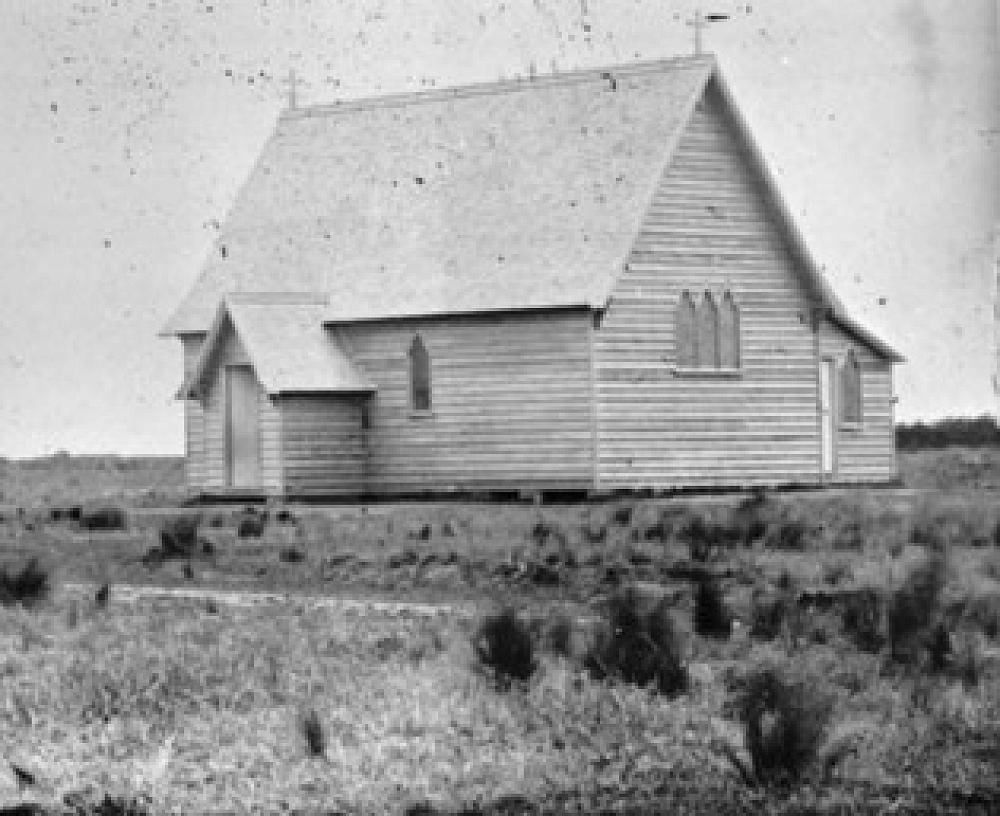
In the early days of settlement in Christchurch schools and teaching staff were not provided by the government. However grants were made available by the Provincial Government for the purpose of establishing churches and schools, and the Harewood community was quick to raise further funds. Their efforts resulted in the building of St James Church in 1862. This was a wooden building on the site of the present-day little church in Whitchurch Place. Later in that same year Harewood Road School was established and lessons began in the church on week days.
St James Church, which originally housed Harewood Road School. Photo courtesy of St James Church
A Mr Foulger was appointed as the schoolmaster for the eleven pupils, who were all the children of the Stanley, Durey and Philpott families. John Stanley wrote in a letter in 1862 that, “Mr Foulger has opened a day and night school. One of the greatest things that could have happened to our neighbourhood. I send 3 at present. I hope to send 5 before long.” I like to think of the Stanleys as our school’s Founding Family. Not only did John become a dedicated member of the School Committee for many years, but also much of the land the school is sited on these days was once owned by the Stanleys. Their descendants also made up a considerable part of the school roll for decades; they had 11 children and 38 grandchildren!
By 1864 the roll had grown to 30, but attendance was very patchy, only 20 usually attended on any given day. Schooling wasn’t yet compulsory, and the children were often needed at home for farm work and to look after their siblings. Getting to the school wasn’t always easy either, many children came from a considerable distance. It was obviously also not an ideal arrangement to have to pack everything up at the end of the week so the building could function again as the church on Sundays!
Finding an educated person to act as schoolmaster wasn’t always easy either; James Thompson, who had been a teacher in Ireland, replaced Mr Foulger within two years. Next was Francis Irving, who was followed by Thomas Mulligan in 1870 (he had been John Stanley’s head gardener prior to his appointment). The schoolmasters lived in a little cottage on the grounds, and close by there was an open well about 3 metres deep with one sloping side. One of the Durey children reported many years later that the boys used to get into mischief playing round it, and once a boy got pushed in.
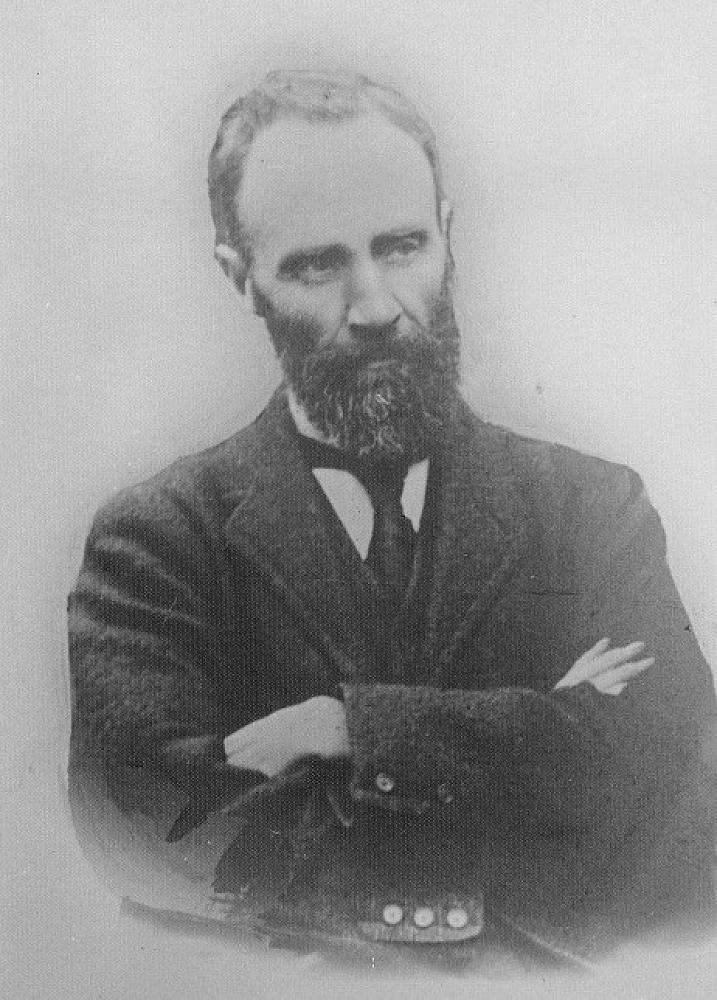
Mr James Thompson, the schoolmaster from 1864 to 1869.
When officials from the Board of Education inspected the church building in 1865, they decided it was not adequate as a school room. Out of the 43 children on the roll, only an average of 16 children attended at any time, mainly because the building was terribly cold much of the year. The walls weren’t lined and there was no fireplace, and those little windows you can see in the photo of the church would not have let in much sunlight. So the School Committee improved the building slightly by lining the walls and putting in a stove as a means of heating. Volunteers also helped to do planting work on the site and to fence the land. The efforts of the community worked as the Board of Education then gave the school a ‘most satisfactory report’.
However, having Harewood Road School functioning in St James Church on weekdays was not a long-term solution to the issue of educating the growing number of children in the area. A purpose-built school building was required. Spoiler alert- this came to be. More to follow!
***
Green, Murray. Footprints on the Land- A story of the life and times of John and Mary Stanley, Canterbury Pioneers via the ship Randolph. Cambridge, 2013.
McFedries, Hugh. History of Harewood. Christchurch, 1933.