The physical demands of the indigenous sport Kī-o-Rahi
Heperi Harris and Dr Peter Olsen, Ara: The Māori sport of Kī-o-Rahi is experiencing a revival, and new research shows it has the potential to deliver considerable physical fitness benefits, as well as cultural enrichment.
This is believed to be the world’s first published research to investigate the physical demands of Kī-o-Rahi.
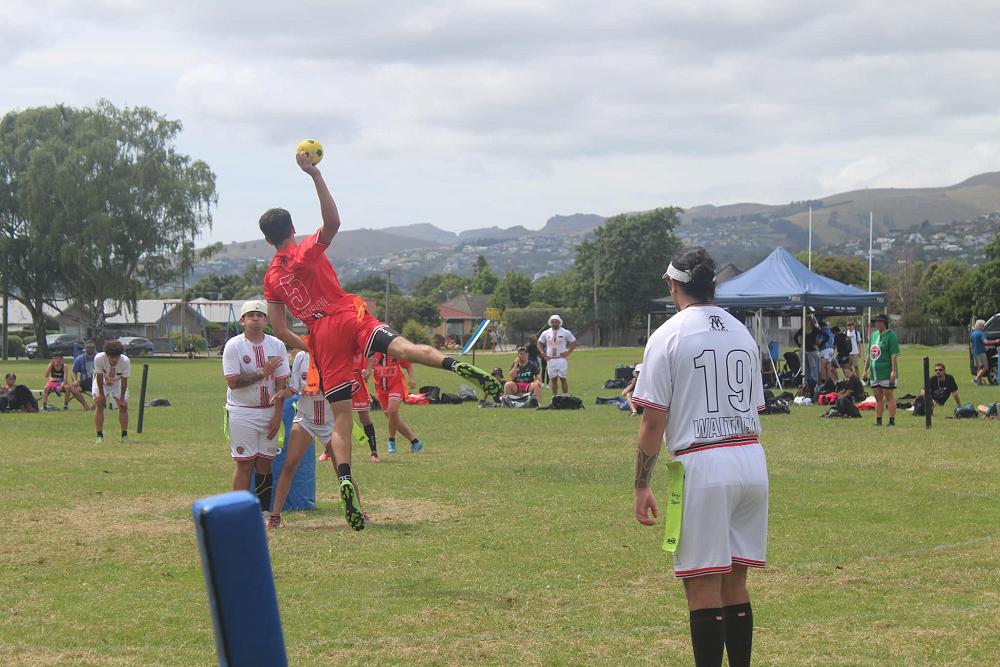
Kī-o-Rahi is a unique ball sport played in Aotearoa New Zealand, which features elements common to netball, handball and touch rugby. It is played between two mixed-sex teams with seven or eight players a side.
The sport emerged from the pūrākau (story) about Rahi and his quest to rescue his abducted wife Ti-Ara from patupaiarehe (fairy-like beings).
In recent years, Kī-o-Rahi has experienced a revival and players now number around 50,000 nationwide, including secondary school students who participate in annual regional and national tournaments.
Ara Institute of Canterbury’s Dr Peter Olsen, Principal Academic Staff Member, and Heperi Harris, Kaiārahi Ihi Aotearoa at Sport New Zealand, were initially focused on the cultural benefits of the game when they brought students together to play Kī-o-Rahi.
“Our intention was to encourage people to participate in Kī-o-Rahi as an opportunity to engage with Māori culture and language and develop leadership skills,” says Harris. “We soon realised the students were playing for the physical benefits as well. We could see participation was a potential vehicle for getting physically fit, and so we decided to gather some data on this side of the game.”
To quantify the physical demands of Kī-o-Rahi competition, the researchers attached GPS and heart rate units to 19 players in a Canterbury secondary schools’ tournament – nine females and seven males. The players were monitored throughout five 20-minute matches of Kī-o-Rahi in one day of competition.
Results showed Kī-o-Rahi was physically demanding for the high-school-aged players. On average, players covered 825 ± 169 metres per game, with an average heart rate of 152 ± 21 beats per minute.
“If a player participated in the full seven games of a typical tournament, they would cover about six kilometres at approximately 75% of their maximum heart rate, on average,” Olsen says.
The distance covered is similar to that of a rugby game, he notes, but on a field a third of the size.
“This indicates there would potentially be considerable loading from acceleration and deceleration on the bodies of players of Kī-o-Rahi,” says Olsen.
The development of specific training and coaching strategies may be required to ensure players are prepared for the demands of competition, he says.
“Based on these findings, Kī-o-Rahi training programmes should be similar to those for rugby sevens, with an emphasis on developing aerobic capacity and explosive speed.”
The data revealed large decreases in all distance measures in later games of the tournament compared to the earlier games – by anywhere between 25% to 70% – suggesting players accumulated substantial fatigue over the day.
“This was despite a similar number of substitutions in each game,” says Harris. “We recommend teams implement recovery strategies for players competing in Kī-o-Rahi, given participant performance decreased substantially over the course of the tournament.”
Olsen says nutrition and hydration are other factors to take into account, as well as player welfare considerations such as protection from sun and heat exposure.
Kī-o-Rahi is one of the few sports where males and females compete on the same team, and researchers found male players covered significantly greater distances than female players.
“Additional research is needed to determine why this is,” says Harris. “These differences could be caused by a number of factors – fitness or experience levels, or team tactics and position allocation, for example.”
Researchers concluded that Kī-o-Rahi is a sport of sufficient intensity and duration to improve fitness, however they note that additional analysis and data collection is needed in this space.
“Our future research will build on these findings with a particular focus on determining whether Kī-o-Rahi has the potential to help improve health and wellbeing outcomes for Māori,” says Harris.
Heperi Harris (Master of Māori and Indigenous Studies) has spent 16 years in education, from university to secondary school and polytechnics, as a tutor, kaiako, manager, and now as Kaupapa Māori Lead at Ara. Heperi has developed a deep passion for te reo Māori, indigenous education, language revitalisation, giving effect to Te Tiriti o Waitangi, and Te Ao Māori pedagogical practice. In addition to work in education he has spent 11 years advocating for taonga tākaro, Māori games and pastimes. He is passionate about creating ways for Māori to engage with kaupapa Māori as Māori, and to promote physical activity and wellbeing through aspects of hauora for all. He has a strong connection with hauora Māori and advocates for the health and wellbeing of Māori communities. Contact Heperi Harris
Dr Peter Olsen (0000-0001-7815-215X) PhD (Otago), is a Principal Lecturer in the Bachelor of Applied Science in Sport and Exercise Science at Ara, New Zealand. He is a specialist in sport science research and his research has an applied focus with an emphasis on investigating sport performance in real world settings. A recent focus has been quantifying physical demands in teams sport using GPS, with a specific interest in women’s and indigenous sports to address equity issues in the provision of sport science support and research. Contact Peter Olsen
Visit Ara Institute of Canterbury
