
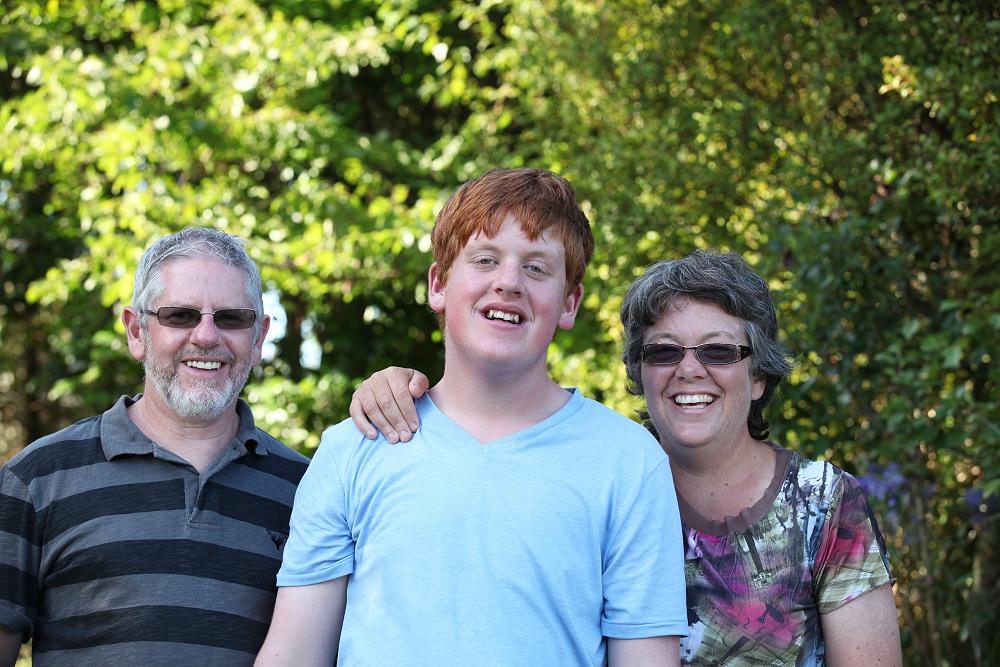
Supporting family carers of disabled adults
(Anita Nicholls, Open Polytechnic) Inspired by her lived experience caring for an intellectually disabled son, Anita Nicholls has explored how other family carers successfully manage ‘flexible funding’ on behalf of an adult family member.
Part of a government initiative called Enabling Good Lives, flexible funding provides disabled people with a budget to choose and purchase support that is appropriate and best for them. This funding may be managed by the person themselves or by a family member who supports them.
Nicholls, a Senior Academic Staff member at Open Polytechnic, says flexible funding has transformed disability support in Aotearoa, ensuring disabled people have greater agency in their lives.
“I have two adult sons with intellectual disability,” Nicholls explains. “One of my sons was living in residential care, but his needs weren’t met there and he became quite distressed and mentally unwell. We brought him home and accessed flexible funding to support him.”
As Nicholls began “the incredibly complex task” of managing the funding and establishing supports for her son, she wondered how others in the same situation were navigating the process.
“Professionals who make these decisions are trained and experienced in person-centred approaches and supported decision-making, yet families don’t necessarily have that knowledge. They are very much left to their own devices to figure it out because professional development that underpins that work is not particularly directed towards family carers.”
In her research, which was part of a Master of Education dissertation submitted to the University of Canterbury, Nicholls was particularly interested in families that were successfully supporting their disabled family members to have good lives.
“I wanted to know what their strategies were, the actions they were taking and how they sourced their information or learned that set of skills.”
Using an ethnographic case study approach to capture her positionality within the research, Nicholls conducted semi-structured interviews with three family carers. Ethics approval was granted by University of Canterbury (HREC 2023/78). Data were analysed using Reflective Thematic Analysis and Bronfenbrenner’s Ecological Systems Framework.
Nicholls approached two parent-led charities to find families who were successful in supporting their loved ones. Three carers participated in the study, all of them mothers managing flexible funding on behalf of adult sons with intellectual disability. They were selected from different locations across the country because supports for families differ regionally. One carer was located in a large city and the other two lived rurally.
Nicholls’ findings showed that to construct a good life for a family member with an intellectual disability, family carers required high quality disability services; strong support networks; knowledge of the disabled person’s preferences; practice aligned with Embracing Good Lives principles; access to information; and advocacy skills.
“The three families very much aligned their practices with Enabling Good Lives. I could see they were focused on ordinary life outcomes, mana-enhancing practice and person-centred practice. They may not have been familiar with those terms, but the principles were evident in their actions.”
Each family carer had a clear vision for their son, and an understanding of their preferences and interests.
“One of the people supported was passionate about chickens, and the family knew someone who knew someone who owned a chicken farm. The family arranged for the son to collect eggs from the chickens, and this became a real highlight of his week. He got to wear a uniform, and his mother recognised his huge sense of pride whenever he put the uniform on. After finishing his work for the day, he'd go out and enjoy a beer and a meal.”
Looking at that young man’s abilities and strengths, Nicholls says, you wouldn't necessarily think he’d make a great chicken farmer. However, it made sense because of his preferences and interests, and it was something he was keen and excited to learn how to do.
The family’s willingness to tap into their wider support network and make contact with the chicken farm led to this positive outcome.
“Our families had very limited access to supports, so they created their own. This was the superpower that made them all really successful. Support networks were so important for the families, and especially for the men with intellectual disabilities. These relationships were empowering and helped them feel they were part of their communities.”
All of the families had a plan for their loved one’s care, informed by the men’s dreams, aspirations and goals.
“Two of the families had PATH plans created by Allies Aotearoa, and this gave them a clear picture of what they were aiming for.”
Nicholls says it’s important there are appropriate and accessible resources and supports for family carers as they manage flexible funding on behalf of their loved ones.
“We design education and resources for agencies and disability services, but unfortunately these don’t usually work for families. A family carer is unlikely to want to complete a course that requires significant amounts of study, for example. They would much prefer to be part of a peer support network or community of practice where they can dip in and out for information or support as needed.”
The implications of this study are that family carers need access to the resources, knowledge and training that facilitate their use of Flexible Funding. Carers’ access to these supports have been limited by government policy and disability organisations’ practice, and there is a need to refocus these to meet the needs of disabled people and their families, as envisioned by Enabling Good Lives.
The research is currently being shared with stakeholders within the sector, family carers, sector professionals, other researchers and special interest groups.
Publication
https://ir.canterbury.ac.nz/items/f65e354c-5e2b-44ae-97ec-e3865714f0e6
Lead researcher
Anita Nicholls (Senior Academic) leads the Bachelor of Social Health and Wellbeing (Disability) and Graduate Diploma in Disability Sector Leadership at Open Polytechnic New Zealand. She has worked in the education and disability sectors for many years, including roles with the Ministry of Education, Idea Services, Autism NZ and other disability advocacy groups. Anita developed the successful education project, ‘No Longer Fragile’, which was designed to provide information and resources to families and education professionals working with children with Fragile X Syndrome. She is a foundation member of Enabling Good Lives Wairarapa. Anita’s research interests include the learning and support needs of people who care for someone with learning (intellectual) disability.
Academic supervisors
Dr Cara Swit - University of Canterbury
Dr Valorie Sotardi - University of Canterbury