Positive ageing among Ngāti Pikiao elders is linked to cultural connectivity
Toi Ohomai: A recent study involving Ngāti Pikiao koeke (elders) confirms that cultural connectedness and participation is a strong contributor to positive ageing and wellbeing as Māori.
When Dr Tepora Emery, Toi Ohomai Institute of Technology’s Kaupapa Māori Research Advisor, was considering a way to capture the stories of Ngāti Pikiao koeke, she came across some interesting research online.
'It was a PhD thesis by Will Edwards from Taranaki into Māori positive ageing,' she says. 'The framework he had designed provided a kaupapa for recording our people’s stories. It got us thinking, does what koeke do on the paepae – maintaining marae, and upholding our kawa, tikanga and reo – contribute to positive ageing?'
The research was undertaken by an intergenerational team of Ngāti Pikiao researchers, with and for Ngāti Pikiao – in particular, the Ngāti Pikiao Council of Elders. It received a Ngā Kanohi Kitea research grant from the Health Research Council, which is for community-led iwi, hapū and whānau research.
'Ngāti Pikiao approved and oversaw the project,' says Emery. 'Although unspoken and unwritten, a culturally-based, ethical code of conduct applied. By consenting to participate in the research, koeke were trusting that the outcomes would be mana enhancing for all involved.'
Of the 22 koeke invited to take part, 19 agreed to participate – 11 women and eight men. With one exception, the koeke were aged over 65.
'We interviewed the koeke in their homes, which meant establishing strong and trusting research relationships. We were bound by the principles of tika and pono – trust, honour, integrity and reciprocity – throughout.'
Although the koeke were asked focused interview questions, the structure of the research also gave them the chance to tell their life stories.
Through this storytelling, the researchers investigated how the tribal governance and cultural roles of the koeke contributed to their wellbeing and positive ageing.
'We found a positive relationship between these foci,' says Emery. 'Cultural connectivity throughout their lives and into their senior years was shown to give koeke a secure sense of identity and belonging, and an eminence among their people – a mana rangatira – that made them feel good. They felt needed, supported and purposefully engaged.'
A number of themes emerged as the bedrock of ageing positively. These were kāpuia (connectivity); aroha (unconditional love for people, land and waterways); kōkohu (giving rather than receiving); manawanui (resilience, commitment and dedication); ringa raupa (hard work); urutaunga (adaptability); ngākau māhaki (humility); tino rangatiratanga (self-determination); and anga whakamua (succession).
Other positive factors identified by koeke included supporting and looking after whānau, having whānau look after them, and contributing to the greater good of their communities.
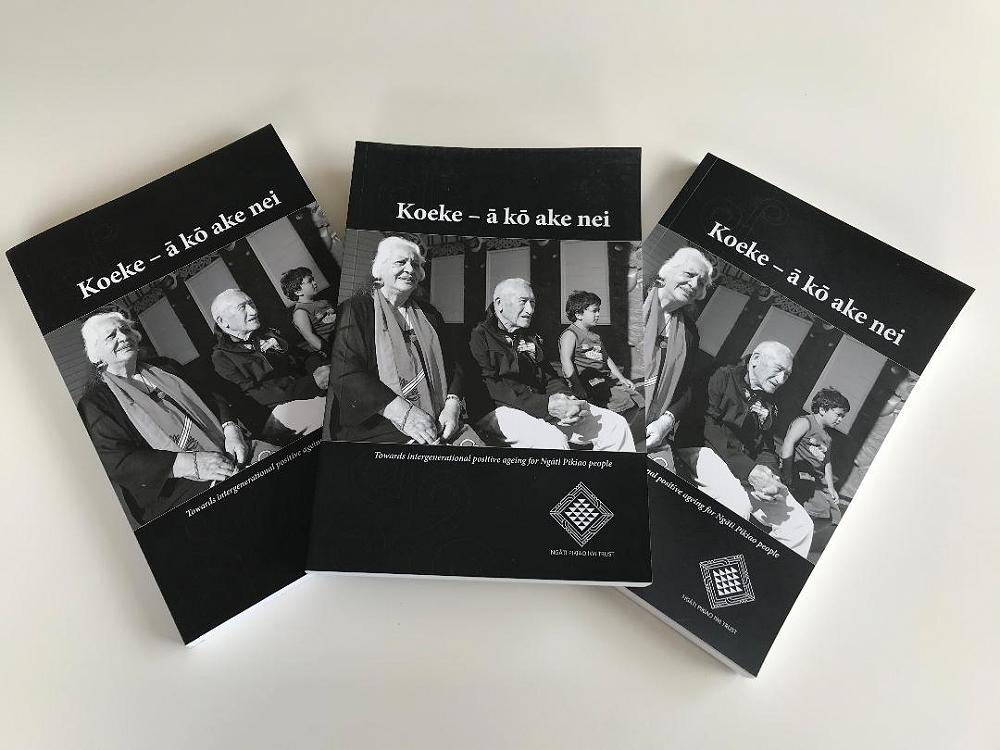
As a result of the research, a book has been published – Koeke – ā kō ake nei: Towards intergenerational positive ageing for Ngati Pikiao people – which details all aspects of the research, and stories and photos of the participating kōeke.
'All members of the research team wrote the koeke stories for the book,' says Emery. 'The relationships the researchers had – or didn’t have – with the koeke sometimes had a bearing on who wrote which stories. Before publication, the stories were provided to the koeke for approval, and they were able to edit them as they saw fit.'
The book is now into its second print run.
'It has been such a beautiful project to work on. The best thing about it was how the iwi really owned it. One kuia, Aunty Nana [Ngawhakawairangi Hohepa], referred to the book as ‘our book’. That was the pinnacle for me in terms of what a successful kaupapa Māori research is – when the participants can refer to it as theirs.'
Despite all the advantages of cultural connection and leadership that emerged from the study, many koeke also felt concerned about succession and the future of their marae.
'Not enough people in the generation below them are stepping up to take their places - largely, we suspect, because they are still working. A group of younger people are stepping up to assist koeke on the paepae – the first lot of kohanga reo tamariki, aged in their 40s. While they appreciate the help, the koeke worry that the younger ones are doing it before their time, when they are also busy working and bringing up young families. The koeke are concerned it could affect that group’s positive ageing,' says Emery.
The research team is now planning a new project, ‘Mā wai e tō taku kaue ki uta – who will carry my jawbone into the future?’, to consider the issues around succession.
'Arguably, our marae are the last quintessential bastion of Māori culture and identity – a place where we live and breathe who we are. What will happen if nobody steps up to carry the kawa, reo and tikanga of our marae forward?'
- Dr Tepora Emery has been a champion of research and higher education for more than 22 years at the institute now known as Toi Ohomai. She has been the programme leader for staff development, an academic advisor and the academic lead for the Master of Applied Professional Studies. She has been in her current role as Kaupapa Māori Research Advisor and researcher since the inception of Toi Ohomai. She is a member of the Ministry of Health Ethics Committee for Assisted Reproductive Technology (ECART) and is a peer reviewer for the Health Research Council of New Zealand. Contact Dr Tepora Emery.
- Visit Toi Ohomai Institute of Technology.
