Providing inclusive perinatal care for trans and non-binary people
George Parker - Otago Polytechnic, Te Pūkenga: A new study shows perinatal care services in Aotearoa New Zealand do not consistently provide safe and inclusive care for trans and non-binary people, who face unique barriers when accessing reproductive healthcare.
Funded by the Health Research Council of New Zealand and the Ministry of Health, the 18-month mixed-method study runs until April 2023. It is led by Otago Polytechnic, in collaboration with Te Herenga Waka Victoria University, the University of Waikato and Tiwhanawhana Trust.
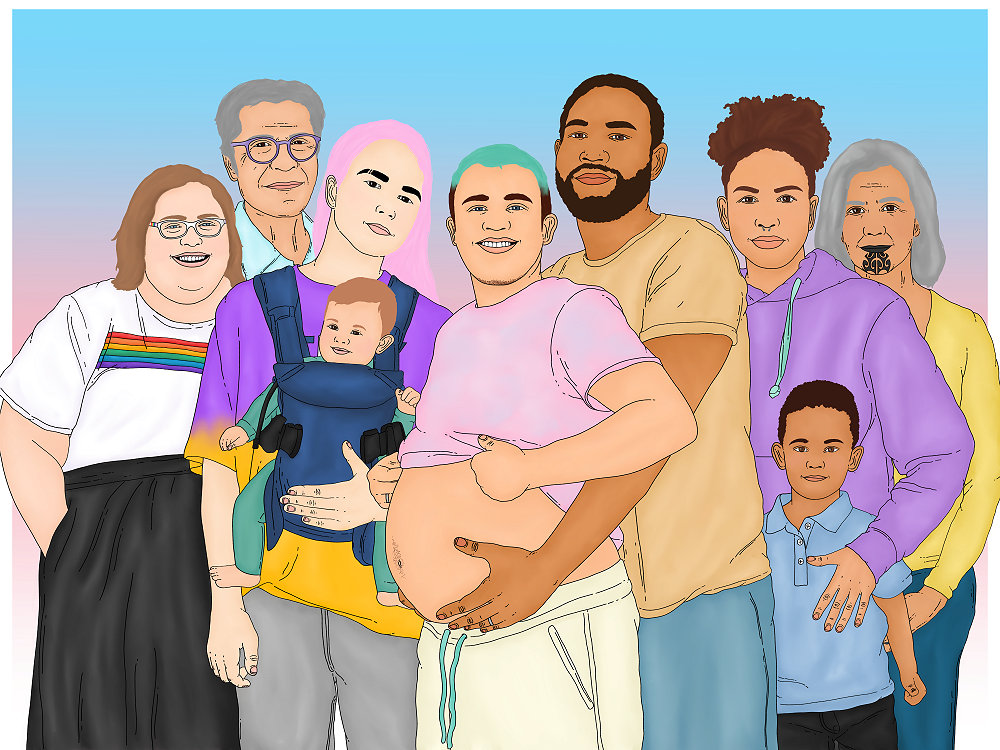
Data collection has been completed for the first phase of the study, involving 20 interviews with trans or non-binary parents and whānau to understand their experiences of navigating the perinatal system.
“We recruited our participants through trans and non-binary networks on social media and through word of mouth, meaning we had participants from all over the country,” says lead researcher, Dr George Parker, who is now a Lecturer in Health Service Delivery at Te Herenga Waka Victoria University. “Most participants were the gestational parent, but a small number were the non-gestational parent, and in some whānau, both parents were trans or non-binary.”
Participants discussed a range of experiences, including pregnancy loss, accessing fertility services, pregnancy and birth care, and care during the first six weeks of their child's life.
“There were some examples of care that trans and non-binary whānau felt positive about,” says Parker. “However, all participants were subjected to transphobia or harmful gender norms, contributing to a sense of erasure and of care not being ‘for them’. As a result, they did not always feel safe and supported in their perinatal care journeys – and in some cases, this led to emotional harm and the avoidance of some aspects of perinatal care, such as childbirth education.”
Inclusive physical environments, resources, antenatal education and use of gender-inclusive language were all key to a positive experience. The use of gendered language and assumptions – verbally, on signs and in forms – led participants to feel highly excluded from perinatal care settings, undermining their trust in the people providing their care.
“One participant, Rory, described it as death by a thousand cuts – each one hurts, but it's not until they all add together until you get that sense that this this hasn't been a positive experience for you,” says Parker. “When gender-inclusive language was used, it had a positive impact on participants’ wellbeing – it communicated that they were welcome at the services, and that the services wanted to engage with them and their whānau.”
Continuity of midwifery care was valued as a major asset, as participants talked about the relationship they had with their ongoing midwife.
“That was really affirming. Midwives who were educated about trans and non-binary inclusion, and who were willing to acknowledge mistakes and commit to ongoing learning, were highly valued,” they say. “But when participants had to move beyond that one trusted relationship into the broader perinatal care service, particularly if they were having their babies in hospital or when they were accessing childbirth education, that's where things came unstuck for them.”
Most participants expressed fear about their midwife not being available, and feeling uncertain whether other providers would be affirming and responsive to their family.
Reflecting on a time when their lead maternity carer wasn’t available, participant Ollie said: The standard midwife just kept misgendering me and calling me ‘mum’ and referring to mums in general…it was just like a real blow, and especially because I was like, if there is something going wrong, you are not the person I want. But I felt like I didn’t have a choice.
“Having a baby for anyone can be a big, exhausting and overwhelming deal,” says Parker. “For our trans and non-binary whānau, there’s also this cycle of disempowerment.”
Participants spoke about feeling exhaustion and stress, of ‘putting on their armour’ when going into perinatal care, feeling defensive, sometimes under attack or as if they were invisible.
“This took a lot of additional labour – and we know from research that rainbow people are at higher risk of perinatal distress. What we’re hearing from our study is that ethics of care are pivotal in either ameliorating or compounding that risk.”
Participants also talked about taking responsibility themselves for educating their providers.
“This had a great emotional and mental cost on their pregnancies, so they greatly valued care providers who took up that responsibility for themselves and who advocated for this within the system.”
Parker says while some progress towards inclusion is acknowledged, all perinatal care workers need to be resourced with education and support gender-affirming health care that meets the needs of trans and non-binary people.
The second phase of the study is a perinatal workforce survey which has elicited responses from around 470 midwives, obstetricians and other caregivers on their knowledge of gender-inclusive perinatal care, as well as their own education and support needs.
“I think projects like this are part of a broader commitment to move towards a health system that delivers on equity,” they say. “It will provide evidence to support recommendations to Te Whatu Ora and Te Aka Whai Ora for health policy development in support of trans and non-binary inclusion in perinatal care, as well as education and support for the perinatal care workforce.”
George Parker is lecturer in health service delivery in Te Kura Tātai Hauora, School of Health at Te Herenga Waka, Victoria University of Wellington. George is a Pākehā queer and non-binary person and lead investigator in the Health Research Council of New Zealand funded Trans Pregnancy Care Project. Contact George Parker
Visit Otago Polytechnic, Te Pūkenga