
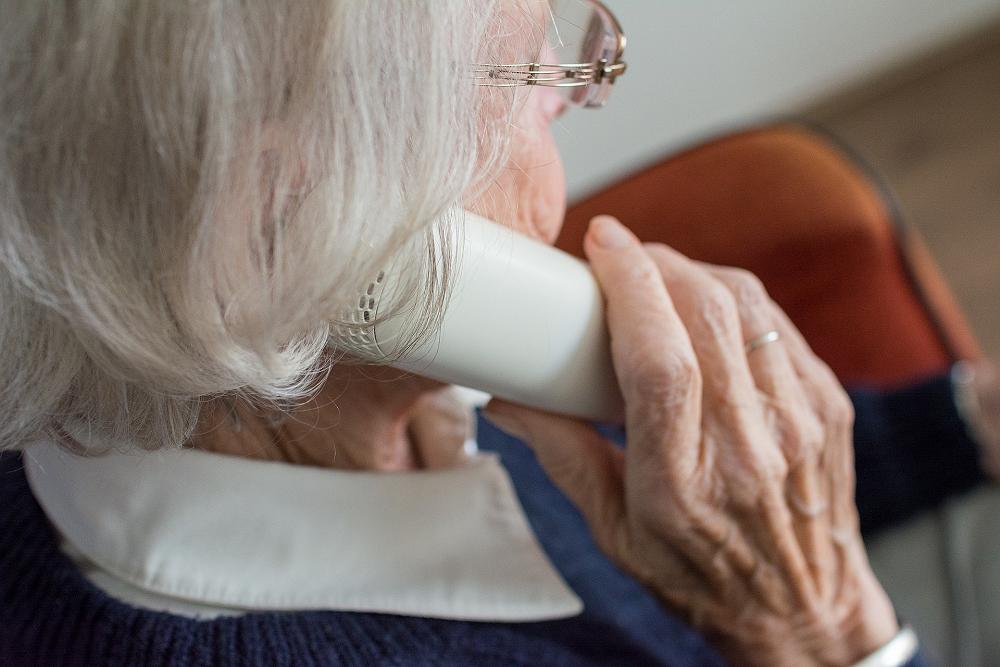
Tele-health clinical placements provide critical support to elderly during Covid-19 lockdown
Wintec: As New Zealand’s 2020 Covid-19 lockdown began, third-year Bachelor of Nursing students at Wintec undertook clinical placements from their own homes, via telephone, supporting vulnerable elderly people in the Waikato.
New Zealand mandates regular health assessments for older people using a clinical assessment system called InterRAI. In the Waikato at the time of last year’s lockdown, up to 2,000 community-dwelling elderly had not been assessed in at least three years. The pandemic made it even more urgent that these vulnerable community members could access an assessment and wellness check.
The Nursing Council of New Zealand (NCNZ) was approached and gave approval for nursing students to undertake a tele-health clinical placement and conduct some of the much-needed assessments by phone. The students would have the chance to complete clinical placements without delay, ensuring they would be eligible to sit their final exams at the end of the year.
'This initiative became the first tele-health clinical placement approved for undergraduate students by the NCNZ,' says Dr Patrea Andersen, Academic Leader and Professor of Wintec’s Centre for Health and Social Practice.
The project involved collaboration between Wintec, Massey University and the Waikato District Health Board’s Older Persons Health Service. All of Wintec’s third-year Bachelor of Nursing students were offered the opportunity to participate, with 19 students opting to take part.
'These students first completed full interRAI training with interRAI-NZ so they were able to provide a safe and appropriate service to the community,” says Andersen. “Five Wintec staff also undertook training to attain interRAI assessor status so they could oversee and monitor and assist students throughout their clinical placement.'
After the relevant DHB safety checks, the students were granted access to the interRAI system from their personal devices, allowing them to complete the assessments from home. These permissions were removed once the placements concluded.
The project was evaluated using a mixed method approach. Students completed a survey reporting their perceptions of, and satisfaction with, the telehealth placement experience, and kept reflective diaries throughout their placements that were later analysed. Researchers also conducted interviews with students and staff, either individually or in focus groups, depending on the subjects’ preferences.
“Our preliminary analysis shows this was a fantastic learning experience for the students,” says Andersen.
Students highlighted the benefits of the experience, with one stating: 'I would say it’s a really good experience because even though for us it was classified under our primary healthcare, you get mental health, you get primary health, you get people that have had hip replacements, knee replacements, people that have arthritis. You get everything in it, not just one. And I found having done my mental health placement after, doing the tele-health and being able to go through those assessments, I was much more confident when I did my mental health with that more therapeutic kind of nursing rather than medical nursing, and it helped me a lot in my confidence and what I could ask.'
Anderson notes, 'This was the first time the students had been in a clinical situation where they were in charge. They had to apply their knowledge, critical thinking and clinical reasoning. They really felt like nurses.'
Students reported encountering challenging situations with elderly people who were isolated and in need in the community.
'Some spent over an hour on the phone with older people who had not seen or heard from anybody in weeks,” Andersen recounts. “In completing the important health evaluations, the students were able to provide these people with a bright spot in their day.”
As a result of the project, all of the students were able to meet the course learning outcomes and demonstrate the required NCNZ competencies. Andersen says one student, now a new graduate, has recently been employed as a telehealth nurse, specifically because of her clinical placement experience.
“That is not normally the sort of placement a new graduate would go into, so we’re absolutely thrilled to bits about that.”
While tele-health has been around for decades, Andersen says it hasn’t been given a high priority in curriculum or in practice. She believed the Covid-19 pandemic presents a timely opportunity to reflect on its benefits and how it can be used to better prepare graduates for future practice.
“Our research findings will be incorporated in a report to NCNZ with recommendations that support tele-health as a viable clinical placement for nursing students under appropriate conditions and with appropriate support. With the way in which the world is heading, it’s important our professional workforce makes use of accessible technologies to support our communities.”
- Professor Patrea Andersen is the Academic Leader for the Centre for Health and Social Practice (CHASP). Her previous experience as Academic Director for Simulation and Visualisation at The University of the Sunshine Coast, and Director of Simulation at the University of Wollongong, have fuelled her research interest in simulation pedagogy and curricula integration. She is an internationally recognised expert in health care simulation, and her teaching and scholarship have been recognised with an Australian OLT citation for Leadership in Simulation and appointment to the Higher Education Academy (HEA) as a Senior Fellow. She holds adjunct professorial positions with the University of the Sunshine Coast and CQUniversity in Australia. Contact Professor Patrea Andersen.
- Professor Sharon Brownie is Adjunct Professor and former Centre Director at the Centre for Health and Social Practice at Wintec and Professor of Nursing and Principal and Academic Director at the University of Canberra Sydney Hills. She has significant experience in health and education research, including in cross-cultural contexts, and was previously Dean of the School of Nursing and Midwifery at the Aga Khan University in East Africa. She also holds continuing appointments at the School of Medicine at Griffith University in Australia, as well as being Research Associate at Green Templeton College, University of Oxford. Much of her extensive research experience has involved professional education in health and health workforce development in a range of cross-cultural contexts.
- Visit Wintec: Waikato Institute of Technology.
