
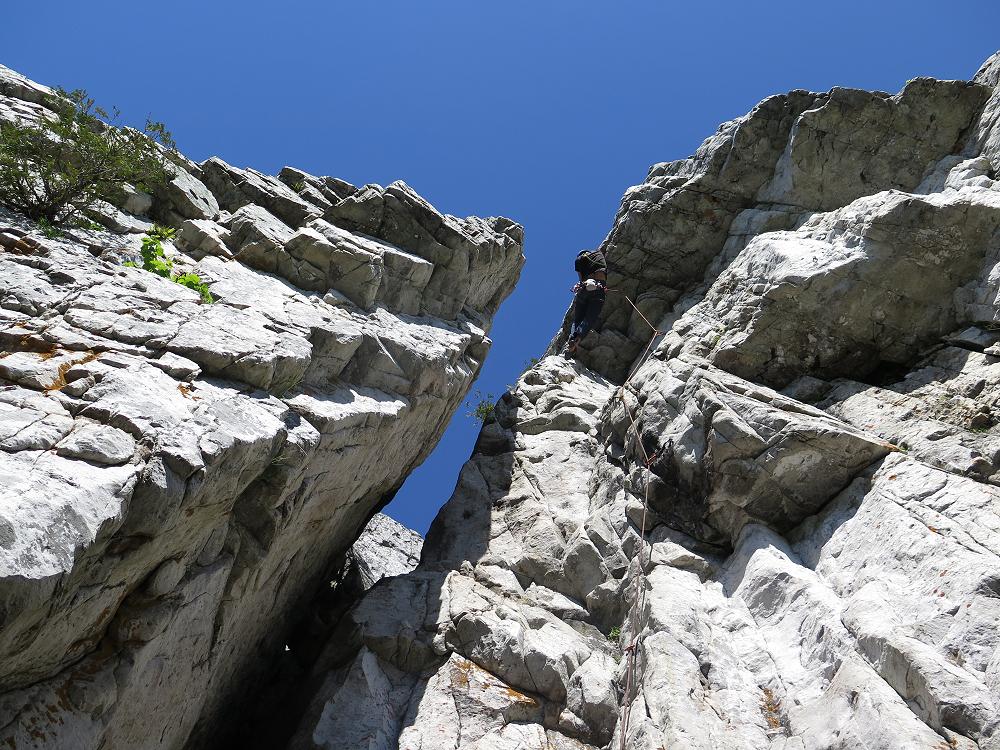
Comparing the psychological benefits of indoor and outdoor rock climbing
Dr Patrick Boudreau, Ara: Participating in physical activity and being outdoors in nature have each been associated with both psychological and physiological wellbeing – but research suggests combining the two may bring additional benefits.
“The advantages of physical activity for the body and the mind are well documented, but the literature suggests that, if we have the choice, exercising outdoors might be even more beneficial,” says Dr Patrick Boudreau, Senior Lecturer in Sport, Exercise and Health Psychology at Ara Institute of Canterbury.
“Compared to exercising indoors, exercising in natural environments is associated with improved psychological wellbeing and higher levels of concentration and attentiveness,” he explains. “It also seems to confer greater reductions in low-density lipoprotein [LDL] cholesterol levels and potentially cardiovascular disease risks.”
In response to the growing popularity of both indoor and outdoor rock climbing in Aotearoa New Zealand, Boudreau sought to examine how climbers engage with and perceive their experiences of the two different contexts.
Employing a qualitative crossover design, Boudreau conducted in situ interviews with 12 experienced rock climbers who were selected for their advanced climbing experience in both indoor and outdoor settings. He employed reflexive thematic analysis to uncover emerging themes related to motivations, perceptions, and optimal experiences.
He interviewed the participants immediately after both indoor and outdoor climbing sessions to ensure the experiences remained fresh in their minds.
“I asked them about their motives for the session, what brought them indoors or outdoors, the climbing experience itself and how they were feeling.”
While some responses were common to both settings, he says others highlighted “the complex interplay” between the different climbing experiences.
“The participants did not necessarily describe one setting as better than the other, but they noted distinct benefits and drawbacks to each, and had clear reasons for engaging in one over the other on different occasions.”
Indoor climbing emerged as a controlled and convenient environment valued for safety, social interactions, technical focus and fitness enhancements.
“One key advantage was in developing mastery by improving their technique and seeing that progress in the levels or grades they were climbing,” says Boudreau.
Participants also reported feeling social fulfilment when climbing indoors.
“At indoor climbing gyms, they would be associating and interacting with large groups of fellow climbers, compared to the outdoor climbing experience where they would be with just one or two climbing partners.”
Outdoor climbing was described as a more meditative experience than indoor climbing.
“When climbing outdoors, the participants valued the relative solitude of the experience,” he says. “Outdoor climbing offered a sense of exploration and engagement with natural surroundings and vistas.”
Participants reported seeking greater adventure, creativity and freedom when they climbed in nature.
“They felt indoor climbing was generally more forced and unnatural,” Boudreau says, “and they appreciated the variety and inherent unexpectedness or uncertainty in nature.”
Comments included:
I like trying new climbs and not knowing what is around the corner. There's a kind of aspect of exploration that I really enjoy.
It has been interesting recently to find that I'm not the only person who climbs worse indoors… It feels too regimented. Like, these are the holds that you have, and they're the only holds that you have access to.
Participants reported seeking a connection to nature when climbing outdoors. They noted a stronger spiritual component than when climbing indoors and an enhanced sense of wellbeing and relaxation.
Whenever I get back home from climbing outside, I feel happy and relaxed. It is a state of contentment.
I just feel happier. I just feel better when I am outside.
I find being outside, it's the environment that's better. I do not know what it is, but your problems just go away. You touch the rock and your problems go away.
“Several participants felt these relaxing effects helped them climb better and improved their concentration levels during participation,” Boudreau says.
After examining these psychological aspects of indoor and outdoor rock climbing, Boudreau now plans to further explore the implications of outdoor exercise on psychological wellbeing.
“I’m interested in different interventions promoting physical activity in nature and analysing the effects of these on mental health disorders such as depression and generalised anxiety disorder,” he says.
Prior to being a lecturer at Ara, Patrick Boudreau was a certified physical and health education teacher and rock-climbing instructor in Canada. The focus of his research is on self-confidence, personality traits, resilience and motivation in adventure sports. Patrick has a PhD in Sport Psychology (University of Otago), a Master of Physical Education (University of Victoria) and a B.Ed. in Health and Physical Education (McGill University).
Visit Ara Institute of Canterbury
