Results of last year's assisted calvings
Last year VetSouth Gore attended a total of 310 calvings/prolapses over the spring calving period. We were able to follow up on ⅔ of these, to see what happened to them this season.
Last year VetSouth Gore attended a total of 310 calvings/prolapses over the spring calving period. We were able to follow up on ⅔ of these, to see what happened to them this season. The ⅓ cases with no known outcome were a combination of farms for which we couldn’t access Minda information through Infovet, or where Minda was not updated with events through lactation, or in a few cases there was no cow tag number to follow up.
45% of these cows are now in calf, so close to 1 in 2 cows. 25% of the cows were culled sometime between calving and mid-May, with a cull result being based on them not being present in the herd on Minda. The actual date of their cull and reason for culling remains unknown, so this value includes cows culled for lameness, mastitis, age, empty etc. In addition to the culls there were 16% of our calvings who were still present in the herd, so completed a full lactation, but were recorded as empty after the final yes/no scans of the season. 14% of cows died or were euthanised either during the calving/prolapse or in the few days following. The correlation between the attending vet’s prognosis and the actual outcome was quite a reliable indicator of the cow’s prognosis and chance of getting back in calf. Though, of the cows we didn’t think would survive, 14% got back in calf so there is still hope for the worst cases!
Cases in which we applied traction alone had a very good prognosis, with 76% now in calf. We also noted very few differences between the outcomes for manual corrections vs single cut foetotomies with >50% of cows now back in calf. However, when it came to >2 foetotomy cuts, the outcome varied much more dependent on the state of the calf, with the rotten calvings requiring multiple cuts having very little chance of getting back in calf for the following season, though more than half made it through their lactation. The prognosis for fresh dead calves requiring >2 cuts was much more positive, which highlights the importance of checking calving cows multiple times a day for signs of calving and ensuring cows going into the herd have actually calved, so we can minimise the percentage of rotten calvings.
There was very little difference between cow outcomes for calf presentation, including with twisted uterus’. The only one that stood out was foetal monster (not including schistosomes), with none of these cows back in calf, though ¾ made it through the season. However, we only had 4 of these cases so not a very reliable result. However, there was a clear pattern seen with the time taken for calving, with longer calvings resulting in fewer cows back in calf. And the age of the cow also affected prognosis, with cows >6 years old twice as likely to be culled or empty than those younger than 6 years old.
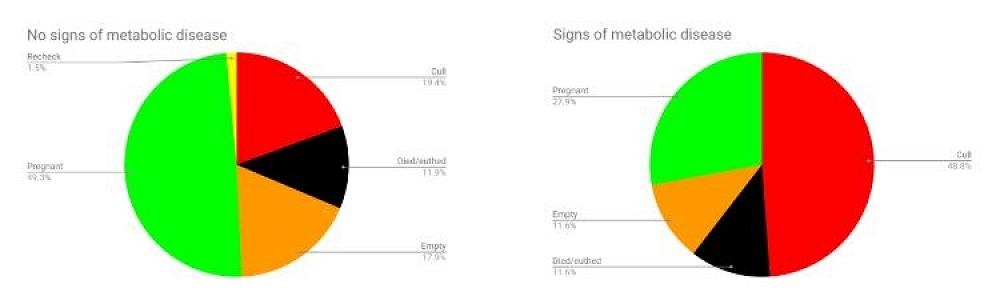
Another major effect on the final outcome was whether the cow was showing signs of metabolic disease, with 20% less metabolic cows in calf compared to non-metabolic cows. This makes sense with the plethora of research available on the effects of sub-clinical ketosis and milk fever on reproductive performance and milk production throughout lactation. So if you noticed a number of cows with signs of metabolic disease at calving (remembering that the cases you see are only the tip of the iceberg for subclinical disease), it is worthwhile calling us to discuss management options for this season.
There was very little difference in the percentage of cows in calf following prolapse vs calving at 41% and 44% respectively. And a prolapsed uterus one season does not mean a prolapsed uterus next season. In terms of the prolapse, the main factor affecting prognosis was the length of time the prolapse had been out for, a prolapsed uterus is always an emergency situation so call a vet out immediately. There was no real pattern seen with the length of time to get the prolapse replaced.
So a few goals to consider for this coming calving season: ensure a good transition plan is in place to minimise metabolic disease, reduce the number of rotten calvings by increased vigilance of the calving mob, if a cow is seen to be actively calving and there is no progression of delivery within 20 minutes (i.e. feet visible, then head etc.) you should be gloving up to check on her. Similarly, if you are attempting to calve a cow and have made no progress in 20 minutes then it is time to call for back-up.