
Finding a Passion through Protests - An Interview
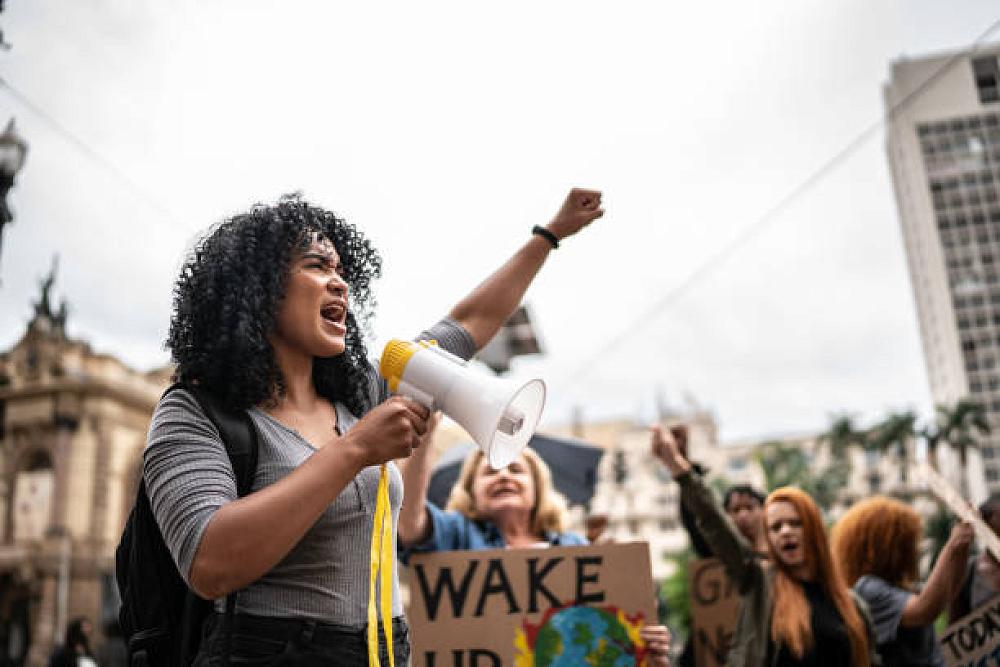
In this article we interviewed Josephine Maplesden the Head of the SoS Department at HGHS. Having attended many different protests herself, we asked her questions regarding these protests. Why did she join them and did she ever fear the consequences? Find out in the article below. (Image credit: Frazao Studio)
“When I was at university there were a couple of things I remember. I remember marching at a night protest in Christchurch that was against nuclear weapons. At the time there was just this feeling of dread in the air that either Russia or the United States would actively use nuclear weapons. I was really worried that that would happen and it would have a bad effect on everybody, so I actively took part in a protest in Christchurch. I was in a hall of residence and we had this parade for all halls of residence where you would decorate a float to participate in the parade. The majority of the floats had people singing and dancing but I convinced my group that we would do a protest about nuclear testing in Mururoa - the French were nuclear testing in Mururoa. I thought nuclear testing was the worst - I still think it's really terrible and so I actively got help from this group of people to build this great big mushroom cloud. We dressed up with sort of gunk on our faces to look like we had been affected by fallout. I’ll be honest and say that I don’t think a whole lot of people were influenced by what I did but it made me aware of the fact that you can do things when you want to show how you feel about something. You just have to take that step and do it. You can’t worry too much about what other people are thinking. It's about finding something you're passionate about and realising you can do things that bring attention to these topics. A key thing for social scientists these days is to be aware of these things going on, but also being aware of exactly what information you’re looking at because there are these great big rabbit holes you can go down. You sometimes have to have the courage to draw away from these kinds of rabbit holes and realise you need to properly think about whether this information is true or is inconsistent or even AI.”
Did you ever think about possible consequences?
“Not really! I think maybe when I was collecting names I can remember one of the teachers saying I better not do that on the school grounds but nobody really did anything. When I was doing the other marches, because we were students we didn’t really care. I had friends who protested when there were anti-nuclear ships coming to New Zealand and one of them got arrested by the police, another one of my friends had to bail her out. That was the first time really I realised that there could be consequences. I wasn’t here in New Zealand during the Springbok Tour so I can’t say I took part in any demonstrations then, I had earlier done marches but when it was actually here I wasn’t in New Zealand. I knew quite a few people who got arrested and for some of them it affected their lives in the sense that they became much more actively involved in politics."