Navigating AI in School: What You Need to Know
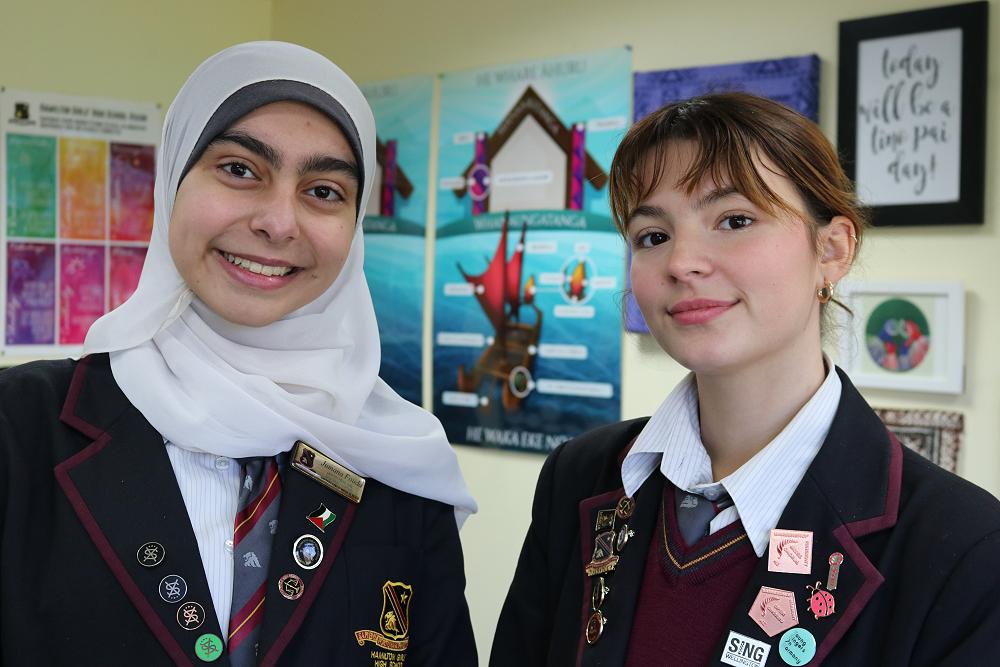
The speech below was delivered by Jumana, Sam and Charlize to Year 11 and 12 students at a recent assembly.
By now, students will have probably seen posters around the school and heard discussions in class about artificial intelligence (AI) — particularly how it's being used in student assessments. There’s been a lot of conversation, both inside school and in the media, raising concerns about this topic. And for good reason: it’s something that impacts us all.
At its heart, the purpose of school isn’t just about passing tests or chasing grades. Students are here to learn how to think critically, solve problems, and develop the skills that will help them succeed in life beyond the classroom. Assessments are part of that process - they’re designed to measure how well students are learning and to help teachers understand where each student is at.
When AI is used to create work that’s then submitted as if it were their own, that whole process is undermined. It doesn't show what they understand. It doesn’t reflect their thinking or learning. And ultimately, it’s not just dishonest — it’s unfair.
Think about it this way: imagine a student has spent weeks working hard, showing up to class, revising, and putting genuine effort into an assessment. They receive an Achieved grade. Meanwhile, someone else who skipped classes and barely engaged just uses AI to generate their assessment and ends up with an Excellence. How would that feel?
Now imagine that same person is awarded a scholarship or another big opportunity that you really wanted — not because they worked harder or learned more, but because they let a tool do the work for them.
These are real concerns. That’s why both the school and NZQA take authenticity seriously. Student’s assessments need to reflect their understanding and effort — not the work of a program.
It’s crucial that every student is given a fair shot at success, based on their own merit. The grades students receive should accurately reflect what they’ve actually learned.
As we continue to explore new technologies, it’s important to balance innovation with values like honesty, effort, and respect — for ourselves, for our peers, and for the learning process.
AI Isn’t the Enemy — If Used Correctly
While AI can sometimes get a bad reputation, not all AI use is negative. In fact, when used appropriately and within school guidelines, it can be a helpful tool.
One of the most important rules to follow is transparency. It is important that students always check with the teacher before using AI for any part of their schoolwork. Different subjects and standards have different rules, and the teacher can help students understand what’s acceptable and what isn’t. It’s always better to ask first rather than deal with consequences later.
Some examples of appropriate AI use (depending on the subject) might include:
Using AI to spot spelling or grammar errors which may have been missed
Brainstorming ideas or developing focus questions for research tasks
However, across all subjects, students cannot use AI to write the final version of any work. Additionally, it is important to reference any use of AI used in the process — just like you would reference a book, article, or website.
AI Outside the Classroom
AI can also be a powerful tool in other areas of a student's life. It can help with tasks like:
Writing a CV or cover letter
Creating a study plan
Managing time more effectively
In short, AI can be incredibly useful — but only when used responsibly and within the right context.
The Consequences of Misuse
At Hamilton Girls’ High School, using AI inappropriately in assessments is considered Assessment Misconduct. Teachers can usually tell when a student’s work suddenly changes in tone or quality. If they suspect prohibited AI use, the work will be investigated further.
To help ensure fairness and reduce the risk of misconduct, the school has introduced extra steps and expectations for completing assessments. These include:
Always using your school login when working on assessments
Following all instructions carefully, including:
Working in a specific document
Making a set number of meaningful edits
Completing work across a set timeframe (to prevent last-minute copy-pasting)
If students do not follow these steps, their work may not be graded. With the rise of AI tools, the school needs clear evidence that your work is authentically your own. Without that proof, NZQA requires teachers to withhold a grade, which may result in a Not Achieved outcome.
What Happens if Your Work is Suspected?
If a teacher believes a student’s assessment may not be their own work, the following investigation process will be carried out:
The teacher submits a report to Mr. Mitchell outlining their concerns, along with the work in question.
AI detection tools may be used to check the authenticity of the work.
The student’s assessment may be compared with their past work to identify differences in writing style or ability.
Students may be asked to explain key vocabulary or demonstrate their understanding of the content they have submitted.
This questioning stage is often the clearest indicator of whether or not AI was used.
How to Stay on the Right Track
Want to stay out of trouble? Here’s how you can keep your work above suspicion:
Do your own work — authentic work can’t be questioned
Follow instructions carefully — show the correct process has been followed
Keep track of your references — this includes sources and AI tools used
Meet deadlines — avoid suspicion by meeting any milestones put in place
Talk to your teachers about your progress — keep them in the loop
Try your best in every class — even when assessments aren’t involved, build trust with consistent effort
The bottom line? AI is here to stay - and when used responsibly, it can be a useful tool. But it should never replace a person’s own thinking or learning.
Thank you,
Jumana Fouda (Academic Captain), Sam Clunie (English Prefect) and Charlize Fourie (Arts Prefect)