
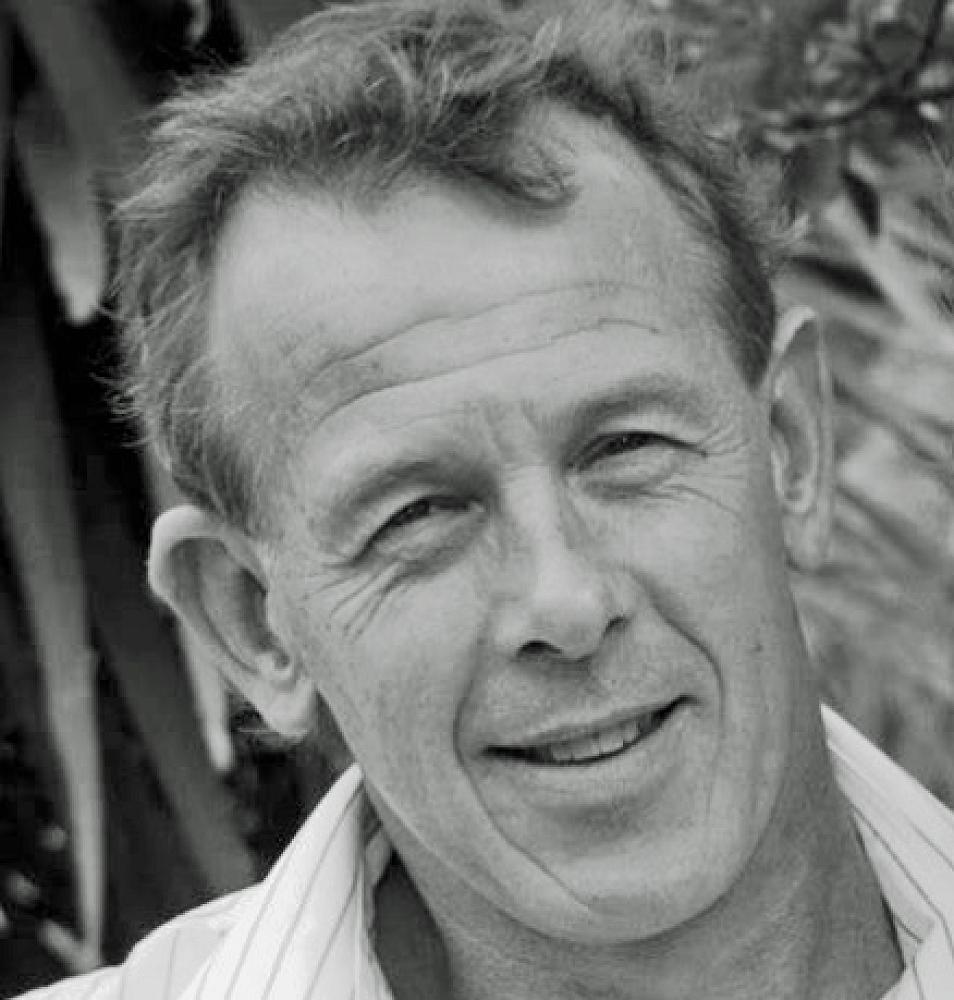
The Kingsmen
Richard John Wilden
Richard attended King's High School from 1972 to 1976. He gained Volleyball and Rugby Blues in 1976. He played for the 1st XV Rugby team, the 1st Volleyball team, and was a member of the Senior Rowing Four. Richard played on the side row of the scrum in the Rugby team – according to his coach his ability to get to the breakdown first was his strength – his speed and anticipation made him a first rate loose forward.
On leaving King's, Richard went dairy farming in Palmerston and then worked on a sheep and beef farm in Lee Stream. He attended Lincoln University, but found studying a "waste of time" so went shearing and crutching around Otago in winter and hauled meat at the Burnside Freezing Works in summer.
He began a three-year Building apprenticeship at age 27, where his weekly wage plummeted from $700 to $120, which he described as "a bit of a shock". During his apprenticeship, he taught himself Technical Drawing and, once it was completed, he worked for himself as a Builder and Architectural Designer. He did his last hands-on building job in 1998 and he has been a designer ever since. He has experience in all construction methods, earth, straw-bale, lightweight concrete and all the conventional materials. He uses the 3D virtual model to conceptualize, and produce the contract documents.
He has travelled extensively to North America, Asia and Europe as part of his further education. Working as a Builder and Designer, assimilating ideas and construction methods. Also attending conferences, seminars and workshops in his fields of interest. This has given him a global perspective to the built environment. He has been a Professional Architectural Design New Zealand (ADNZ) Member since Jan 2006. ADNZ is an inclusive professional body for all architectural design professionals in New Zealand. Members are architectural designers, trailblazers in architecture, experienced professionals, registered architects, innovators in sustainable design.
In 2013 he was a National Finalist - Residential Alterations & Additions Architectural Design Award – the Residential Interiors Architectural Design Award and the Resene Colour in Design Award. Recently Richard has been working with Bevan Wood an Architect associated with Eco Workshop Architectural Studio. Together, they received recognition for their collaboration on a rental housing development called “Glynllifon”. Their achievements include a Commended Award in the Residential Interiors category and the 2021 Regional Residential Multi-Unit Dwelling Award sponsored by MiTek12.
Richard bought his Saddle Hill property in 1991. When he bought it, there was plenty of gorse. Initially, he ran 150 sheep and beef cattle. He sold his stock in 2002 and started planting trees the same year. About 30,000 trees were planted in a week by himself and six forestry contractors. The Forestry covers his 31ha "rural enclave" on the north eastern slope of Saddle Hill, near Mosgiel, a mere 10-minute drive from the Octagon in the heart of the city.
In his development he did leave 4ha of native bush to regenerate, but he selected tree species on their timber value. The 30 species planted included Alder, Ash, Blackwood, Eucalyptus, Oak, Poplar, Macrocarpa, Red Beech and Redwood. He entered his forestry in the New Zealand Emissions Trading Scheme, rated as continuous cover, which "locks it up for 90 years". A trial was launched in the Macrocarpa block a year ago. The government contracted the association to measure how fast the Macrocarpa trees grow and how much carbon they sequester. "...for storing carbon long-term, this forest wins hands down."
Tracks have been created in the forest and dog walkers and horse riders have been given access. Native birds are prevalent, including Fantail and Tūī. Richard’s forest on Saddle Hill adds to Dunedin’s natural heritage! His forest project stands out as a testament to his vision and commitment.