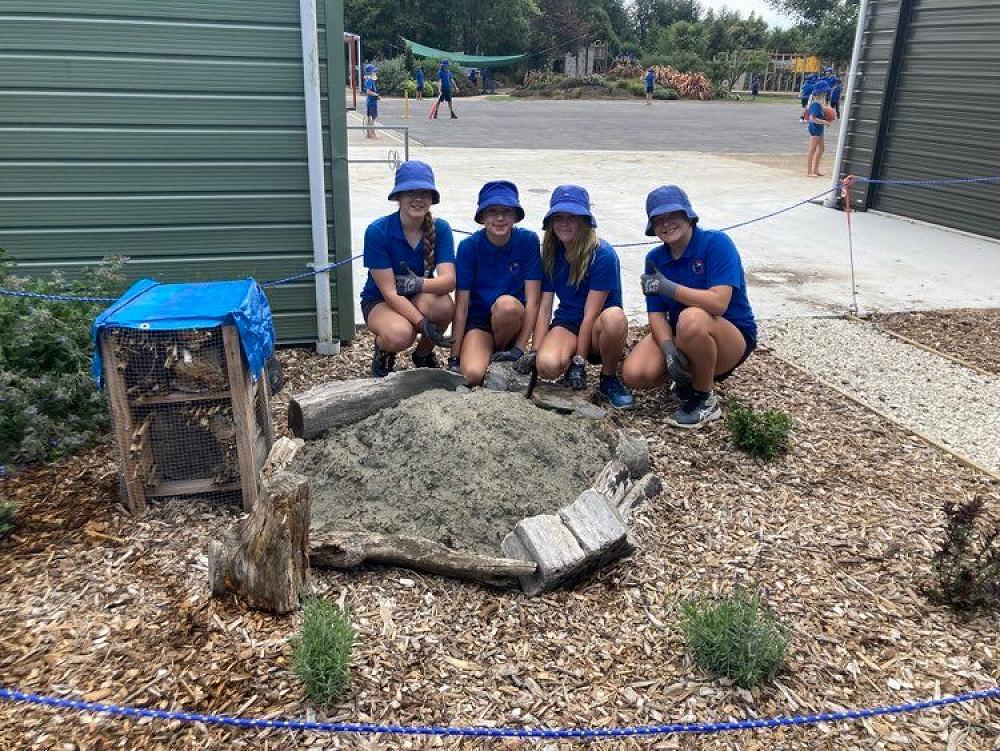
Native bee garden
Last year the RLC learned all about native bees in New Zealand. Native bees are small and don’t swarm in big numbers, so they’re often overseen and most people don’t even know of their existence. Many schools are learning about honey bees and getting hives for their school, but we wondered what effect the honey bees have on our native bees.
In New Zealand, we have 28 native bee species. Like honey bees, these native bees forage on flowers. While they collect nectar and pollen for food they pollinate the plants they visit. However, their life is very different from the domesticated honey bee Apis mellifera. Native bees are small and dark; each female burrows her own nest in the ground or hollow plant stem, where she generally lives a solitary life.
Native bees don’t fly long distances when foraging. They stay in a radius of approximately 100 meters to their nest. They have very short tongues that are perfect to visit and pollinate the small flowers of New Zealand’s native plants, such as mānuka and kānuka. They are also widespread in orchards, some vegetable crops, and exotic flowers.
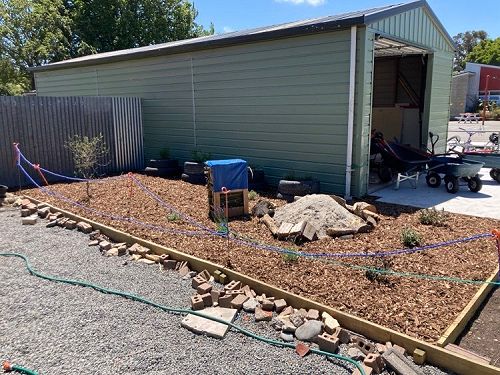
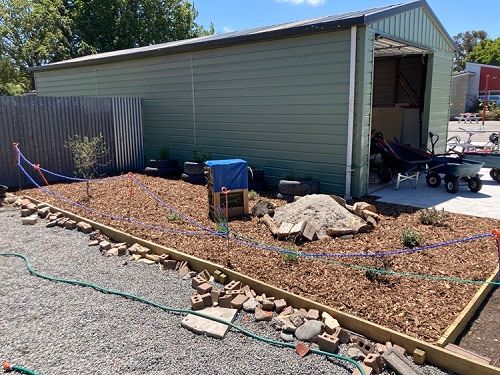
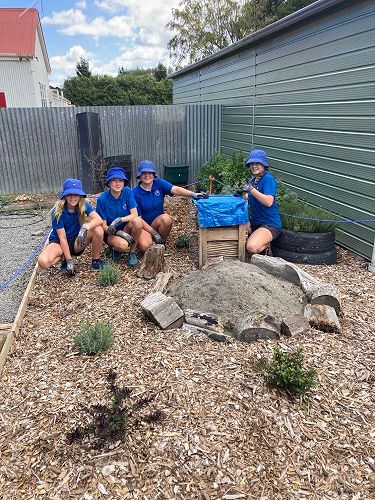
As a class we decided to build a habitat for native bees. In the secret garden behind the sports shed we created a space just for them. This space includes a clay mound, a handmade bee hotel, and plants such as lavender, native hebes, herbs and a kowhai tree. We needed to look at when each plant flowered to ensure there was a food source all year round.
This has been a success! We have spotted burrows in the clay mound and after careful and quiet observation we have seen small black bees going in and out of the burrows.
We would love to make closer observations through photographs or capturing one to look at under a magnifying glass so we can identify the bees. We will wait until they have become more settled and established in their new habitat first.
A big thank you to Kirsty Lepper, Lisa Muir and Tayla Wright for their donations or time, soil and garden edging.
Gallery