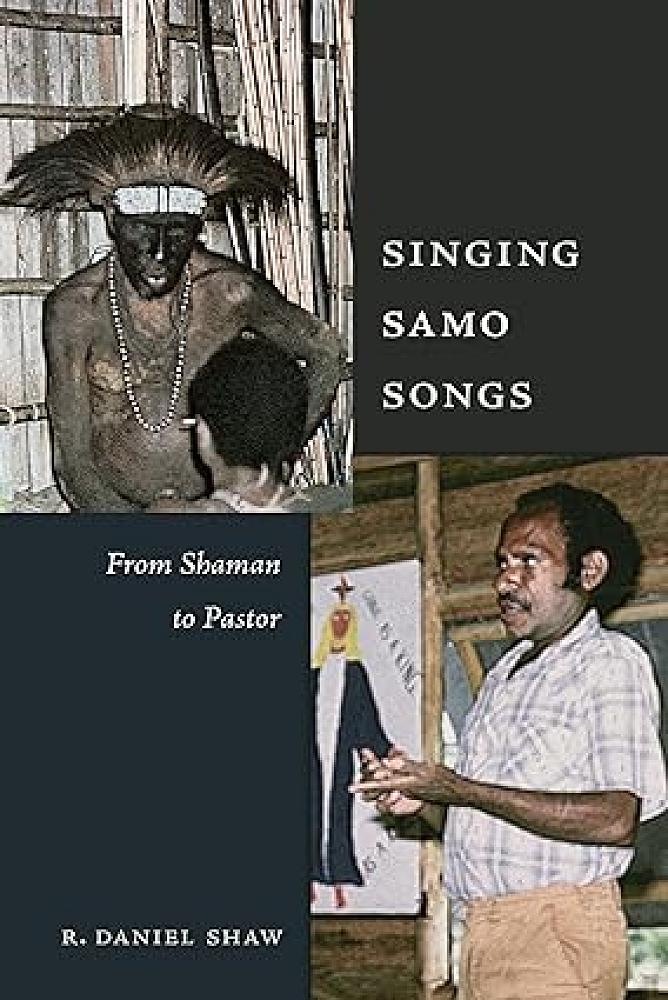
Book Review: Singing Samo Songs: From Shaman to Pastor.
R. DANIEL SHAW. DURHAM, NC: CAROLINA ACADEMIC PRESS, 2022. Xxvi + 249 PP. ISBN: 978-1-5310-2379-9. US$45.00; Kindle: US$36.00.
R. Daniel Shaw is Senior Professor of Anthropology and Translation at Fuller Seminary's School of Mission and Theology. He is the 2022 recipient of the annual Lifetime Achievement Award, given by the American Society of Missiology, in recognition of his lifetime of engaging in and encouraging socio-religious research so that all people may receive God’s Word and apply it to their lives.
This ethnographic study is of interest because it combines the work of an anthropologist, linguist and missiologist in one person and presents an interesting model for church development among indigenous peoples. The various transitions describe in the process of communicating the Scriptures speak powerfully in working with indigenous peoples. The Samo accommodated many changes while being exposed to the Good News through different approaches. The book clearly and faithfully records the impact of Western-influenced national missionaries encountering an already developing church. It records a situation where the Samo peoples were given an abridged version of the Bible (Baibo Booka) in their tribal language and sought to apply its principles within their cultural practices before the “misso-prepared pastors” arrived. Dan and Karen Shaw committed the Samo language to written form and then translated the Bible, beginning in Genesis—then giving them the Baibo Booka and allowing a remote tribal group of people the space to develop their practices as they interpreted the meanings of the text.
Reading their story is very interesting and reinforces the logic of allowing indigenous people to apply cultural values and practices that had been part of their initiation processes to living. One of Shaw's earlier books, Kandila, describes the initiation pathway for young Samo as they grew to take part in their society.[1]
Second, the book deals with the colonial approach to civilisation introduced by the Kiap (Government appointed officers, usually foreigners). The rules and regulations of a democratic process was more like a dictatorship following a set of Western laws, regulations and statutes.
Third, a record of the Samo having to accommodate the Western missionary-prepared indigenous pastors who could not accept the Samo Christian community concepts developed by the Samo after reading their tribal language translation of the Baibo Booka. Samo received and took this translation as their church practice guide from their indigenous understanding of identity. Shaw has written of these changes honestly and clearly with the Samo returning to indigenous practices and eventually convincing the PNG-prepared pastors to accept them as simple patterns for Christian life in the Samo context.
As an Urban missionary in Papua New Guinea, I take the liberty to add a fifth transition not written about in Shaw's book. Fifth, the transition to accommodate modernity and technology taught to their young men and women moving to the cities for higher education and work and then returning home labelled as the “elite”. This is another story to be researched and written. I note that in Shaw’s Epilogue, he mentions a Samo could well write the next book.
I believe this is an essential book for New Zealand church leaders to read. There is a genuine desire, already in progress, for our indigenous people to return to Te Reo, become bilingual, and introduce aspects of their culture to worship. However, many of our Pākehā church leaders cannot understand how this can be possible in the church. May this book help them envision such a New Zealand church?
Kevin White has a Masters in Intercultural Studies from Fuller Graduate School, Diploma Adult Education & Training, Certificate Adult Literacy & Education (voc) and is a Registered Electrical Inspector and Technician. While in PNG, he established the Resource Development Foundation for Consultancy in community training and development.
[1]R. Daniel Shaw, Kandila: Samo Ceremonialism and Interpersonal Relationships. Ann Arbor, MI: University of Michigan Press, 1990. ISBN 0-427-09426-2.