
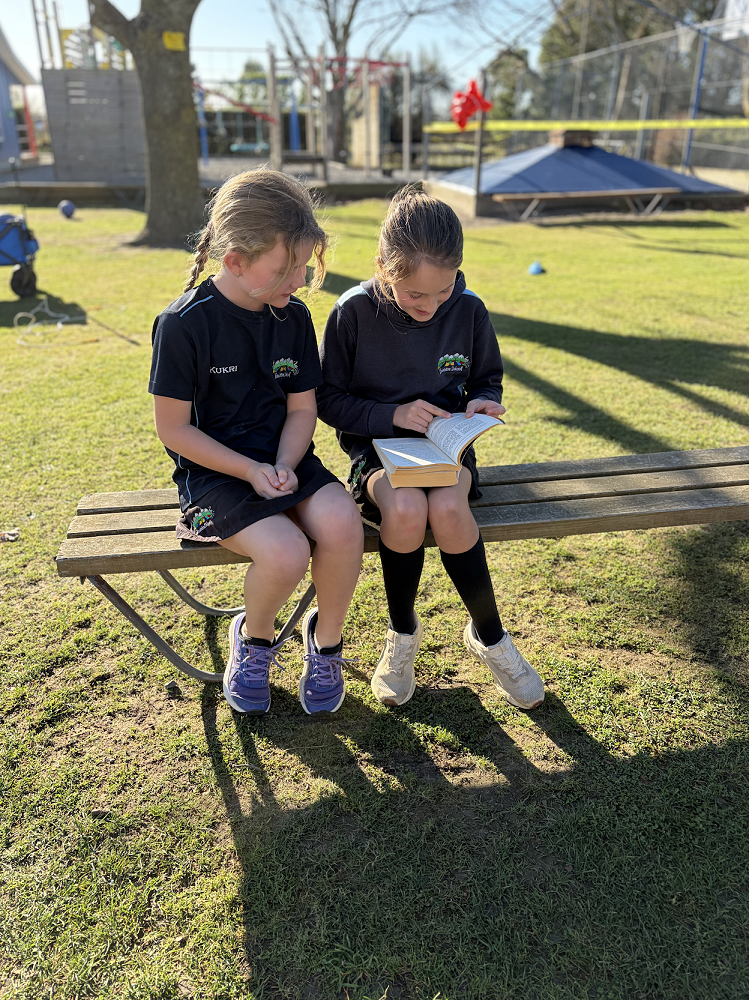
Reading Every Day: One of the Greatest Gifts We Can Give Our Children
Read every day
One of the simplest and most powerful things we can do for our children costs very little, requires no special equipment, and can have lifelong benefits.
Read every day.
As educators, we spend a great deal of time discussing literacy, achievement, curriculum, assessment, and learning outcomes. Yet the research continues to point us toward a surprisingly simple truth: children who read regularly for pleasure are more likely to succeed not only at school, but in life.
Reading for pleasure has been linked to stronger literacy skills, improved vocabulary, greater academic achievement, enhanced empathy, better mental wellbeing, and stronger social connections. In fact, the National Library of New Zealand describes reading for pleasure as "a door to success," highlighting its positive impact on learning, health, and wellbeing.
Importantly, this doesn't just apply to children who are already strong readers.
The benefits are seen across all ability levels. Children who develop a habit of reading regularly often make greater progress over time because reading itself becomes the engine that drives further learning. The more children read, the more words they encounter, the more knowledge they gain, and the more confident they become as learners.
Reading Builds More Than Reading Skills
Reading develops far more than decoding and comprehension.
Stories help children understand different perspectives and experiences. They build empathy, imagination, curiosity, and critical thinking. Through books, children can explore worlds beyond their own and discover ideas they may never otherwise encounter. Research suggests that people who read for enjoyment demonstrate greater empathy and cultural understanding, while also experiencing benefits for their overall wellbeing.
For younger children, being read to aloud is especially powerful. Hearing rich language, engaging with stories, and sharing books with trusted adults strengthens communication skills and builds strong foundations for future learning. Just as importantly, reading together creates moments of connection in an increasingly busy world.
What Matters Most?
The good news is that reading at home does not need to be complicated.
Research consistently shows that choice matters. Children are more likely to become engaged readers when they can select books that genuinely interest them. Whether it's graphic novels, adventure stories, sports biographies, magazines, fantasy, information books, comics, or audiobooks, the goal is to foster a love of reading.
At Lauriston School, we want our children to see reading not as a chore, but as a gift. Reading should be associated with enjoyment, curiosity, and discovery.
Five Practical Ways Families Can Help
Read together every day. Even 10–15 minutes makes a difference.
Let children choose what they read. Interest is one of the strongest motivators.
Be a reading role model. Let your children see you reading.
Talk about books. Ask questions, share ideas, and discuss characters and events.
Create regular reading routines. Bedtime reading remains one of the most effective habits families can establish.
A Challenge for Our Community
As we move through the year, I would like to encourage every Lauriston family to consider a simple challenge:
Read for at least 15 minutes every day.
Not because it is homework.
Not because it is required.
But because reading opens doors.
Doors to knowledge.
Doors to imagination.
Doors to understanding.
And, perhaps most importantly, doors to opportunities that can last a lifetime.
As parents, grandparents, whānau, and educators, we all have a role to play in building a community of readers. Together, we can help our children develop one of the most valuable habits they will ever learn.