
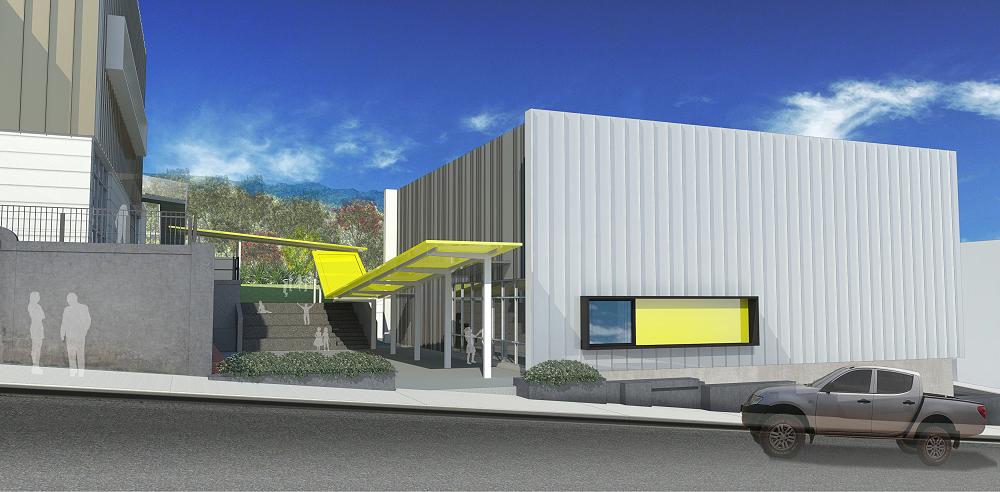
School Rebuild FAQs
Below, you'll find the Ministry of Education's answers to the school community's questions about the Lyttelton Primary School rebuild.
What is the total budget to build the school itself (i.e. excluding land remediation)?
The business case budget was $8.8m. This figure excludes remediation of the goal wall and construction of the new steps connecting the upper terrace of the School site to the grassy.
The new school will cost more than the budget, largely because of the unique and complex site conditions which have resulted in higher costs than expected. The new school will cost approximately $13m–$15m.
How much money was spent on the original plans? Does this come out of the build budget?
We are currently reviewing the amount spent to date to determine the quantum of work that is being used to develop the latest design.
No, the cost of the original plans will not come out of the original build budget.
Have site complications (land and wall remediation, archaeology, contamination) reduced the amount of money available to build the school?
No, the ministry has increased the amount of money available to the school for this project as a result of the unique and complex site issues.
Have heritage and archaeological constraints imposed this new, single footprint?
There are a number of parameters which impact on the design. These include heritage and archaeological issues, budget constraints and local environment conditions. For example, locating the building in the optimal way to capture natural sunlight (especially in winter), to shield the building and outdoor space from prevailing winds and provide maximum outdoor play space for students.
A single building will provide the school with the opportunity to evolve and change its teaching practice over time as virtually all the teaching areas are connected. This also means that community connection can more easily be fostered and supported in the school.
Do we have a choice?
Yes. The ministry wants to work closely with the school to determine the best solution for the school and its community. However, site constraints do limit the range of solutions. The majority of these constraints impact the overall master plan for the site but allows the school to decide on how the school will be configured internally, including how we can accommodate the Loons Theatre Trust.
Doesn’t CERA have a mandate to override heritage constraints in the interests of progressing with the rebuild of Christchurch?
CERA has powers under ‘section 38’ of the CERA legislation to direct the removal of a heritage building, but only where that building is posing a risk to human life or property i.e. a dangerous building that is at risk of collapsing onto the street or over a property boundary. Archaeology building foundations do not fall into this category, so CERA doesn’t have any ability to speed up the removal of archaeology on the Lyttelton Primary School site.
We are working closely with Heritage New Zealand to minimise the impact on the school build of the archaeological remains on the school site. We are also investing significant funds to ensure historical elements, such as the steps, are incorporated in to the development.
How much delay will challenging heritage rulings cause to the school build?
It is not the Ministry’s intention to challenge any heritage rulings as we consider the requirements can be successfully incorporated into the new school development on the site.
I understand you have made changes to the project team designing and building the school, how will this affect the school build?
The new project team has extensive experience in the design and delivery of new schools within tight programmes. They understand the complexities associated with the site having studied the previous reports and have developed a design and construction programme which responds to those issues. Strategies such as early procurement of sub-contractors to secure resources and staged building consents are some of the solutions developed to respond to the programme.
What is the Ministry doing differently to avoid the delays of the past 18 months?
We are confident that we have uncovered the range of unique issues (heritage, archaeological, geotechnical etc) facing development on this site, so this will now allow the school build to progress a lot more quickly. Additionally, the new project team has extensive experience in the design and delivery of new schools within tight programmes. The latest design allows us to implement a staged consenting strategy and early procurement of sub contractors to accelerate the programme.
What are the milestone dates for the delivery of this project?
We will begin strengthening of the goal wall in April 2015. Site excavation works are planned to commence in May 2015. Construction is planned to be completed in April 2016.
When are we going to see you again? When and how will we be updated about progress with the new school build?
We are working closely with the school on how to best communicate and share information with the community. This will include regular information on progress with the project and opportunities for the community to see the design as it gets finalised and, subsequently, follow the construction of the school.
How much natural light will there be in the new design - in the classrooms and in the play spaces?
The location of the buildings maximises the use natural light on the site. The design has the main building set back 34 meters from the goal steps which allows much more light into the open space all year round. This will be complimented by artificial light to ensure appropriate lighting levels are met for the school.
The significantly larger exterior play spaces to the north of the main building will allow much more light into the play area. Earlier draft designs had two buildings in close proximity to the goal steps which would have been in the shade during winter.
How does the new design mitigate the impact of winter southerly winds?
The proposed east west orientation of the main building means that the southerly face will provide significant protection to the northerly, sunny covered and open spaces from prevailing winds. The open play spaces will also have some protection from the southerly winds, because of the location and orientation of the building.
Will the acoustics meet the Ministry’s recommended acoustic standards for newly built primary schools? To the highest level?
Yes, the school will be designed to meet Ministry acoustic standards. The acoustic criteria adopted for the project is derived from the MOE/BRANZ guideline Designing Quality Learning Spaces: Acoustics for relevant spaces within the School. This document provides recommended minimum STC ratings of dividing walls (Table 6) and suggestions for improved levels of background noise and reverberation times (Table 7). 2.
To what standard will the building be acoustically engineered?
The MOE guideline states that the recommended internal noise levels and reverberation times are based on the Australian / New Zealand Standard AS/NZS 2107:2000 Acoustics – Recommended Design Sound Levels and Reverberation Times for Building Interiors. The adoption of this standard is considered best practice in New Zealand. AES (our Acoustic Consultant) provides input for all areas of the acoustic design for the School (including Administration spaces which are not covered by the MOE guidelines, and areas where the MOE guidelines are not able to be directly applied) with the ultimate aim of providing an acoustic environment appropriate for learning and everyday school function.
When will you provide a shade report?
Summer and winter shade diagrams can be provided once the building, civil and landscape designs have been finalised. We expect this to be within 3-4 weeks.
Please clarify the Ministry’s recommendations regarding ventilation: i. What is Best Practice for a school/buildings of this size, given that it is a new build? What is the Ministry Standard for a school/buildings of this size, again, given that it is a new build?
Current practice for the design of new schools in Canterbury includes the use of natural ventilation, which follows the Ministry of Education design guidelines. Examples include Clearview Primary Stage 2 and Pegasus Bay School. The MoE recommendations for ventilation are given in the DQLS Guide “Ventilation & Indoor Air Quality” published in conjunction with BRANZ. Specific relevant extracts include: “Satisfactory passive ventilation of teaching spaces should be achievable in most situations in New Zealand, particularly in new buildings, provided it is properly integrated with other design aspects such as: heating, insulation, control of solar gain, lighting. Active ventilation may be necessary in regions with a significant number of hot, windless days during the school term; existing buildings where it is physically impractical, because of the building configuration, to obtain adequate passive ventilation; specialist rooms and spaces with sources of contaminants which must be extracted at source”
ii. What percentage of schools built in the last 6 years use passive ventilation as their primary method of fresh air circulation?
The majority of new schools in Christchurch are ventilated through passive methods.
Are there enough toilets for 300 students?
Yes, the number of toilets provided meets NZ building code requirements.
Is the Gaol wall safe? If not, what is being done to secure it and will it be 100% of code?
Yes, the Goal wall is being strengthened to 67% of the National Building Standards (NBS). This is in excess of the minimum requirement which is for buildings and structures to achieve 34% NBS.
Is the rear wall safe? What percentage of code is it?
Yes, the rear wall (the East bank) has been assessed by Opus, our geotechnical and structural engineers, and confirmed no remedial works are required to the bank.
What equipment could the Tech Space hold? Is it big enough?
We have allowed sufficient space for a range of different types of technology provision. We believe it is sufficient to hold the required equipment.
The school is not sympathetic to the conservation area within which it will be built. Have you had discussion with Council & Heritage? How comfortable are you that the building will gain consent?
We considered that the school will be sympathetic to the surrounding area. We have had ongoing discussions with Council and Heritage. We are in the process of submitting an Outline Plan application which address’s planning requirements for the site which is designated for education purposes.
How long is the building? approx 59 metres long
What are the ceiling heights? 2.9m (teaching spaces)
How large is the hall? 255 sqm
What width are the staircases? 1.2m (internal staircase). The width of North facing external stair is 1.2 metres and the South facing external stair is 1 metre.
Acoustics: Have you used similar designs in other buildings?
AES has taken the same approach for LPS as we have for previous Primary School projects. Completed schools include Remarkables Primary School (Queenstown), Clearview School Stage 2 (Rolleston), and Halswell Primary, along with a number of more recent MOE projects including Waitākiri, Rāwhiti, Leeston and Tai Tapu primary schools.
How will appropriate acoustic performance be achieved? (Using what materials/ strategy)?
The appropriate acoustic performance will be achieved by the adoption of appropriate surface treatments (high performing acoustic ceiling tiles, wall panels, acoustically rated internal glazing, doors and seals and the like), along with ensuring the building façade construction is appropriate to reduce noise ingress (such as rain noise), and that mechanical plant noise emissions are minimised and sources located in less noise-sensitive areas (such as external plant located away from the learning block).
Will all windows be double glazed?
Yes, external double glazing is specified to meet thermal performance requirements which will inherently also provide increased acoustic performance when compared with single glazed systems.
What are the distances between the Gaol wall and the main building? How will you keep the sun out in the summer and let it in, in the winter?
The distance between the Goal Wall and the Main Building (at its closest point) is approximately 32 metres. Deep verandah eaves on the north side of the teaching block provide summer shade and winter penetration. Upper admin block north windows are restricted in size to minimise solar intrusion. The lower admin block north windows are protected by a canopy.
In what materials will the school be clad? Why were these materials chosen? What are their benefits? Can you provide examples of other schools clad in these materials? Other buildings? (Please provide images)
The schools will be clad in Hardies stria, Plywood with variable battens and various Coloursteel profiles. All these materials are durable, economical and provide a strong textural contribution to the design of the school.
Can you provide physical samples of the cladding materials for display at site?
Yes, the contractor could make samples available to the school.
How will the site compensate for water run off? What is the drainage plan?
The drainage plan is being designed in accordance with Christchurch City Council and Environment Canterbury design parameters and will meet all standards required.
Are there plans to re-use the rainwater collection system from Lyttelton Main?
No
Are there enough staircases? Won’t all of the children try to exit via the North East staircase and therefore cause a bottleneck?
Access and Egress matters have been addressed as part of the design and alternative egress is available through exterior stairs to the east and west.
The reception is close to the internal staircase. How will traffic/sound be managed in this area? Would reception/the stairs be better suited if one or the other was relocated?
This area will have sound absorbent materials to manage noise, but is intended to be the hub of the school. There is no requirement for the reception to be in a remote area, better it be where overview and supervision is enhanced.
How will traffic be managed within the school?
As for all schools, there are a range of support mechanisms available for the schools to manage traffic, including NZTA’s school travel plans initiative.