
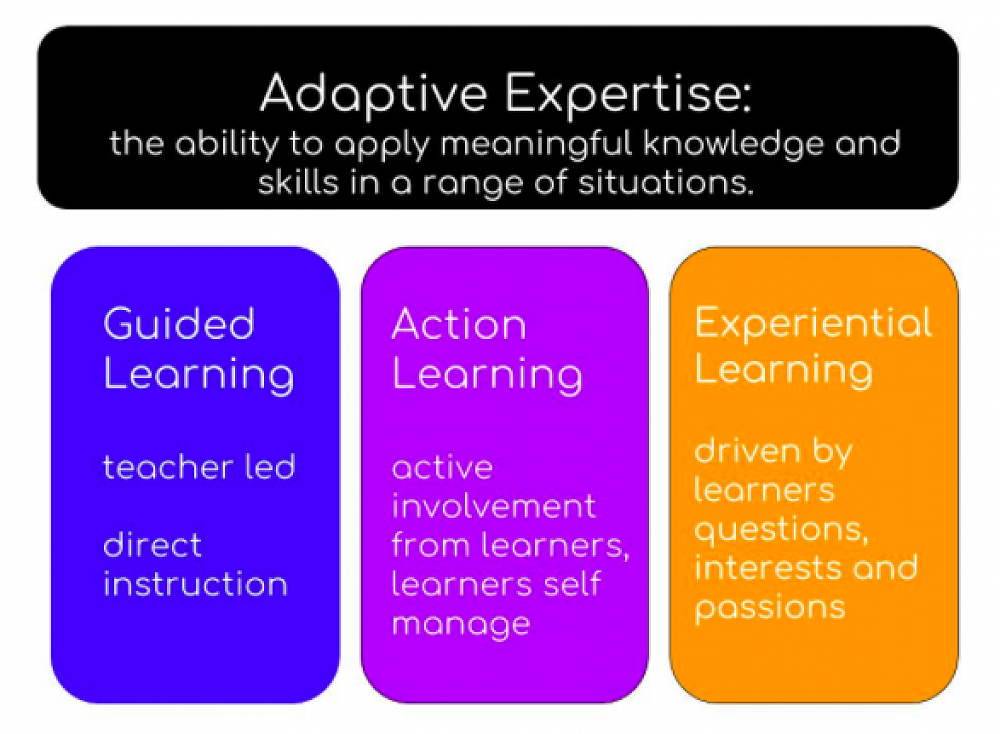
Adaptive Expertise
The ability to apply meaningfully-learned knowledge and skills flexibly and creatively in different situations. The Nature of Learning (OECD)
Adaptive expertise is needed by teachers in order to promote the wellbeing, achievement and progress of all students. Adaptive experts inquire into their own practice, making changes and adaptations to meet student needs. At Lyttelton Primary School we use the Teaching as Inquiry process to underpin this. This is organised through Arinui underpinned by the Spirals of Inquiry.
Students need adaptive expertise -the ability to use knowledge and experience to learn in unanticipated situations. At Lyttelton Primary School our students engage in learning experience to build Pātaki (curiosity and inquiry), Hōpara (Adventure), Hīraurau Hopanga (critical thinking), Auaha (innovation and creativity).
Learning at Te Kura o Ōhinehou is reciprocal based on the concept of Ako. Teachers acknowledge the knowledge, values and perspectives that students and whānau bring to the classroom and that they are learning alongside each other - “He waka eke noa”. Learning of students is linked with their whānau.
We use these teaching approaches to help develop Adaptive Expertise in students:
- Guided Learning: deliberate acts of teaching where teachers identify learning goals, strategies and outcomes.
- Action Learning: students play an active role in designing learning outcomes, strong element of self regulation and self planning. We explicitly teach these self regulation skills.
- Experiential Learning: this is not controlled by teachers and there are no predetermined learning outcomes. What is learned is determined by context, student’s interests and the others with whom they work alongside and make discoveries with.
References: The Nature of Learning (OECD)
ERO School Evaluation Indicators