
Vocational Pathways
Vocational Pathways can help you plan your journey from learning to earning. They provide new ways to achieve NCEA Levels 1, 2 and 3, and develop pathways that progress to further study, training and employment. Achieving NCEA Level 2 is the foundation for success in further education and prepares a student for the world of work. Achieving NCEA Level 2 with a Vocational Pathway demonstrates that you have some interest, knowledge and skills related to industry. It shows you have achieved the required number of credits to achieve NCEA Level 2, as well as achieved the required industry related credits that align with a particular industry.
Level 3 builds upon this through shared opportunities across school, tertiary and industry training.
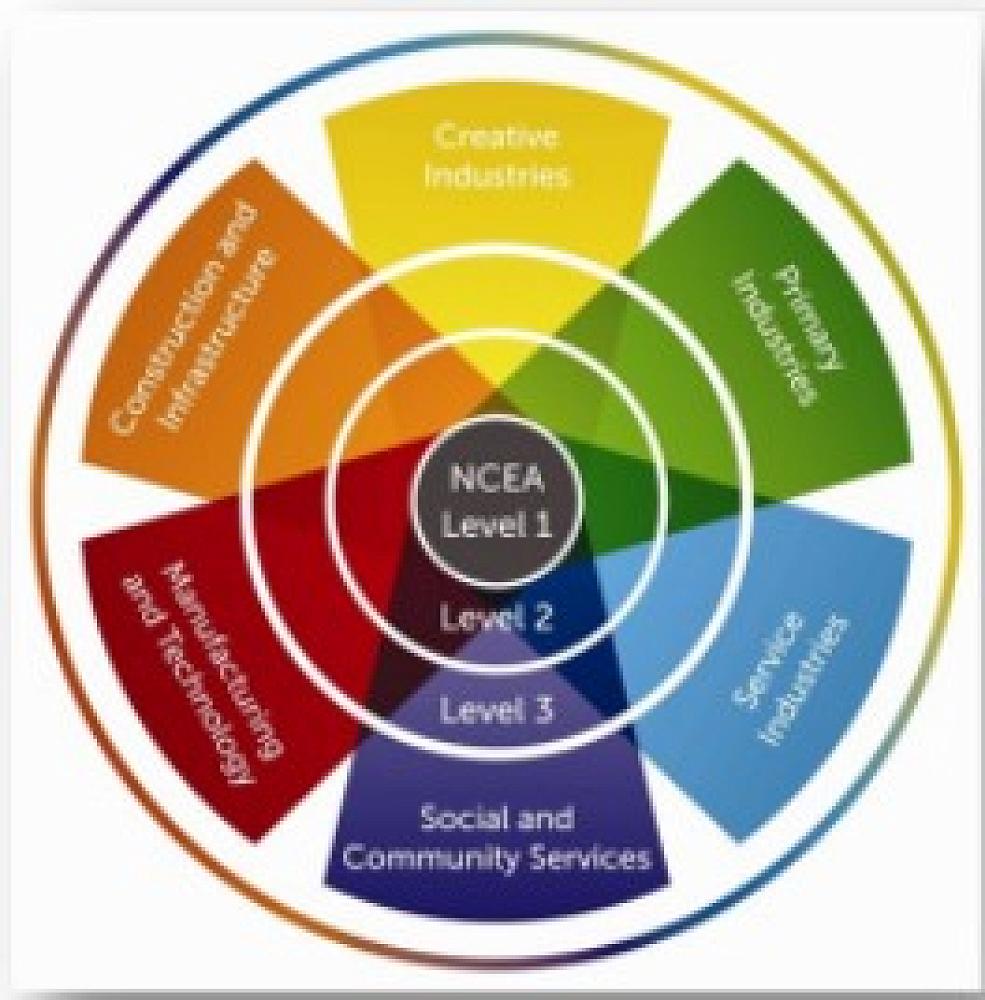
There are six Vocational Pathways. They are:
Construction and Infrastructure (CI)
Creative Industries (CR)
Primary Industries (PI)
Service Industries (SI)
Social and Community Services (SC)
Manufacturing and Technology (MT)
Within each Vocational Pathway, there are recommended Achievement Standards and Unit Standards as well as specific sector related Standards.
The pathways are flexible and enable you to change your direction as you are on your educational journey. You can use the Vocational Pathways to plan your career and subject course options by using the colour coded pathways, and easily see how your skills and interests relate to industry.
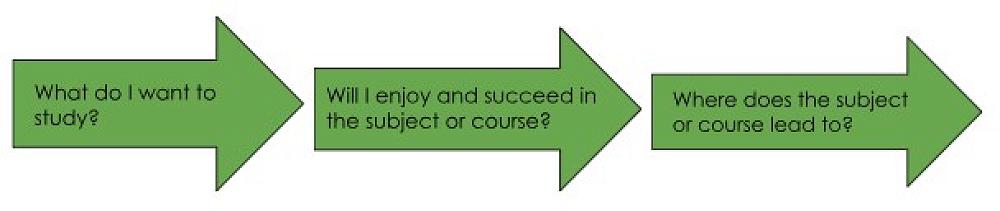
When deciding on a Vocational Pathway as your choice of study, ask yourself:
Vocational Pathways can lead to: (for example)
Construction and Infrastructure (CI) sector:
Includes building anything from the ground up: garages to high rise towers, planning, designing, building, repairing and laying utilities for the community e.eg. drainage to dams, sewerage to broadband, roads, bridges, pavements, tunnels, ports, airway runways, electrical generation and supply, architect, engineer.
Creative Industries (CR) sector:
Includes film/TV camera operator, film and video editor, graphics/web designer, lighting and stage designer, costume designer, media producer, musician, performing arts administrator, photographer, television presenter, stone masonry, Maori art (weaving, whakairo, taniko, raranga), curator, Pasifika art.
Primary Industries (PI) sector:
Includes agriculture, horticulture, dairy manufacture, forestry, mining, seafood industry (fisheries), landscaping, equine industries, veterinary and animal care.
Service Industries (SI) sector:
Includes hair and beauty industry, entertainment, fashion, hospitality, finance, media and news, museums and galleries, retail, sport and fitness, theatre and film, travel and tourism armed forces (air force, army, navy).
Social and Community Services (SC) sector:
Includes public sector, education, healthcare (nursing) and medicine, community and social services, defence, emergency services, protection and security, Whānau Ora.
Manufacturing and Technology (MT) sector:
Manufacturing includes jewellery design to steel making, meat processing to managing people and production lines, mechanic, boat builder, butcher, clothing designer, engineer, welder, joiner. Technology includes electronics, biotechnologist, designer, food technologist, telecommunications, technician, production technologist, medical technologist.
Where can I get more information on subjects/courses to take and job opportunities?
Requirements
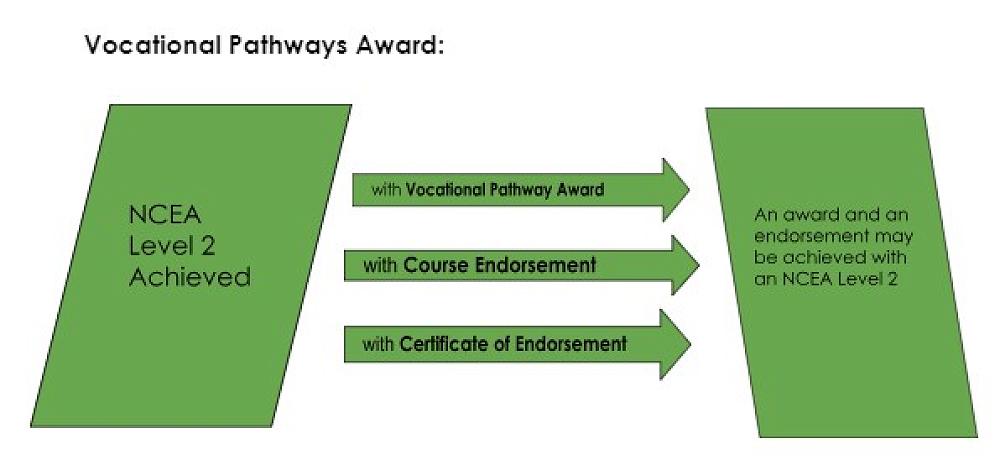
To achieve a Vocational Pathways Award students must first gain NCEA level 2 (60 credits from level 2 and 20 credits from any other level – 80 credits in total – 10 of which must satisfy the literacy requirements and 10 of which must satisfy the numeracy requirements).
To get a Vocational Pathways award a minimum of 20 level 2 credits must be from sector related standards, with the remaining from recommended standards to make up a total of 60 pathway credits.
The Vocational Pathways Awards(s) will show on a student’s NZQA Record of Achievement. This can be a real advantage when young people look for work and training opportunities in a sector that is highlighted in their award.
At Level 2 a Vocational Pathways Award rewards students who achieve 60 level 2 credits from the recommended assessment standards in one or more Vocational Pathway sector. A Vocational Pathways Award must include at least 20 credits from the sector-related standards in a Pathway.
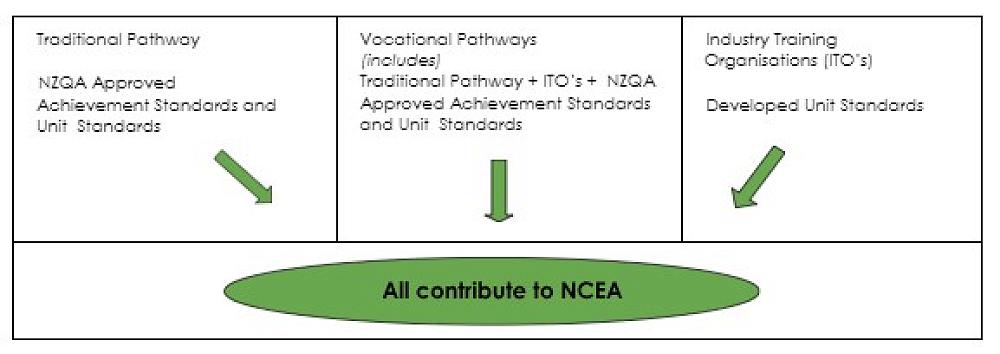
Choose your course: Students can gain NCEA credits from the traditional pathway, from the vocational pathway and from courses provided by outside agencies (ITO’s).