
Learning Area: Technology
LEARNING AREA: TECHNOLOGY
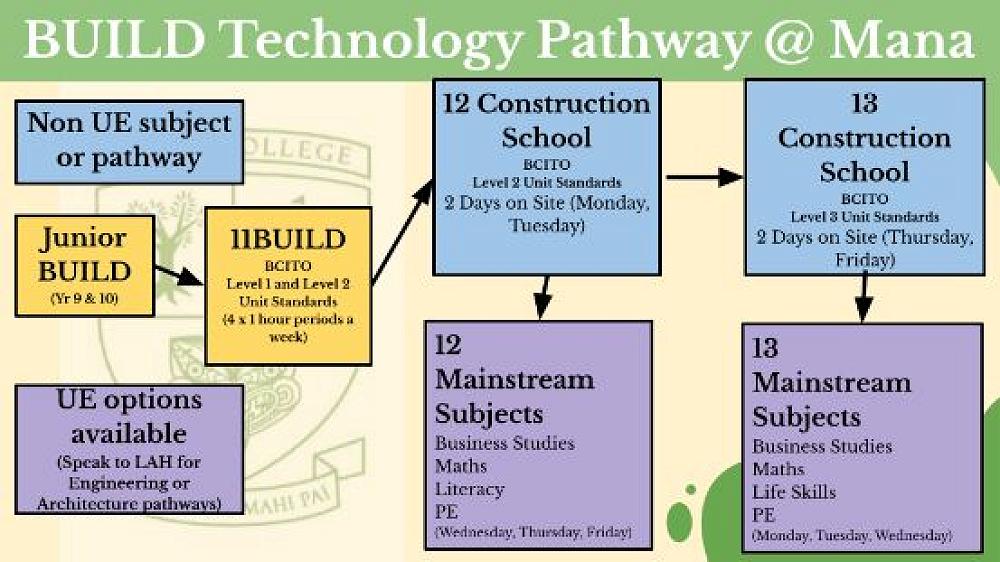
BUILDING TECHNOLOGY: NCEA LEVEL 1
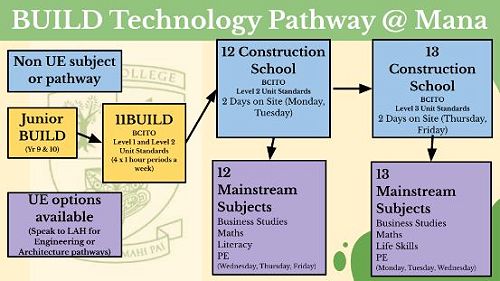
Course description: This is a practical, one year course where students work “hands on'' to gain elementary Trade Unit Standards with BCITO. It provides training appropriate for all trades, including Building, Concreting and Fencing and other related trades. It offers 32 level 1 credits.
Possible pathways: Building Technology Level 2
NCEA credits available: 32 Level 1 Unit Standard credits
Exclusions: None
CONSTRUCTION SCHOOL: BUILDING SCHOOL HOUSE BUILD PROJECT: NCEA LEVEL 2
Course description: This is a practical one year course where students work “hands on” to gain Trade Unit Standards with BCITO while participating in building a house from the ground up on the school site.
Possible pathways: Building Technology Level 3, Trade Apprenticeship
NCEA credits available: 38 Level 2 Unit Standard credits
Exclusions: None
CONSTRUCTION SCHOOL: BUILDING SCHOOL HOUSE BUILD PROJECT: NCEA LEVEL 3
Course description: This is a practical one year Level 3 BCATS program which allows students to develop and enhance a range of practical skills and building industry knowledge while participating in the Mana Building School building Project of building a house from the ground up. As a follow on from the Level 2 programme the students take part in project management of the house build to gain sound skills for future pathways.
Possible pathways: Trade Apprenticeship
NCEA credits available: 34 Level 3 credits from Unit Standards
Exclusions: Satisfactory completion of the Level 2 Construction School is required to enter this programme.
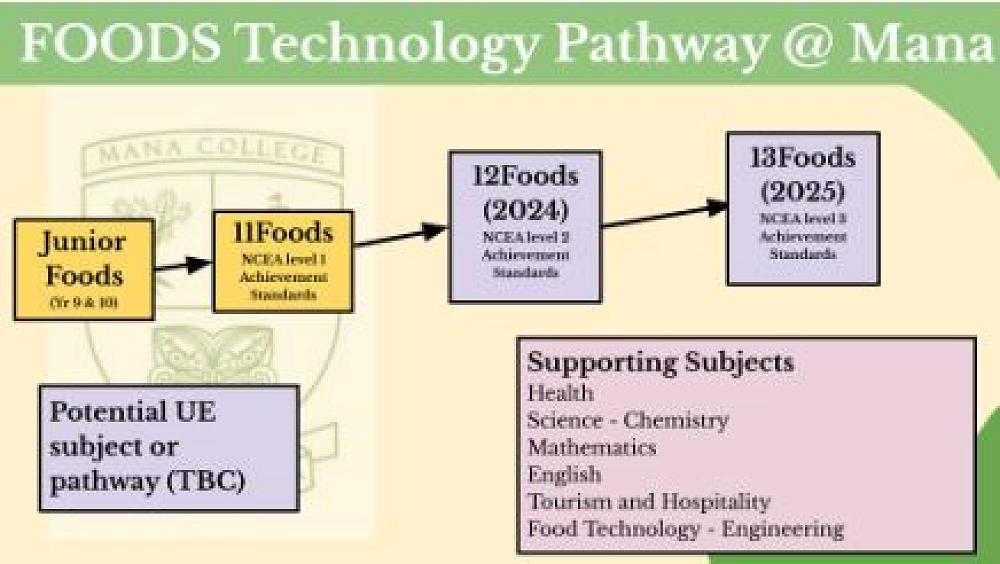
FOOD TECHNOLOGY: NCEA LEVEL 1
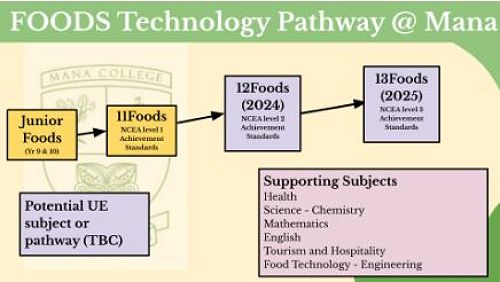
Course description: This year long, practical course will cover working within the Hospitality industry and what that involves in the kitchen and front of house. This is a program intended for students who are looking to pursue a career in the Hospitality industry. Regular attendance is essential to consolidate learning to gain the credits from each of the related unit standards on offer.
Possible pathways: Waiter, Barista, Chef, Bar Staff, Cafe Manager, Front of House, and other careers in hospitality.
NCEA credits available: 22 Level 1 credits from Achievement and Unit Standards
Exclusions: None
FOOD TECHNOLOGY: NCEA LEVEL 2
Course description: This year long, practical course will cover working within the Hospitality industry and what that involves in the kitchen. This is a program intended for students who are looking to pursue a career in the Hospitality industry. Regular attendance is essential to consolidate learning to gain the credits from each of the related unit standards on offer.
Possible pathways: Waiter, Barista, Chef, Bar Staff, Cafe Manager, and other careers in hospitality.
NCEA credits available: 24 Level 2 credits from Achievement and Unit Standards
Exclusions: None
FOOD TECHNOLOGY: NCEA LEVEL 3
Course description: This year long, practical course will cover working within the Hospitality industry and what that involves in the kitchen. This is a program intended for students who are looking to pursue a career in the Hospitality industry. Regular attendance is essential to consolidate learning to gain the credits from each of the related unit standards on offer.
Possible pathways: Possible pathways: Waiter, Barista, Chef, Bar Staff, Cafe Manager, and other careers in hospitality.
NCEA credits available: 22 Level 3 credits from Achievement Standards.
Exclusions: None
CREATIVE DESIGN AND TECHNOLOGY: NCEA Level 1, Level 2 and Level 3
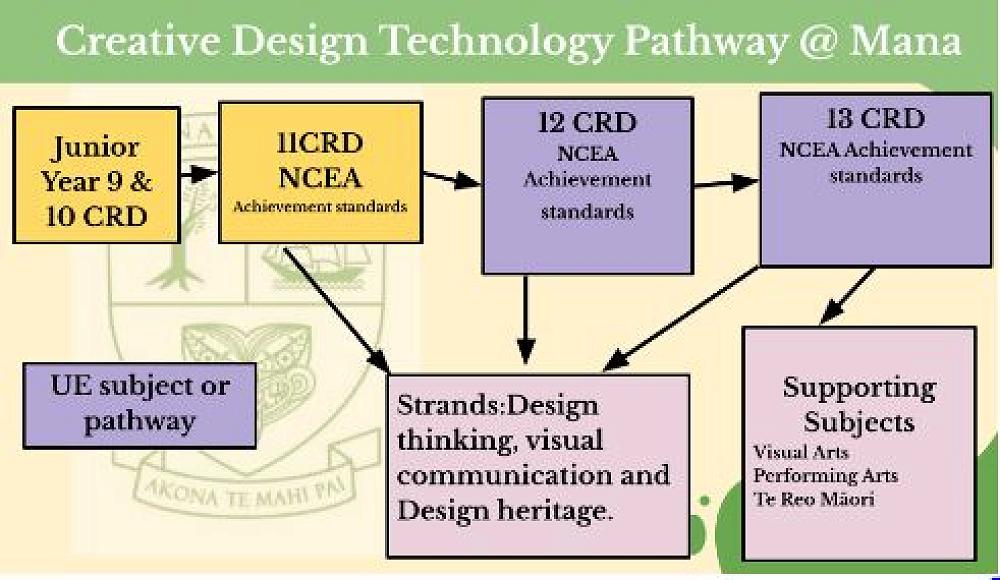
CREATIVE DESIGN
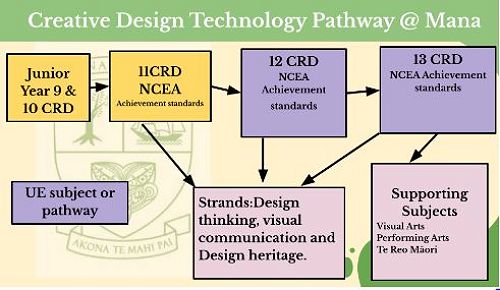
Creative Design is a cross-curricular subject that encompasses two curriculum strands ( Visual Arts and Technology). Its about interrelated strands of DESIGN thinking, VISUAL communication and DESIGN heritage. It encompasses the IDEATION, EXPLORATION/GATHERING INFO, PROGRESSION/REFINEMENT, towards a final outcome, that can be informed by designer heritage and own perspective. Please refer to the Visual Arts section, pgs 20 & 21 for more information.
DIGITAL TECHNOLOGY: NCEA LEVEL 1
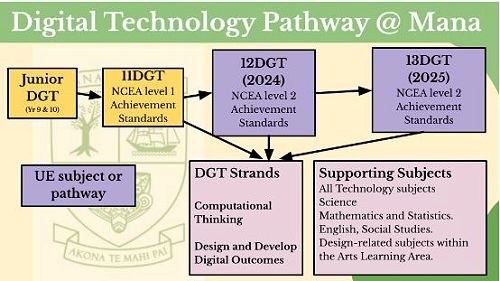
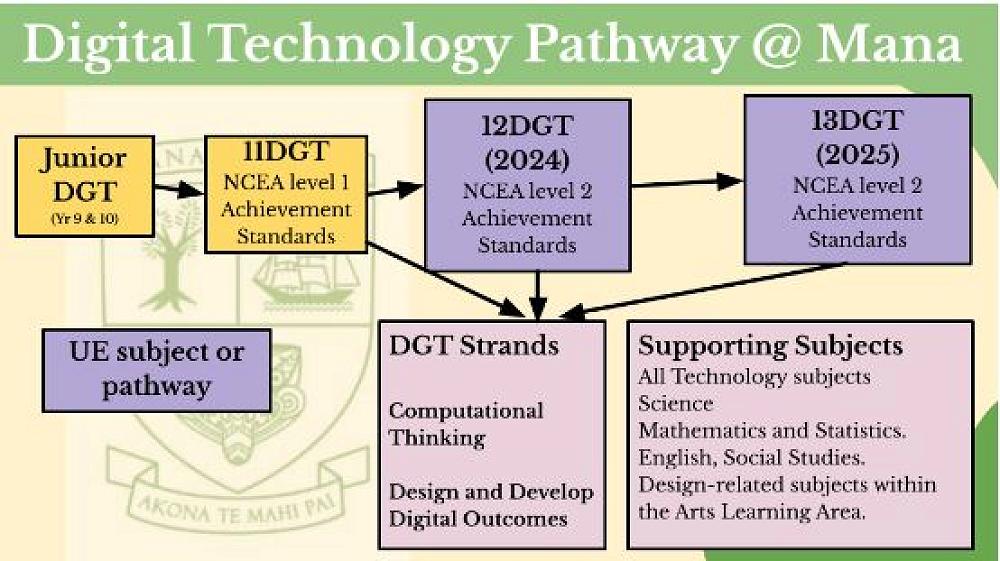
Course description: The purpose of this course is to provide students with computational thinking skills and the ability to produce digital outcomes. Students will continue to develop a deep understanding of digital concepts and how they can be used to solve problems. The students will apply the coding knowledge they gain to produce a computer program and also develop a digital solution of their choosing. For example a digital media outcome such as a web page or 3D model, a digital information outcome such as a database or a digital app such as an educational game.
By the end of the course, students will have acquired the necessary digital proficiency to navigate the technological landscape effectively. Whether students choose to pursue further studies in technology or apply their skills to other disciplines, this course lays a strong foundation for success in the digital age.
NCEA credits available: 15 Digital Technology Achievement Standard credits
Exclusions: None
DIGITAL TECHNOLOGY: NCEA LEVEL 2
Level 2 Digital technology builds on the knowledge that students have gained in Level 1. The same areas as Level 1 are covered but at a higher level to create more advanced digital outcomes.
NCEA credits available: 15 Digital Technology Achievement Standard credits
Exclusions: TBC
DIGITAL TECHNOLOGY: NCEA LEVEL 3
Level 3 Digital technology builds on the knowledge and skills that students have gained in Level 2. The same areas as Level 2 are covered but at a much higher level to create complex digital outcomes.
NCEA credits available: 15 Digital Technology Achievement Standard credits
Exclusions: TBC
Possible pathways:
The Digital Technology senior NCEA courses equip students with versatile skills and knowledge applicable to a wide range of careers and educational opportunities. It empowers them to be proactive digital learners and adaptable problem solvers, ensuring they are well-prepared for success in the ever-evolving digital world.
Possible vocational pathways include working with computer hardware and software, analysing and solving computer-related problems, digital media, the internet and communications, gaming, animation, or designing websites
Gallery